
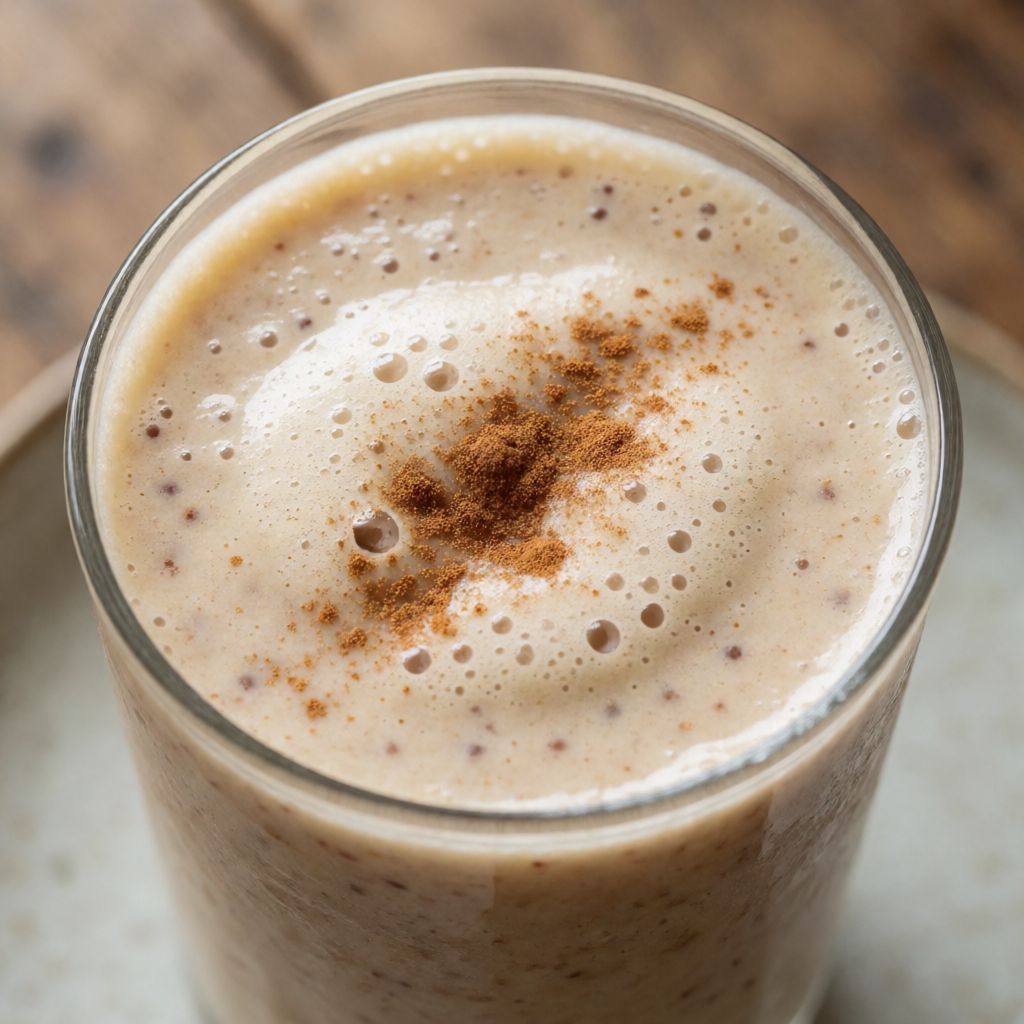
 AI photo
Fig and Almond Milk Smoothie
A quick fig and almond milk smoothie with a hint of cinnamon.
Labels are worked out automatically from the ingredients and can be wrong. Check the packaging if it matters to you.
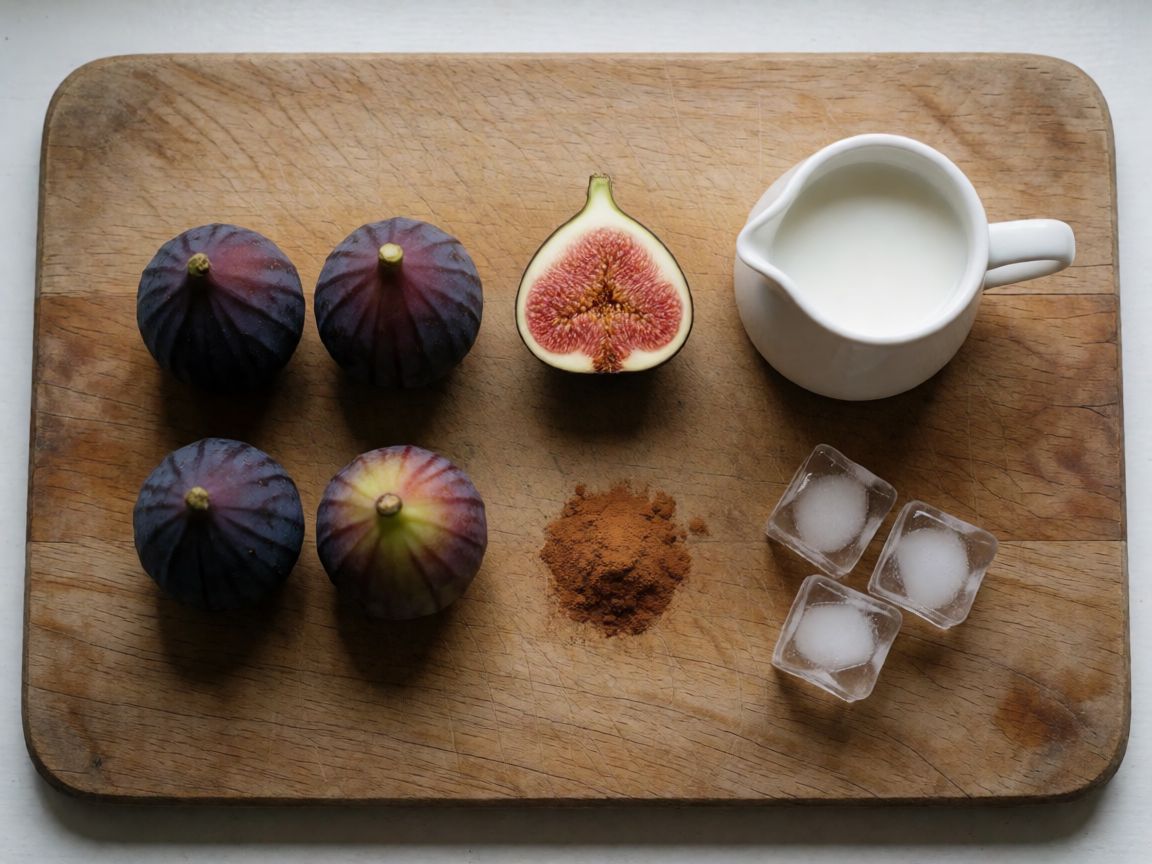
Ingredients




Steps
Carefully peel the figs and place the flesh in a bowl.
Crush the ice cubes and put them in the blender jug.
Add the fig flesh, cinnamon and almond milk.
Turn on the blender and blitz until smooth and creamy.
If the smoothie is too thick, add a little water or milk.
Pour the smoothie into a tall glass and serve immediately.
This is not a dish that cooks — it is a dish that balances. No heat, no transformation by fire, just the right ratio of ripe flesh, cold and liquid pushed through a blade until they stop being separate things. The whole exercise lives or dies on two decisions you make before the blender even starts.
The first is the fig. A ripe one gives to light finger pressure, almost sags — that softness means its own sugars have broken down and the flesh will tear into cream, not fibre. British supermarket figs are picked firm because they travel from Turkey or Spain and firm fruit survives a lorry; left as they are, they fight the blade and leave your smoothie gritty and thin on flavour. So you choose by touch, not by colour, and if what you bought is still tight, you give it a day on the windowsill — patience here is not optional, it is the ingredient that turns a hard fig into a soft one. And you peel it, not for appearance but because unripe skin is tough and slightly bitter, and even ripe skin leaves tiny flecks the blade won't fully break down.
The second decision is the order you put things in the jug: ice crushed dry, on its own, before any liquid joins it. Pour milk in first and the ice cubes float and spin on a cushion of liquid — the blade skids over them instead of biting in, and you end up with shards instead of crush. Break the ice down alone first, and it turns into fine, even fragments that melt steadily through the blend rather than flooding it with sudden cold water.
Figs: four per glass is the proportion for one person — scale it straight, eight figs and double the rest for two. What you're buying, really, is sugar and pectin-like structure already broken down by the sun, not a fig as such; that's why ripeness decides everything and why no sugar is added anywhere in this recipe. Out of season, or if you simply can't find a soft one, dried figs soaked in warm water for ten minutes or so will work, but they give you a denser, more concentrated drink — less cream, more jam — so expect a different texture, not a worse one.
Almond milk here is doing one job: being a liquid with no opinion of its own. Choose the unsweetened, unflavoured kind — the flavoured ones fight the cinnamon instead of carrying it. The criterion for substitution is exactly that: any milk, dairy or plant, with a clean background taste. Oat milk works. So does ordinary cow's milk if nobody at the table needs it dairy-free — nothing sacred about almond here, it's simply what someone without a lactose problem reached for first when these recipes started circulating.
Cinnamon: half a teaspoon, ground, never a stick — a stick won't dissolve in a cold blend, it'll just sit there doing nothing. Ground cinnamon doesn't fully dissolve either, strictly speaking; it suspends in the liquid, which is exactly why more than this amount turns gritty and dusty on the tongue instead of warm. Half a teaspoon per person is the point where you taste warmth, not powder.
Ice: three cubes per glass is less a magic number than a match to a single tall glass's worth of dilution and chill. If your freezer makes oversized cubes, break them by hand or use fewer — judge by whether the finished glass frosts up on the outside, that's your real cue, not the count. The ice's job is double: cold, and the body that stops the drink from pouring like juice.
If it comes out too thick, add a splash of water or more milk rather than more ice — ice brings cold, not looseness, and thins unevenly as it melts rather than at once. And serve it straight away: cut fig flesh browns the way an apple does, slowly, through plain oxidation, and the crushed ice keeps losing its fight with the surrounding liquid the moment you stop blending. Five minutes on the counter and you've got a warmer, browner, thinner drink than the one you made.