
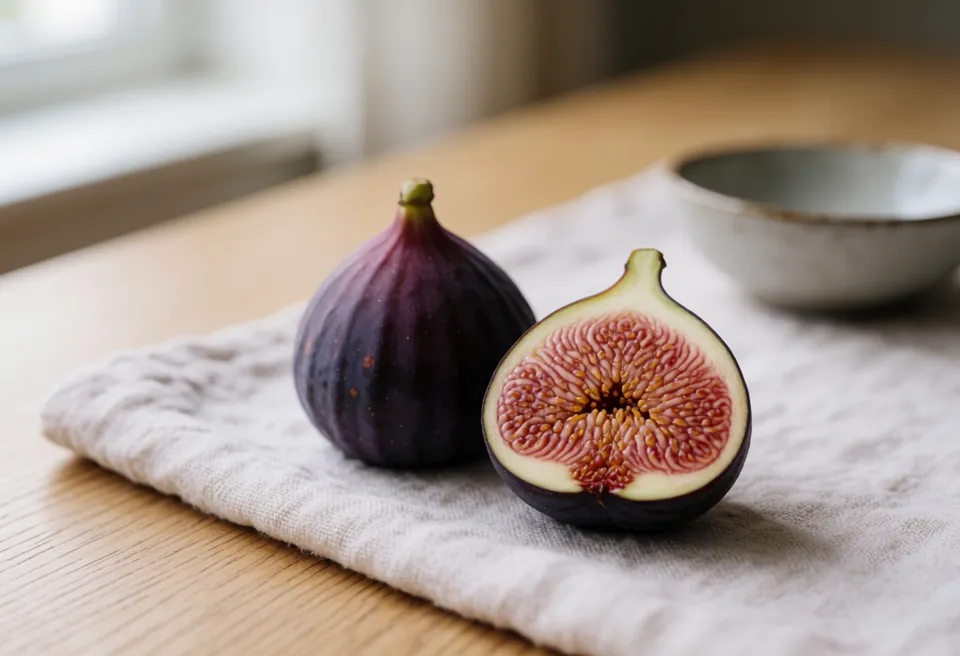

Fruit
Fig
A sweet fruit with soft flesh and tiny seeds, sold fresh or dried. Eaten on its own, or added to baked goods, cheese boards, and desserts.
74 kcal per 100 g
Nutrition per 100 g
74 kcal
| Protein | 0.8 g |
|---|---|
| Fat | 0.3 g |
| Carbs | 19.2 g |
| Fiber | 2.9 g |
Source: USDA FoodData Central, 2026-09-21. Per 100 g raw (per USDA FDC).
How many grams in a measure
Approximate weights of common measures. The exact figure depends on the product and how it is packed.
- 1 piece 50 g
Good to know: Fig
Look at a fig before you touch it. The skin should be tight but ready to give, like it's holding its breath. A split at the bottom, a bead of syrup pushing through — that's not spoilage, that's the fruit telling you it's done ripening and won't wait for you. Smell it. A ripe fig smells sweet and full. If it smells of nothing, put it back.
Some people say figs keep well: you can buy a box and forget about it. No! Leave a fig out and watch what happens. It slumps in on itself, the skin wrinkles like old paper, and the sweet smell turns sour and sharp. Touch it and your finger leaves a dent that doesn't spring back. This is why so many people throw out half a box and blame the seller; the fig was never built to wait.
Buy figs the day you plan to eat them, or the day before at most. Keep them cold, keep them apart, don't stack them. One fig weighs about fifty grams and carries real sweetness along with its soft, seedy flesh. Respect that, and eat it soon.
Questions and answers
How many grams of fig are in a 1 piece?
1 piece of fig weighs about 50 g.