
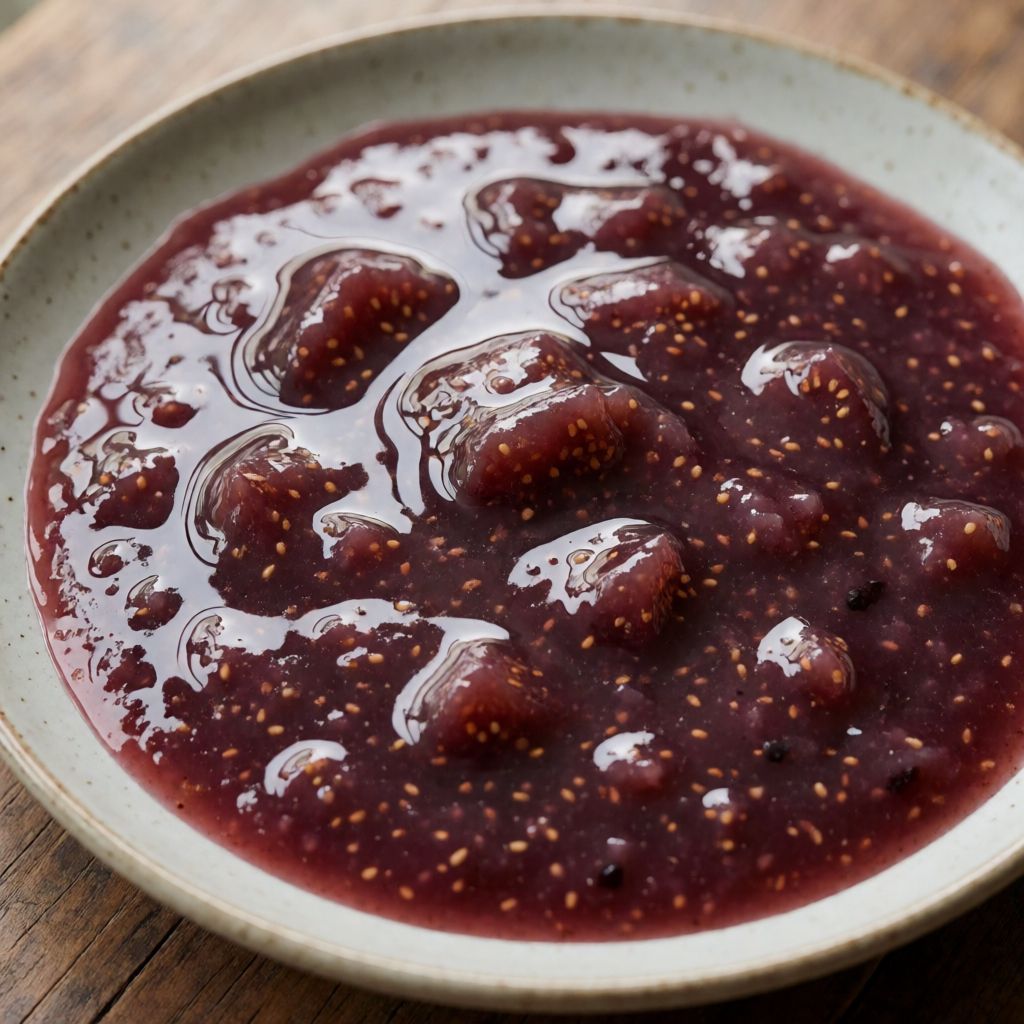
 AI photo
Fig Jam
A simple homemade jam of ripe figs, sugar and lemon juice.
Labels are worked out automatically from the ingredients and can be wrong. Check the packaging if it matters to you.
Ingredients
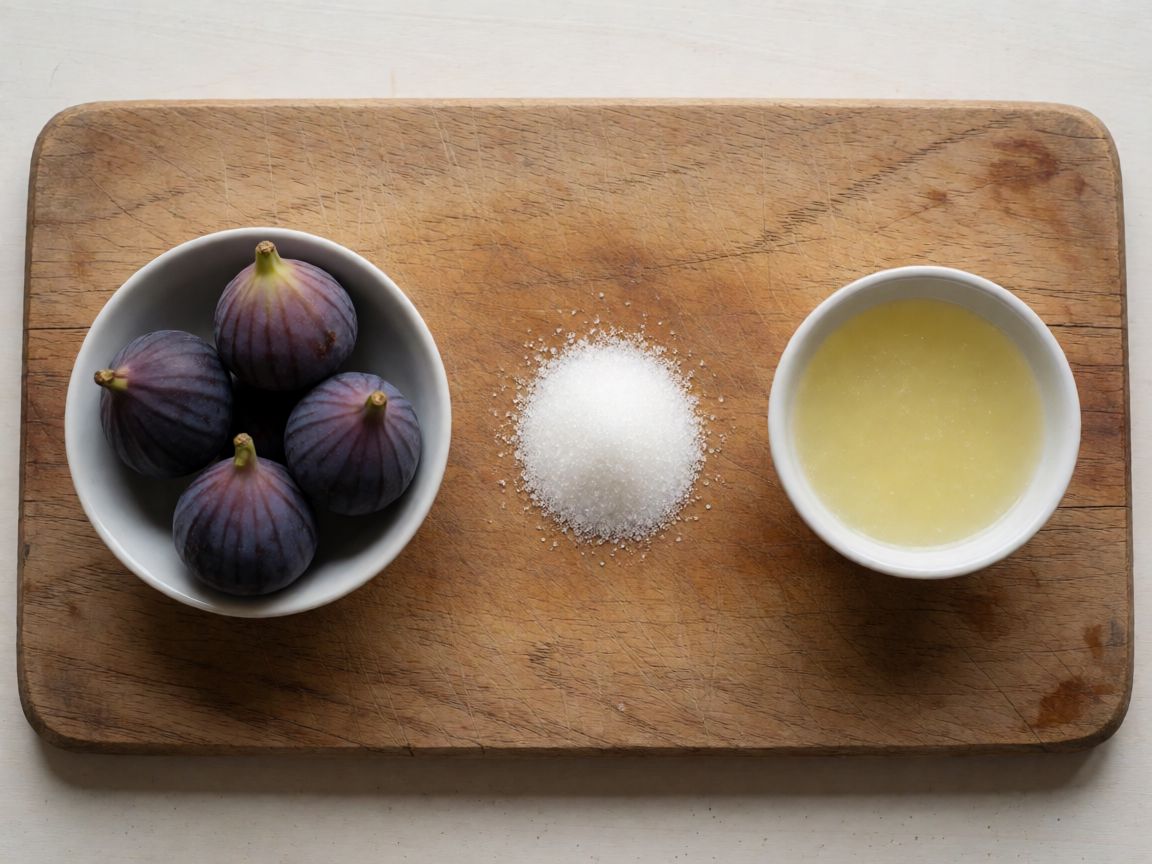
- 1 kg Figs
- 250 g Sugar
- 2 tbsp Lemon juice strained



Steps
Wash the figs, cut each one into quarters, remove the stem and pat dry with a paper towel.
Place the figs in a bowl, add the strained lemon juice, mix and leave to marinate for 45 minutes.
45 minSterilise the jars: put them in a pot of water, place a cloth between the jars, boil for 20 minutes, then add the lids and boil for another 10 minutes.
Let the water cool, remove the jars and let them dry completely.
Transfer the marinated figs to a saucepan, add the sugar, stir and place over low heat.
Cook the jam for 40-45 minutes, stirring gently from time to time.
45 minLadle the jam into the sterilised jars while still hot, close the jars and keep them upside down until completely cool.
Store the jars in a cool, dark place.
This isn't really cooking in the usual sense — it's water management. A fig is nearly 80% water held in a thin skin, and the whole recipe is a slow argument for getting rid of that water while keeping the flavour and the shape of the fruit intact. Sugar pulls water out by osmosis, heat drives it off as steam, and what's left behind thickens because fig flesh has enough natural pectin to set once the water's gone and the acid's there to help it grip. No pectin sachet, no setting point thermometer — just time and a ratio that's been worked out by people losing a batch or two.
What decides whether it works isn't the sugar, it's the heat and your nerve. Low heat here isn't a vague suggestion — it's there because figs have almost no acid of their own and very little structure once cut; crank the heat and the sugar on the outside of each piece caramelises and scorches onto the bottom of the pan before the inside has given up its water, and you get jam that tastes of burnt sugar with raw fruit floating in it. Slow and low lets the water leave gradually, so the sugar concentrates evenly instead of catching in patches.
Some say you need extra pectin or a fixed boiling point to get jam to set. No — that's true for low-pectin fruit cooked fast and sugar-light. Here you're doing the opposite: long reduction, enough acid from the lemon to help the pectin that's already in the fig do its job, and sugar at a ratio generous enough to preserve but not so heavy it drowns the fruit's own flavour. The jam sets because most of the water's gone, not because you hit a number.
Figs: buy them properly ripe — soft enough that a gentle squeeze gives, with the skin sometimes split slightly at the base. Under-ripe figs are what give you a jam that tastes flat and needs rescuing with more sugar than the recipe asks for; they're low in natural sugar and pectin both, because the fruit simply hasn't finished converting its starches yet. If all you can get are firm ones, you're not stuck, but expect a thinner set and a sharper taste — add a touch more lemon and let the cook run closer to the long end of the time given, watching for the syrup to go from loose and bright to glossy and slow off the spoon rather than trusting the clock.
Sugar: at 250g to a kilo of fruit, this is a light hand compared to classic full-sugar preserves (which often run closer to equal weight). That lower ratio is why this jam has more fig flavour and a shorter life in the cupboard — it's doing less of the heavy preserving work that very sweet jams do, so treat an open jar as a fridge thing, finished within a few weeks, not a shelf thing that survives a whole winter. If you want a firmer set and longer keeping, you can push sugar up toward 350–400g, but the jam will taste sweeter and less of itself.
Lemon juice: its job is acid, not lemon flavour. Any sour juice with no smell of its own does the same two things — stops browning on the cut fruit, and gives the pectin something to react with as the water cooks off. Strained is specified so you're not adding pulp or pips that change texture. Bottled lemon juice works fine here since you need the acid reliably more than you need fresh citrus character; a squeeze of lime is an honest substitute too.
On jars: in a British kitchen this will feel familiar — it's the same instinct behind Seville orange marmalade season, boiling jars and lids, filling hot, turning upside down. The upside-down step isn't superstition, it's checking your seal: as the jam cools, the air left in the headspace contracts, and if the lid has sealed properly you'll hear or see it pull down slightly, and no air bubble sits trapped against the cold glass where damp could collect and mould could start. Inverting also lets the hot jam itself sterilise the underside of the lid on contact — belt and braces, given a domestic hob doesn't give you the long sustained boil of proper canning equipment.
One honest limit of a flat kitchen: you likely don't have a wide shallow preserving pan, and a narrower saucepan means a deeper layer of fruit, slower evaporation, and more risk of the bottom catching while the top's still loose. Use the widest pan you own for this — more surface means the water leaves faster and more evenly, and you'll stir less out of anxiety and more out of habit.
From a kilo of fruit and 250g sugar you'll fill three to four small jars (roughly 200–250ml each), enough for a house that has toast most mornings and doesn't rush through it — six people get a few weeks of breakfasts and a cheeseboard addition besides, not a one-sitting pot. And treat the forty-five minutes of marinating and the forty-five of slow cooking as two separate bits of patience, not one long wait — the first is chemistry working quietly in a bowl, the second is you standing near the pan, which is where most of this jam's character actually gets decided.