
Fruit
Grape
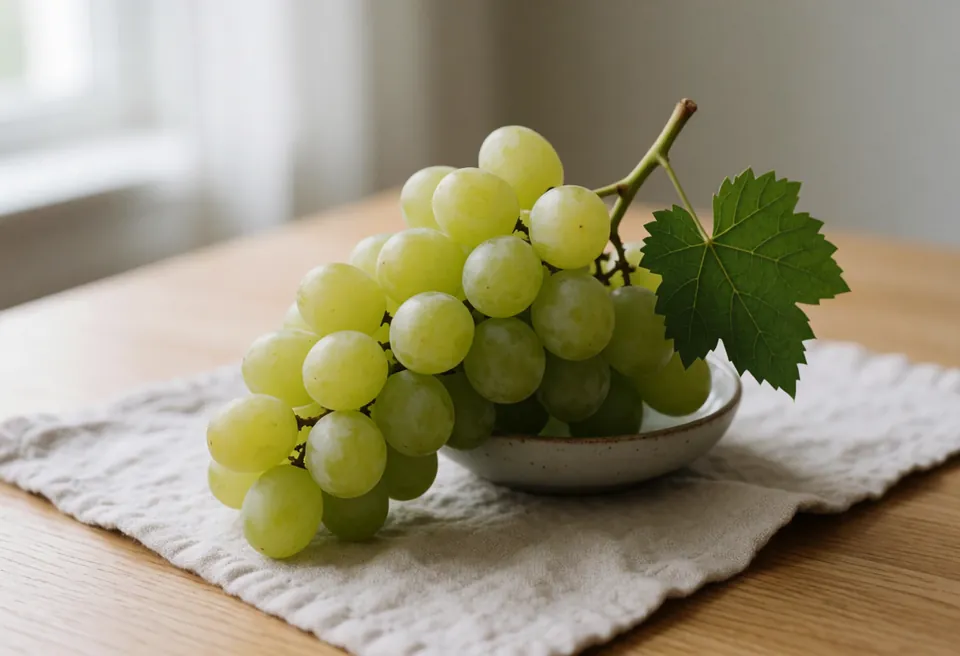
Grapes are sweet, juicy berries that grow in clusters. They're eaten fresh as a snack, added to salads and desserts, and used for wine and juice.
80 kcal per 100 g
Nutrition per 100 g
80 kcal
| Protein | 0.9 g |
|---|---|
| Fat | 0.2 g |
| Carbs | 18.6 g |
Source: USDA FoodData Central, 2026-09-21. Per 100 g raw (per USDA FDC).
Good to know: Grape
A grape is a berry, sweet and juicy, growing in clusters. Choose it by feel more than anything. Pick up the bunch and watch what falls — a good cluster holds its berries, nothing dropping the moment you lift it. Press a berry gently: it should be firm and plump, not soft under your thumb. Look at the skin near the stem — a little wrinkling there tells you the grape has sat too long. The stem itself should be green and bend without snapping, not brown and brittle. Bite into a fresh one and listen: it gives a clean little burst, not a squeeze. Smell the bunch too — it should smell clean and fruity, never musty or like it's starting to ferment.
Now the misconception. Some people see the pale, powdery film on dark grapes and think it's pesticide that needs scrubbing off fast. No. Rub it between your fingers — it feels waxy, not chalky or greasy, and it's just part of the grape's own skin. The mistake this fear leads to is washing grapes too hard, squeezing and rubbing under the tap until skins split and juice runs out before the fruit ever reaches your mouth. Wash gently, under running water, swirl the bunch, pat it dry, and leave it at that.