
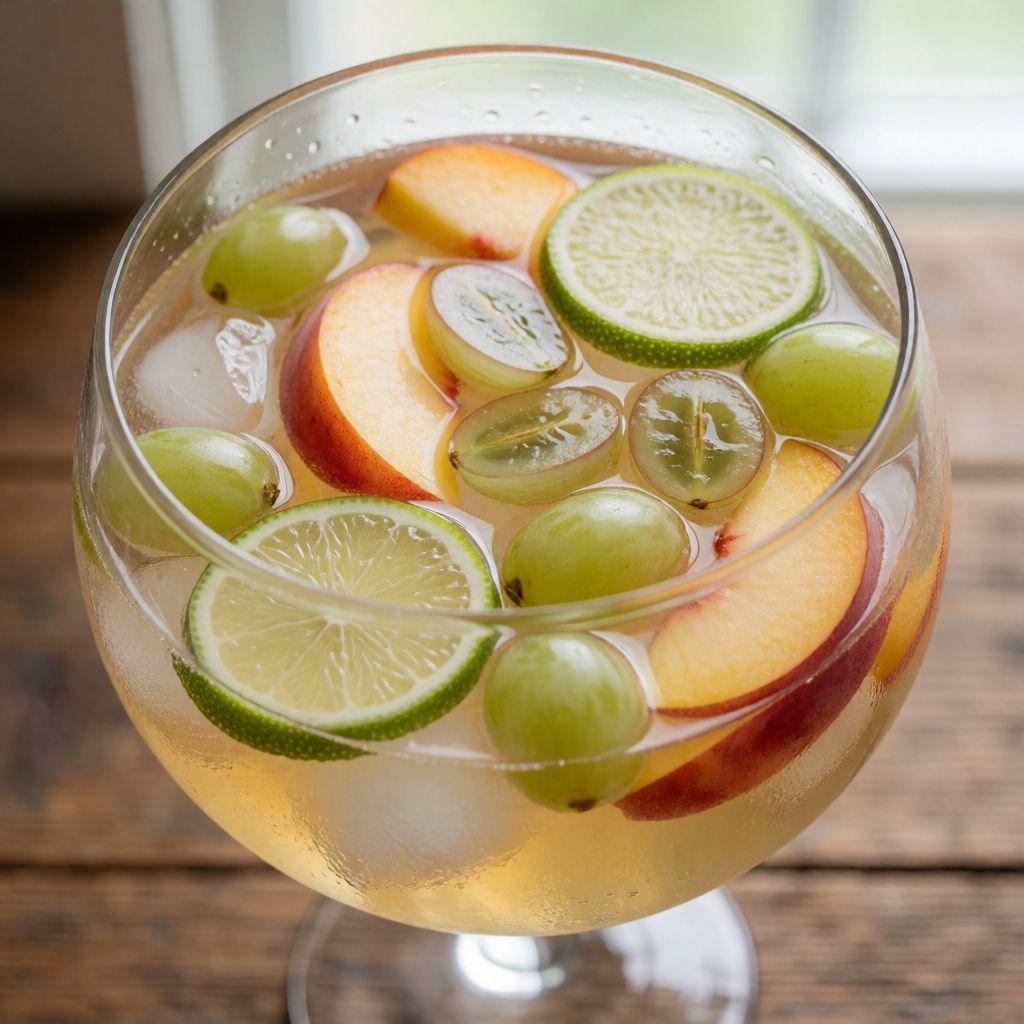
 AI photo
White Sangria
A refreshing white wine sangria with elderflower syrup, limoncello, fresh fruit and mint.
Labels are worked out automatically from the ingredients and can be wrong. Check the packaging if it matters to you.
Ingredients
- 750 ml White wine
- 100 ml Elderflower syrup
- 100 ml Limoncello
- 150 g Grapes frozen
- 1 pcs Nectarine sliced into wedges
- 1 pcs Lime organic, sliced
- 1 pcs Lemon organic, sliced
- 1 bunch Mint fresh
- Ice cubes to serve







Steps
Pour the white wine, elderflower syrup and limoncello into a jug and stir.
Add the fruit and mint to the jug along with the ice cubes and serve immediately.
White sangria isn't really a recipe, it's a formula: wine, something sweet, something stronger than wine, fruit, and cold — served before anything has had time to settle into something else. What decides if it works is the balance between sour (the wine), sweet (the syrup), and alcohol (the limoncello), plus how you keep the whole thing cold without drowning it.
The trick that makes this version taste sharper than the usual party-table sangria is the frozen grapes doing the job ice would otherwise do, but without ice's usual apology — melted water everywhere. Grapes hold their shape longer in a cold jug, and when they finally do soften, they give grape juice and sugar back to the drink instead of stripping flavour out of it the way a tray of ice always does.
Myth worth naming: that sangria has to sit for hours, fruit soaking in wine overnight in the fridge so the flavours "marry". Break it — this version is built to be drunk within minutes of being made, not steeped. The citrus fragrance here comes from the oil in the peel, released the second you slice lemon and lime, not from patient maceration. The patience in this drink isn't in waiting for it — it's in chilling the wine, the syrup and the limoncello properly beforehand, so you're not tempted to bury a warm bottle under a mountain of ice at the last minute. That's the real fix for the thin, watery sangria people complain about: not more ice, colder bottles.
Wine first, because everything else is built to sit on top of it, not fight it. You want something dry and properly acidic, with no strong personality of its own — a young Sauvignon Blanc, a Verdejo, a crisp English dry white all do the job. Avoid anything oaked or already sweet: the sugar is coming from the elderflower syrup and the limoncello, and a sweet base wine just pushes the whole jug into cloying. If the only white you have is a bit soft and flat, a squeeze more lemon in the jug corrects it faster than reaching for a different bottle.
Elderflower syrup is doing two jobs: sweetness, and a floral top note that a plain sugar syrup can't give you. It's a British cupboard staple for a reason — cheap, keeps for ages, used for cordial long before anyone put it in wine. If you don't have it, a light sugar syrup works for the sweetness alone, though you lose the floral lift; a spoon of honey dissolved in a little warm water is the next best stand-in.
Limoncello raises the alcohol slightly and sharpens the citrus already in the glass — it's concentrated lemon, not just flavouring, so it does more work than another lemon slice could. No limoncello in the house: vodka with lemon zest left to sit for twenty minutes gets you close enough, or simply more lemon and lime slices and accept a gentler drink.
Use organic lemon and lime if you can, and this isn't fussiness — you're slicing the peel straight into the jug, wax and spray included if the fruit isn't organic, and that peel oil is where a good share of the aroma comes from. The nectarine wants to be ripe enough to give a little under your thumb; a hard one contributes nothing but crunch.
Mint goes in bruised, not torn to shreds — a light press between your palms is enough to crack the leaf and release the oil. Chop it fine or leave it sitting too long in the wine and it turns bitter and a bit grassy, which is the actual reason recipes tell you to add herbs last.
The ice cubes are for the glass, not the jug — that's the whole point of using frozen grapes in the jug instead. Keep the dilution decision in the drinker's hand, glass by glass, rather than built into the batch from the start. A wide jug off the shelf is all you need; nobody's asking for a kazan here, just cold glass and a fridge that's actually been used in advance.