
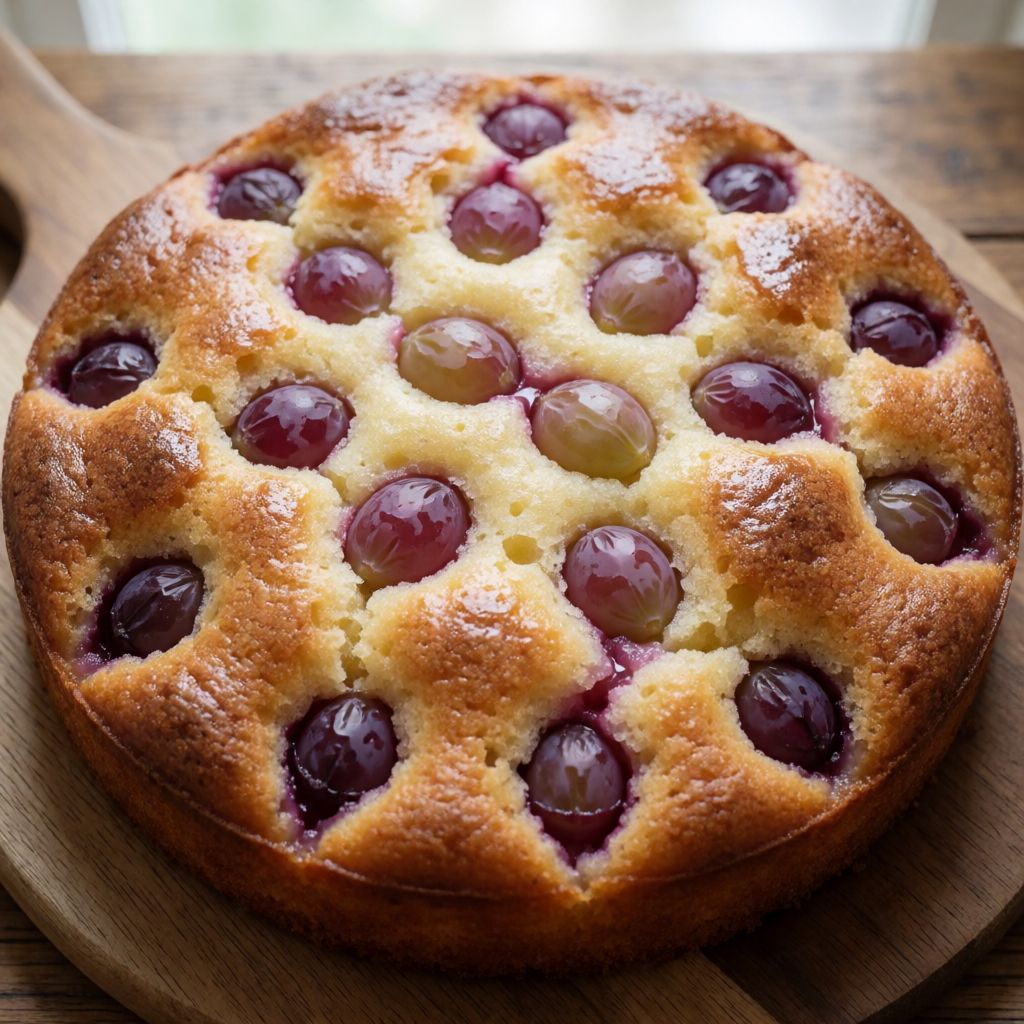
 AI photo
Grape Cake
A soft, buttery sponge studded with sweet grapes, a favourite home-baked treat.
Labels are worked out automatically from the ingredients and can be wrong. Check the packaging if it matters to you.
Ingredients
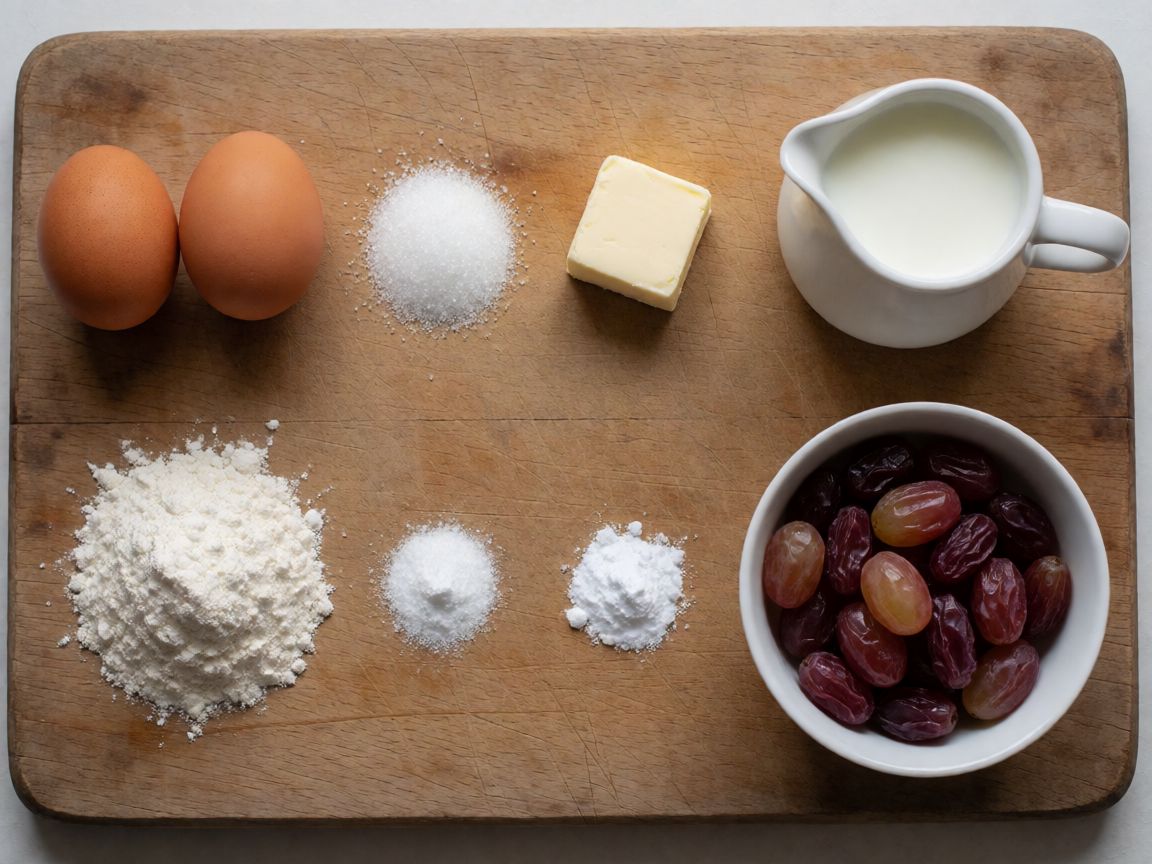
- 2 pcs Eggs
- 100 g Caster sugar
- 60 g Butter
- 200 ml Milk at room temperature
- 300 g Plain flour sifted
- 15 g Baking powder
- 450 g Grapes washed and dried







Steps
Crack the eggs into a bowl and beat with an electric mixer together with the sugar until pale and fluffy.
4 minAdd the melted, cooled butter and continue beating.
Mix in the milk, alternating with the sifted flour combined with the baking powder, a little at a time.
Stir the batter and fold in half of the washed, dried grapes.
Pour the batter into a tin, smooth the surface and decorate with the remaining grapes.
Bake the cake at 180°C for at least 50 minutes, checking for doneness.
50 minRemove from the oven, let it cool and serve.
What you're baking here is a butter cake that leans on two separate rising mechanisms stacked on top of each other, and understanding both tells you where it can go wrong. The eggs and sugar beaten for those four minutes aren't just "getting fluffy" for show — sugar crystals shred the egg proteins into a mesh that traps air, and that trapped air is your first lift, before the oven ever gets involved. The baking powder is your second lift, a chemical one, triggered properly only once the batter hits heat. Lose the egg foam by adding hot butter too soon, and you're relying on the baking powder alone — the cake will still rise, but dense and a bit rubbery, because air cells that collapse don't come back.
That's also why the butter is melted and cooled rather than creamed soft with the sugar, as you might expect from a Victoria sponge. Melted fat folds into an egg foam far more gently than solid fat ever could — a solid lump has to be beaten in, bruising the air bubbles as it goes. Melted fat just slides between them. The trade-off is a slightly closer, moister crumb than a creamed sponge — not a flaw, just a different structure, closer to a French-style batter than an English one.
On the grapes themselves: go for seedless, and smaller rather than large — a big grape is heavier than the batter around it and will sink to the bottom before the structure sets, giving you a soggy floor instead of fruit suspended through the crumb. That's also why half go into the batter and half sit on top: the buried ones cook through and burst, the ones on top catch direct heat, their skins tighten and blister a little, and you get two different textures from the same fruit in one slice. If all you've got is a seeded variety, halve them and pick the seeds out — tedious, but a seed hitting a tooth mid-slice is the kind of defect nobody forgives.
Worth saying where this dish actually comes from, because it isn't a special-occasion cake at all — it's a harvest cake. In grape-growing regions, early autumn brings a glut of table grapes before the wine grapes are even picked, and a batter cake is the quickest way to use up fruit that's starting to turn soft before it's wasted. There's no ceremony in it; it's a using-up dish, the grape equivalent of banana bread. Worth knowing so you don't feel obliged to treat it with more reverence than it was built for.
The eggs want to be at room temperature if you can manage it — cold eggs resist whipping into volume, the fat in the yolk stiffens slightly and the foam takes longer to form, so you'll beat longer for less air. If your kitchen is cold, a bowl sat in warm water for a few minutes before you start does the job.
Flour and baking powder, sifted and combined before they ever meet the wet mixture — this isn't fussiness, it's distribution. Baking powder sitting in one pocket of batter gives you one over-risen patch and three flat ones. Alternating the milk and flour mixture in gradually, rather than dumping either in at once, keeps the batter from seizing — too much flour added at once turns the gluten in it stiff and tight before the fat's had a chance to coat the strands, and you get a tough streak through the slice.
Butter — go for unsalted if you've a choice, since you're already dialling the sugar yourself and don't want to guess how salty someone else's butter is. In a pinch, any flavourless neutral oil will do the same mechanical job of sliding into the foam without bruising it, though you lose the faint dairy note in the crumb.
For the tin: an ordinary UK kitchen means a round 20cm cake tin, lined on the base with baking paper. Don't skip the lining — grapes that burst against bare metal leave sugar that caramelises hard onto the tin and glues the cake to it, and you'll tear the base getting it out. Let it cool properly in the tin before turning out — patience here isn't optional, it's what stops a soft, still-setting crumb from collapsing under its own weight the moment it loses its support. Slice once it's fully cool, with tea, milk in first if that's your way — the cake won't mind either order, even if some in this country have opinions about it.