
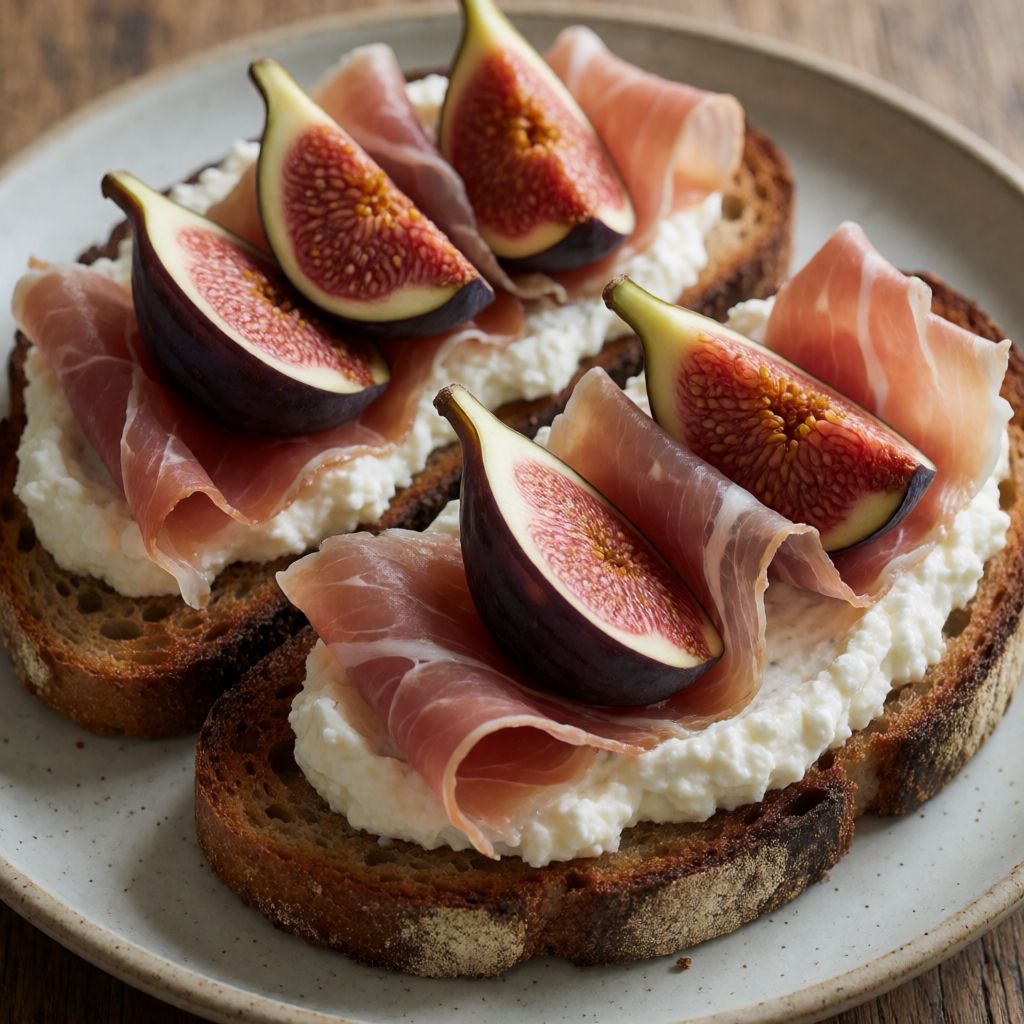
 AI photo
Fig and Prosciutto Bruschetta
A quick antipasto of toasted rye bread with goat's cheese, prosciutto and fresh figs.
Labels are worked out automatically from the ingredients and can be wrong. Check the packaging if it matters to you.
Ingredients
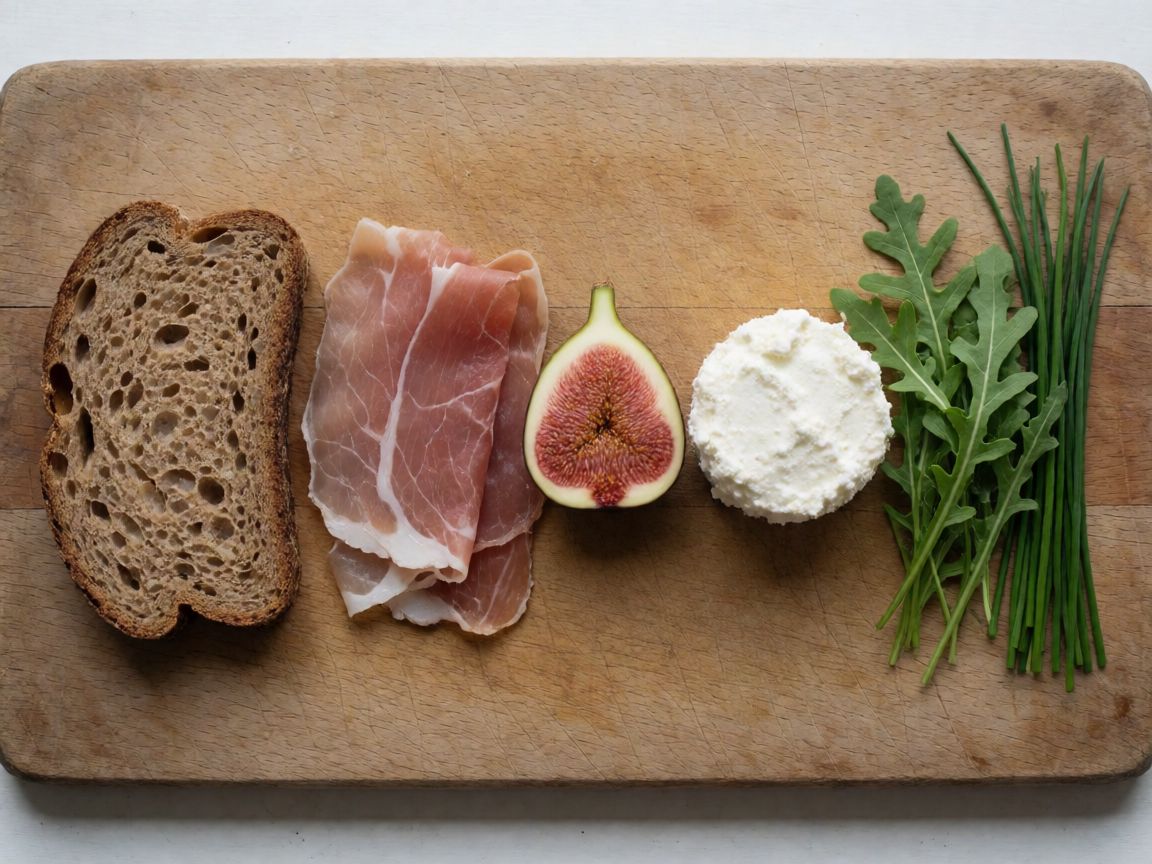
- 350 g Rye bread
- 8 pcs Prosciutto
- 2 pcs Figs
- 200 g Goat's cheese
- 1 bunch Rocket a few leaves
- 1 bunch Chives to taste






Steps
Cut the rye bread into slices about 1 cm thick.
Heat a wide frying pan and toast the bread slices on both sides until golden and crisp.
Wash the figs thoroughly and cut them into slices.
Spread a thin layer of goat's cheese on the toasted bread slices and season with finely chopped chives.
Place a slice of prosciutto on top of the cheese layer, add a fig slice and wrap with the remaining prosciutto.
Garnish each bruschetta with a few fresh rocket leaves.
Serve this appetising snack.
This isn't really cooking — it's assembly on a platform that's been cooked already. The only moment with real heat is toasting the bread; everything after that is placed, not fired. What decides whether the whole thing works is the balance of wet against dry: too much juice from the fig, too soft a smear of cheese, and the bread goes limp under the weight before anyone gets a bite. Too little colour on the toast, and there's nothing to stop the prosciutto's fat soaking straight through.
The crust on the rye isn't decoration, it's a dam. Rye crumb is dense and full of trapped moisture — nothing like a baguette, which is mostly air and crisps in seconds. Rye needs honest contact with a hot dry pan to drive the surface water out and seal it shut. That seal is what lets you stack cheese, ham and fruit on it and still have something to pick up at a party, rather than a biscuit gone soft. Some say any bread does for bruschetta — no, because an airy, open-crumbed loaf has no seal to give; it just drinks whatever you put on it and sags.
The prosciutto stays raw, draped at room temperature, never near the pan. The entire reason to use cured ham rather than, say, Sunday's leftover roast ham is that curing turns the fat soft and almost translucent over months — heat would melt that fat straight out and leave you with dry string. The fig, sliced thin rather than crushed, gives one clean burst of sweetness against the salt; the goat's cheese underneath is less a flavour statement than glue with an opinion — its sourness stops the ham's fat sitting heavy on the tongue.
Rye bread: look for a dense, close-crumbed loaf — a proper bakery rye or seeded sourdough, not the pre-sliced plastic-bagged "rye" that's mostly wheat flour and air pockets. Hold a slice to the light; if you can see daylight through big holes, it will go soggy under the toppings instead of sealing. No oil needed in the pan — the bread's own moisture does the crisping; a dry, honestly hot wide frying pan is your kazan substitute here, and the tell is smell and steam, not a clock: toast smell, not scorch smell, and steam easing off rather than still rising.
Prosciutto: in a British supermarket this sits under "Parma ham" — same idea, dry-cured, never cooked, sliced thin enough to drape rather than fold stiffly. The criterion for substitution is cure, not brand: any air-dried ham will do — speck, a good jamón, even bresaola at a push, though that last one changes the fat balance since it's leaner. What won't work is cooked ham from the Sunday roast leftovers in the fridge; it's a different animal entirely, boiled or baked rather than cured, and it has none of the soft, almost melting fat this dish depends on.
Figs: ripeness is the real variable, not the recipe step. A fig still green at the shoulder and firm under your thumb tastes of water and nothing else; you want one that gives slightly, maybe split a little at the base — that's sugar finally arrived. Fresh figs in the UK have a short window, roughly late summer into early autumn; outside it, soften dried figs in warm water for ten minutes, or use a ripe pear sliced thin as the sweet note — it won't have the jammy seed-crunch of a fig, but it won't let you down either.
Goat's cheese: you want one soft enough to spread cold straight from the fridge, with enough sourness to cut through the ham's fat — a fresh log-style chèvre, not an aged, crumbly one that falls apart rather than smearing. If goat's cheese isn't to your taste, cream cheese loosened with a little lemon juice gets you the spreadability and some of the tang, though you lose the particular sharp, slightly animal note that makes the pairing interesting rather than just pleasant.
Rocket and chives: both are there for contrast, not bulk, and both should go on raw and last. Rocket's bitterness is the counterweight to all that sweetness and salt sitting below it — add it only at serving, because warm toast underneath will wilt it within minutes and you lose the crunch that's its whole point. Chives give a mild onion edge without raw onion's sharpness, which would fight the fig rather than support it; chop them fine enough that they stick to the cheese layer instead of rolling off onto the plate.
On proportions: 350g of bread and eight slices of ham across eight people reads as one bite each — fine for a canapé course before a bigger meal, thin for a proper starter. If this is meant to carry a course on its own rather than open one, double the ham and cheese and buy a second loaf; the fig count can stay roughly the same since two good ripe figs, sliced thin, genuinely stretch further than people expect.