
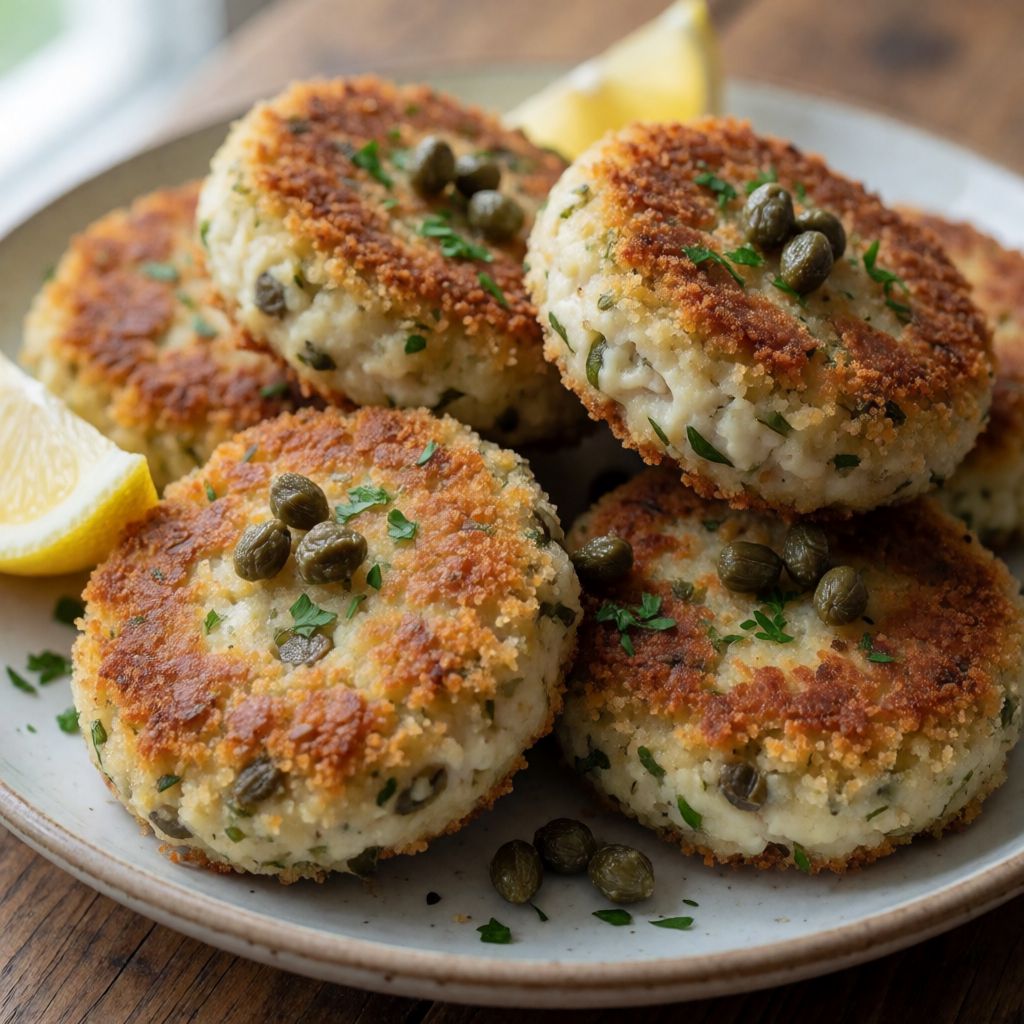
 AI photo
Tuna and Ricotta Fish Cakes
Crispy pan-fried fish cakes made with ricotta, tuna, Parmesan and a few punchy extras.
Labels are worked out automatically from the ingredients and can be wrong. Check the packaging if it matters to you.
Ingredients
- 200 g Ricotta
- 200 g Canned Tuna drained
- 50 g Parmesan grated
- 4 pcs Anchovies
- 10 g Capers
- 50 g Breadcrumbs
- 2 pcs Eggs
- Parsley to taste
- Salt to taste
- Groundnut Oil for frying








Steps
In a bowl, mix the ricotta, drained canned tuna, eggs and grated Parmesan.
Finely chop the capers, anchovies and parsley, then stir them into the main mixture; add the breadcrumbs and season with salt to taste.
Mix everything until you have a smooth, even mixture.
Shape the mixture into round patties, flattening them slightly, then coat them in breadcrumbs.
Heat the groundnut oil in a frying pan and fry the patties on both sides until golden and crisp.
10 minPlace the finished patties on a paper towel to drain excess oil, and serve hot.
What was changed
Grated bread was replaced with Breadcrumbs, a product British shoppers normally use for coating and binding.
Call these fish cakes and the Englishman in you goes looking for potato. There isn't any. This is a curd-and-tin construction — ricotta standing in for mash, canned tuna standing in for fresh fish — and once you see that, the whole dish makes sense: it's a frugal Italian kitchen idea, using what's already in the fridge next to the pasta shelf, not a seaside recipe at all.
What decides whether it holds together has nothing to do with the fish and everything to do with the egg. Ricotta and tinned tuna are both already "cooked" in the sense that matters — safe to eat cold, straight from the tub or tin. The only thing actually cooking in that pan is the egg protein, setting like a very thin custard around everything else, and the crumb on the outside, browning. So the pan's job is binding and crust, not cooking through. Misunderstand that and you either fry them too gently, hoping for doneness that was never coming, or you flip too soon and watch one fall apart — because the albumen hasn't had the heat to grab yet.
Some say fish cakes need potato to hold their shape. No — because what potato actually does is soak up moisture and give the mix dry starch to cling to, and ricotta plus internal breadcrumb does the same job here, just with a creamier result underneath the crust instead of a fluffy one. The breadcrumb inside the mix is there to drink up the ricotta's wetness before it hits the oil; the breadcrumb on the outside is a different job entirely — crust, colour, crunch. Don't confuse the two or wonder why the inside is still soft when the outside's gone dark.
Ricotta: the body of the whole thing. Buy the kind sold as a block or tub, drained, not the runny whey-heavy sort — if yours is wet, tip it into a sieve for ten minutes first, or you'll be fighting it with extra crumb later and the patty will taste of flour instead of cheese. No ricotta in the shop, cottage cheese blitzed smooth is close enough; it's blander, so lean a little harder on the parmesan and anchovy.
Canned tuna: drain it properly, press it in the tin or against a sieve, because any oil or brine left in there is water you don't control, and water you don't control is why patties spread flat in the pan instead of holding a dome. Tuna in oil gives a softer, richer crumb; tuna in brine is leaner and a touch drier, which actually helps the mix hold if your ricotta was on the wet side. Either way, flake it — don't leave chunks, or the patty shears along the seam when you bite it.
Parmesan does two jobs nobody mentions: it's salt and savour, yes, but it's also dry — grated hard cheese pulls moisture the same direction the breadcrumb does, and its proteins brown, helping the crust colour faster than it otherwise would. A hard aged pecorino works the same way and pushes saltier; if that's all you have, go easy on the added salt until you've tasted the raw mix.
Anchovies and capers are doing the seasoning that stock or bones would do in an actual fish stew — anchovy dissolves into savoury depth when chopped fine and worked through a warm-ish mix, rather than sitting as a visible fillet; capers cut back in with a small sour snap so the whole thing doesn't read as one flat rich note. If you don't eat anchovy, a scant teaspoon of fish sauce does the same chemical job — it's the same fermented-fish backbone, just from a bottle instead of a tin.
Eggs: this is your binder, full stop, and two per 400g of ricotta-and-tuna is a fair ratio — enough protein to set and hold, not so much that the mix turns custardy and never firms in the pan. If you're down to one egg, add a touch more breadcrumb to compensate for the lost hold.
Oil for frying: groundnut is picked for one reason — a high point before it smokes, and a smell of nothing, so it doesn't lay its own flavour over the anchovy and parmesan. Any refined oil with the same blank nose does the job — sunflower, a light (not extra virgin) olive oil. You want it shallow in the pan, maybe a centimetre, and you'll know it's ready the honest way: drop in one stray breadcrumb and it should fizz up at once, not sit there sulking. Too cool, and the patty drinks oil instead of searing — that's the actual cause of a greasy fish cake, not the amount of oil you poured in. Paper towel afterwards isn't tradition, it's just physics — pulling off what the crust didn't need to carry to the table.