
Meat & fish
Tuna
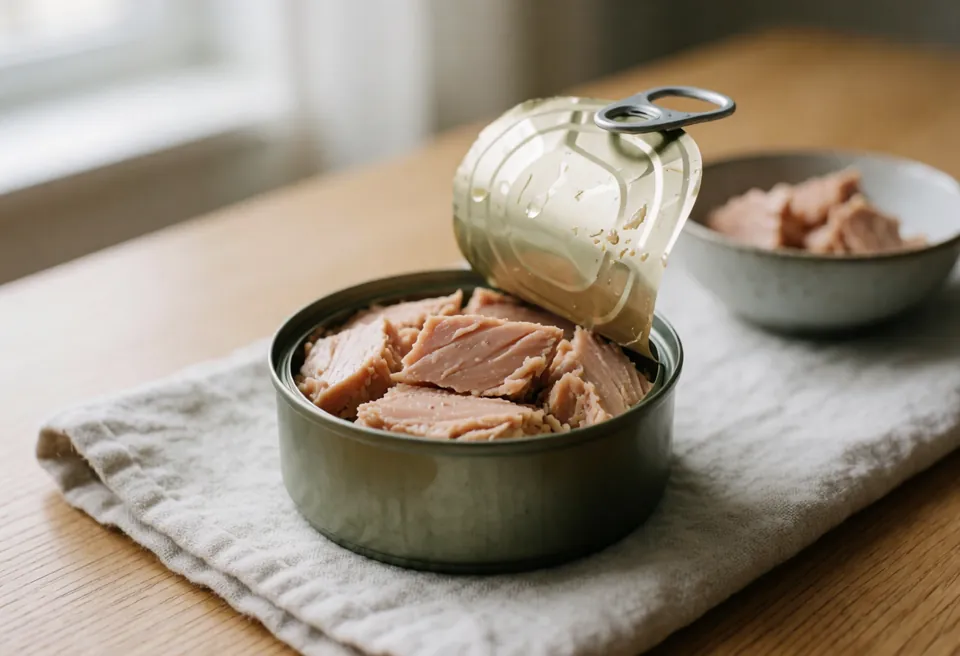
Tuna is a large saltwater fish with firm, dark pink flesh, often sold canned in oil or water. It is used in salads, sandwiches, and spreads.
90 kcal per 100 g
Nutrition per 100 g
90 kcal
| Protein | 19 g |
|---|---|
| Fat | 0.9 g |
| Carbs | 0.1 g |
Source: USDA FoodData Central, 2026-09-21. Per 100 g of product.
Good to know: Tuna
Let me tell you about tuna, and why it behaves nothing like the delicate white fish you might expect.
Tuna is a big, fast-swimming sea fish, and its flesh is dense and dark pink, almost like meat from a four-legged animal. That density is not a defect. It is the reason tuna holds together in a pan and on a grill, keeping its shape in a steak or a chunk, while cod or hake flake apart much sooner under heat.
Choose it by look and smell, nothing else. Fresh tuna should smell of the sea, not of fish — if it smells "fishy," walk away. The flesh should be deep pink or red, shiny, without brown edges or dull, grey patches. Canned tuna: judge it by the flesh, not the liquid. It should look firm and hold its shape, not fall into mush the moment you open the lid.
Now, some people say tuna is a light, lean fish, so you can cook it as long as you like, no harm done. No! One hundred grams gives you ninety kilocalories and nineteen grams of protein — that is a lot of protein packed into very little fat, and protein like that turns dry and stringy fast under heat. The mistake this leads to: people overcook tuna steaks until they are grey all through, dry as cardboard, when a few minutes with a pink center is all it needs.