
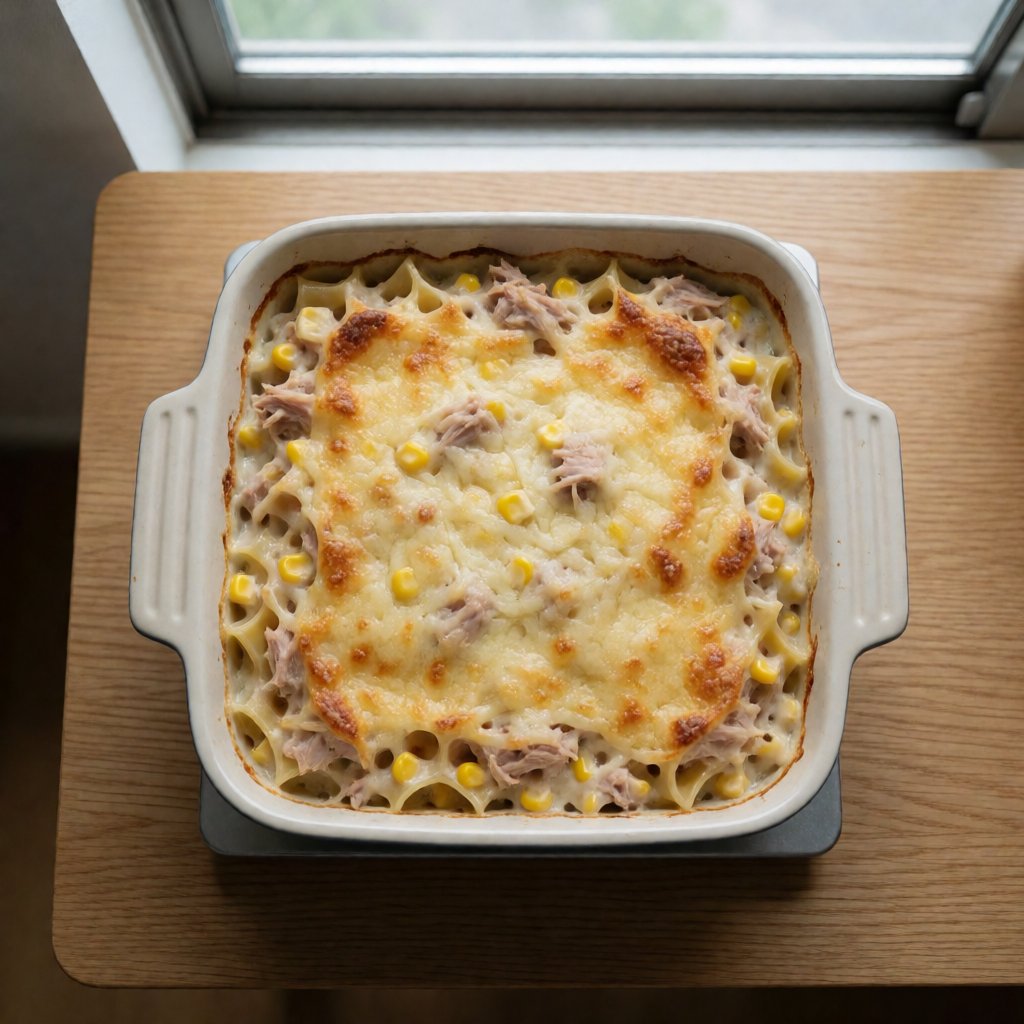
 AI photo
Tuna Pasta Bake
A quick, creamy baked pasta with tuna, sweetcorn and a golden cheese topping.
Labels are worked out automatically from the ingredients and can be wrong. Check the packaging if it matters to you.
Ingredients
- 140 g Pasta (penne or fusilli) dried
- 185 g Tuna in spring water
- 150 ml Single cream
- 3 tbsp Sweetcorn, tinned
- 50 g Mature cheddar grated
- 1 pinch Salt
- 1 pinch Black pepper







Steps
Cook the pasta for 2–3 minutes less than the pack instructions, then drain.
Mix with the tuna, sweetcorn, single cream, salt and pepper; transfer to a baking dish.
Sprinkle with cheddar.
Put the dish in the oven at 200°C for 15–20 minutes, until golden on top.
20 minTake the dish out of the oven.
What was changed
The recipe now uses Mature cheddar instead of generic hard cheese, matching what's in UK kitchens.
This is not really a pasta dish — it's a gratin that happens to use pasta instead of potato. Tinned tuna, cream and cheese, baked until the top goes from pale to gold. What decides whether it works has nothing to do with the tuna and everything to do with the pasta going into the oven slightly raw, and the cheese coming out properly browned, not just melted.
Cook the pasta two or three minutes short of done, and you're doing it on purpose — that undercooked core is a reservoir. In the oven it keeps absorbing the cream, swelling the rest of the way, so by the time the top is gold the inside is actually cooked, not stewed twice into paste. Cook it fully first and you lose that: it's already saturated, has nowhere to put the cream, and twenty more minutes at 200°C turns it to mush with a crust on top. Some say you should always cook pasta to the packet instructions before anything else happens to it — no, because here the oven is the second half of the cooking, not decoration.
The gold on top is the whole point of the cheese, not a side effect of it melting. Melted cheese is pale and wet; gold is the fat and protein in it actually browning, the same reaction that crusts a roast potato. That's your real doneness marker — not the clock, the colour. Fifteen minutes is the earliest it can plausibly happen in a normal oven; it's a floor, not a promise. Pull it at pale and you've got hot cheese sauce with a pretty idea of a crust.
This whole genre — tinned fish, cream, pasta or potato, oven — is British weeknight economics, not cuisine in the grand sense. Tinned tuna keeps for a year in the cupboard, cream and cheese keep a week in the fridge, and the oven does the work unattended while you deal with the rest of the evening. It sits at the opposite end of the week from a Sunday roast: the roast is the occasion, this is what you make on the Tuesday after, from things already in the house.
Buy tuna in spring water, not oil, and drain it properly — press it against the tin with the lid, don't just tip it. Oil-packed tuna adds a slick of fat on top of the cream that has nowhere to go in a short bake; it floats, it doesn't cook off, and you get an oily sheen rather than a sauce. Water-packed tuna brings almost nothing with it, so the cream stays the only liquid doing work, which is what you want when that liquid also has to be absorbed by half-cooked pasta.
Single cream, not double, and that's deliberate too, not a thrift measure. Single has less fat to begin with, so at 200°C for fifteen-plus minutes uncovered it reduces and thickens rather than splitting into oil and curd the way an overheated double cream can. If you've only got double, thin it with a splash of milk; if you've only got crème fraîche or natural yoghurt, use it, but expect a sharper sauce, not a creamier one — different acid, different result, not a straight swap in flavour even if it behaves the same in the dish.
Mature cheddar earns its place by flavour density: it's been aged long enough that a thin grating over the top carries real savouriness and salt, and it browns rather than just stretching, because it has less moisture than a young cheese to boil off first. A mild cheddar or a block of mozzarella will melt obediently and tell you nothing — pale, rubbery, flavourless. Any hard, aged cheese does the same job: a chunk of Parmesan, an old Gruyère, whatever's drying out a little at the back of the fridge is often better here than fresh.
Sweetcorn isn't filler. It's the one thing in the dish with sweetness and a bit of bite, sitting against cream that's rich and tuna that's soft — without it everything in the bowl has the same texture and the same flavour register, and it gets dull fast. Go easy on the salt and pepper: the tuna brine and the cheddar are both already salted, and a pinch each is there to round things off, not to season from zero.
And once it's out of the oven, leave it a couple of minutes before you dig in. The cream is still loose at the moment it comes out — hot, still moving. Standing lets the starch finish tightening it, so what you serve is a sauce that holds its shape on the spoon instead of a soup with pasta floating in it. That wait costs you nothing and fixes a problem you'd otherwise blame on the recipe.
·