
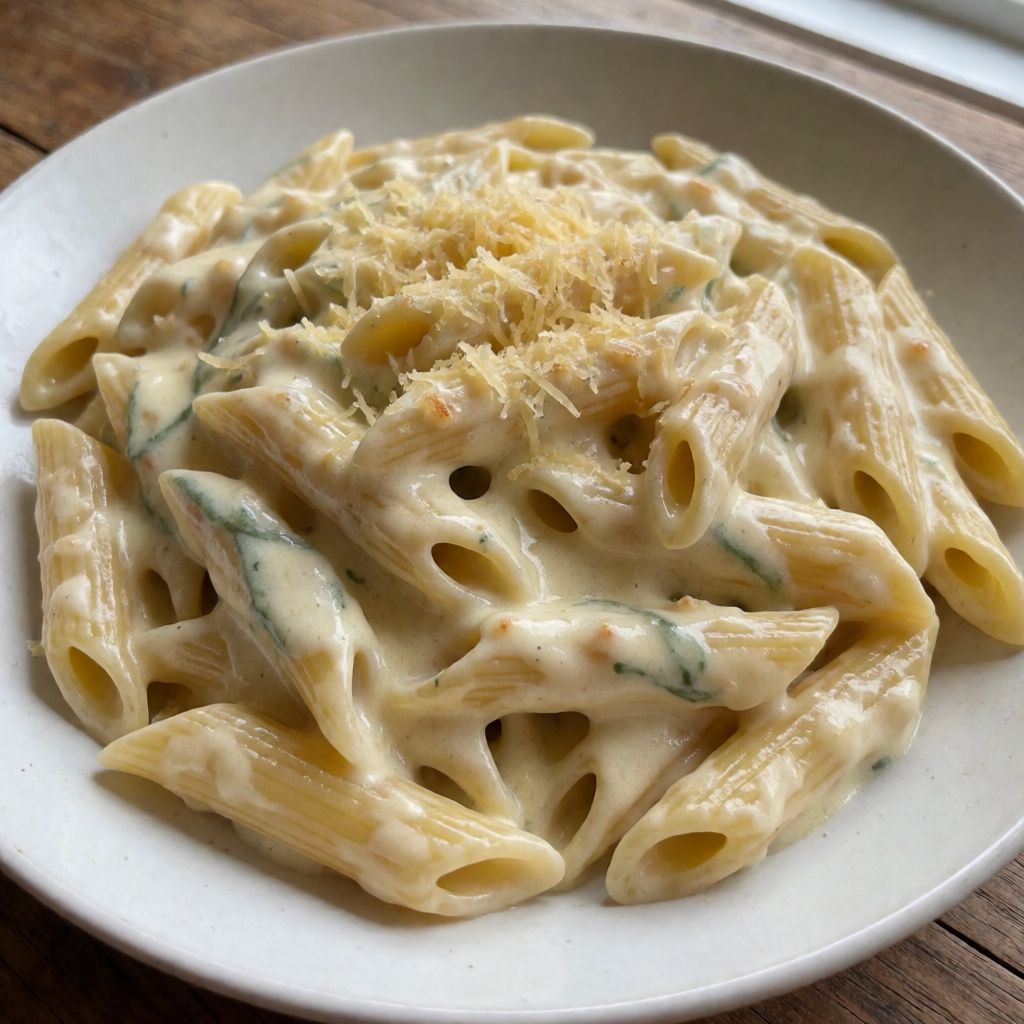
 AI photo
Four Cheese Pasta
A rich, creamy pasta dish made with four Italian cheeses melted into a smooth, velvety sauce.
Labels are worked out automatically from the ingredients and can be wrong. Check the packaging if it matters to you.
Ingredients
- 400 g Penne Rigate
- 200 ml Milk
- 30 g Butter
- 120 g Emmental grated
- 120 g Gorgonzola
- 100 g Parmesan grated
- 100 g Taleggio
- Black Pepper ground, to taste
- Salt to taste
- Nutmeg to taste









Steps
Bring a pot of water to the boil.
Cut the taleggio and gorgonzola into small cubes.
Once the water is boiling, add salt and the penne, and cook until al dente.
Put the gorgonzola and taleggio into a saucepan, add the milk, grated parmesan, butter and grated emmental.
Melt the cheeses over low heat, stirring, until you get a smooth, creamy sauce. Season to taste with salt and pepper.
Drain the cooked penne and combine it with the four-cheese sauce.
Mix everything together, coating the pasta evenly with the sauce. Serve on plates and sprinkle with nutmeg and black pepper.
Four cheese pasta is a fondue that forgot it was Swiss and wandered into Lombardy, picked up a wheel of taleggio and a chunk of gorgonzola, and decided pasta is a better vehicle than bread. Nothing sacred about it — it's a way northern Italian kitchens used up odds and ends of cheese too small to sell and too good to bin. Four cheeses, some milk, some butter, built into a sauce, then pasta tossed through it. That's the whole idea.
What decides whether it works is heat, and only heat. Cheese is not fat you're melting — it's a protein net holding fat and water inside it. Push that net too hot, too fast, and it squeezes, the way a sponge squeezes when wrung: out comes grease, out comes water, and what's left is rubbery clumps swimming in a thin, oily puddle. Some say any cheese "just melts" into sauce if you give it enough heat — no, because heat is exactly what breaks it. Low heat with constant stirring isn't caution for its own sake; it's the only thing standing between you and a split sauce.
The second thing that decides it is salt, and here people usually go wrong the other way — not too hot, too salty. Parmesan is dry and sharp with salt, gorgonzola is salty and ripe, taleggio carries its own washed-rind saltiness. Salt the pasta water as always, but taste the sauce before reaching for more — three of your four cheeses have already done that job for you.
Penne rigate earns its place by its ridges — they hold sauce on the outside, and the tube catches more inside, so every bite carries cheese, not just the first mouthful. Any short pasta with texture does the same job — rigatoni, fusilli, conchiglie. A smooth pasta like plain spaghetti just lets the sauce slide off onto the plate, which is why nobody serves quattro formaggi that way.
Milk and butter are not filler, they're the carrier — the fat and liquid that let cheese proteins stay loose instead of clumping together. Butter brings fat with almost no water, milk brings water with modest fat, and between the two the sauce gets body without the proteins seizing. Use whole milk here; the fat in it matters more than it does in your tea.
Emmental brings elasticity and a mild, nutty melt — the cheese that stretches and holds the sauce together structurally. Parmesan brings salt and a dry backbone, but it's the trickiest of the four: grate it fine, and remember it has almost no moisture of its own, so if the heat climbs, it's the first one to turn gritty on you.
Gorgonzola and taleggio are the soul of the dish — one sharp and blue-veined, one soft and washed-rind, slightly barnyard. They're also the most forgiving to melt, being naturally soft and high in fat. No taleggio? Any washed-rind or semi-soft melting cheese with some character meets the same criterion — fontina, for one. If gorgonzola is too loud for the table, a milder blue, or even a soft stracchino, quiets it down without breaking how the sauce comes together.
Nutmeg at the end isn't decoration, it's the same trick British kitchens already use on cauliflower cheese and in a good bechamel: a pinch cuts through milk-and-cheese richness so it doesn't sit flat on the tongue. Black pepper does the same job from the sharp end instead of the warm one.
One honest thing worth saying: this dish does not wait for you. The moment it's off the heat, the fat in four cheeses' worth of sauce starts setting again as it cools, and what poured like cream on the stove turns thick and clingy on a cold plate within minutes. Serve it the moment it's mixed, on warmed plates if you've got them — not for ceremony, but because the fat doesn't care about ceremony, only about temperature.