
 AI photo
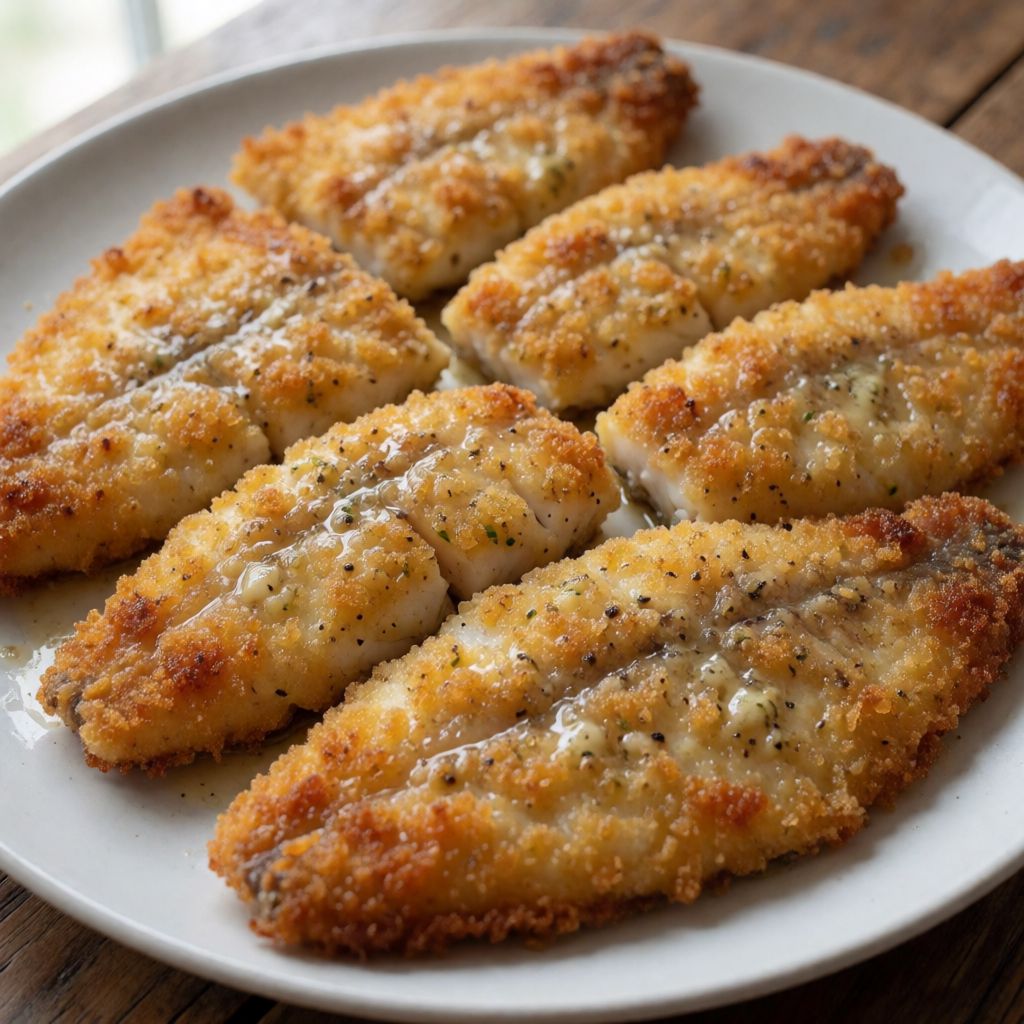
Fried Plaice with Parsley Sauce
A classic pan-fried plaice served with boiled potatoes and a creamy parsley sauce.
Labels are worked out automatically from the ingredients and can be wrong. Check the packaging if it matters to you.
Ingredients
- 4 pcs whole plaice whole
- 1 pcs egg beaten
- 200 ml rye flour
- salt to taste
- black pepper to taste
- 30 g butter
- 2 tbsp plain flour
- 500 ml milk
- 0.5 pcs lemon juice and zest
- 2 bunch parsley finely chopped
- 1 kg potatoes boiled











Steps
Rinse and carefully clean the plaice, then pat dry with paper towels.
Coat the plaice in the beaten egg, then in flour mixed with salt and pepper.
Let the plaice rest for 10 minutes so the coating sets.
10 minPut the potatoes in a pan with enough lightly salted cold water, bring to the boil and cook for 15–20 minutes.
20 minCheck the potatoes are tender, drain the water from the pan, keeping a little of the potato water for the sauce.
Melt the butter in a small saucepan and whisk in the flour to make a roux.
Gradually pour in the milk and the potato water, stirring, until the sauce reaches the desired consistency.
Simmer the sauce for a few minutes, stirring constantly, then season with lemon juice and lemon zest.
Serve the freshly fried plaice with the potatoes and parsley sauce, sprinkled with parsley on top.
Plaice is a flatfish — thin, delicate, over before you've finished reading the label on the butter. That thinness is the whole story here. You're not cooking a fillet so much as crisping a wafer of fish with bone still inside it, which means the window between "done" and "dry sawdust" is narrow, and the coating exists to protect what little moisture the fish has.
What decides whether this works is heat management in a flat where you've only got a hob, not a chef's range. Plaice goes in hot enough that the coating seizes and crisps in seconds rather than slowly absorbing oil like a sponge — that's the difference between fried and greasy. The rye flour coating isn't decoration: it browns faster and crisper than plain flour because it's got less gluten to go gummy, and it reads less "chip shop batter" and more "thin armour."
The parsley sauce is a béchamel wearing a disguise — butter and flour cooked together, loosened with milk, sharpened with lemon, greened with parsley. It's doing the job that a rich pan sauce would do for meat: plaice is mild, almost shy, and needs something with acid and fat to carry it. Some say a white fish needs nothing but butter and lemon — no, because plain butter runs off the plate before you've picked up your fork, while a sauce stays put and coats the potato too.
And the potatoes aren't a side thought squeezed in at the end — their cooking water goes straight into the sauce. That's not frugality dressed up as technique; that's where the sauce gets its body and a whisper of potato starch, instead of tasting like flour and milk and nothing else.
Start with the fish itself. Plaice is cheap for a reason: it's thin, bony by nature of being flat, and doesn't hold up to rough handling — which is exactly why it gets a crisp coat rather than a long cook. Pat it properly dry before coating; any surface water left on the skin turns to steam the moment it hits the hot fat, and steam pushes the coating off rather than letting it bond. That's the actual cause of coating that slides away in the pan — not "bad luck," just a wet fish going in.
The egg-then-flour order matters mechanically: egg is glue, flour is the thing that needs gluing. Beaten egg gives the dry flour something to grip; skip it and you get patchy, falling-off crumb. The 10-minute rest afterwards isn't padding the recipe out — it lets that coating actually set and dry slightly at the surface, so it doesn't just wash off into the pan as a slurry the second oil touches it. Patience here is doing real work, even though it looks like nothing's happening.
Rye flour over plain: rye has less gluten, so it doesn't form the same stretchy, bready crust — instead it crisps and shatters more like a cracker. If you've only got plain flour in the cupboard, use it; the fish will still cook fine, the coating will just be a touch softer and more "fried fish supper" than crisp. The criterion is: a flour low in gluten, for crispness over chew — rye, or a fine semolina, or even a light dusting of cornflour under the egg if you're pushed.
For the fat to fry in: anything that can take real heat without smoking or fighting the fish for flavour. Butter alone will burn before the fish is properly coloured — its milk solids scorch at a relatively low point — so if you're using butter for flavour, cut it with a neutral oil, sunflower or vegetable, anything with no smell of its own. That's a separate matter from the butter used in the sauce, which stays gentle because it's never pushed past a simmer.
The sauce is a roux-based white sauce, the same family as what goes over cauliflower or fish pie — butter and flour cooked together first so the flour's raw taste cooks out and it can thicken the milk without going lumpy or tasting of paste. Whisking in the milk gradually, not in one go, is what prevents lumps: cold or room-temperature milk added all at once to a hot roux seizes before it can disperse. The potato water stirred in afterwards isn't just stretching the sauce — it's carrying starch released from the boiling potatoes, which gives body you'd otherwise have to get from more flour, and flavour you'd otherwise have to get from stock.
Lemon juice and zest go in at the end, off or near-off the heat, because citrus acid can split a milk-based sauce if it hits it while it's still aggressively bubbling — add it once things have calmed to a simmer and it folds in instead of curdling. Zest for the oil and fragrance, juice for the actual sharpness that cuts the fattiness of butter and fried fish both. If lemon's not to hand, a small splash of white wine vinegar or even a spoon of capers will do the same acidic job, though you lose the citrus smell, which is most of lemon's charm here anyway.
Potatoes: plain boiled, the way you'd do them for a Sunday roast — a floury variety that holds its shape but goes tender rather than a waxy salad potato that stays firm and starch-poor. You want them tender enough to take the sauce and release decent starch into their cooking water; an undercooked potato gives you thin, flavourless sauce liquid and a bite that fights the fork. Parsley on top at the very end is fresh contrast, not seasoning — it should still be green and a bit sharp, not wilted into the sauce before serving.