
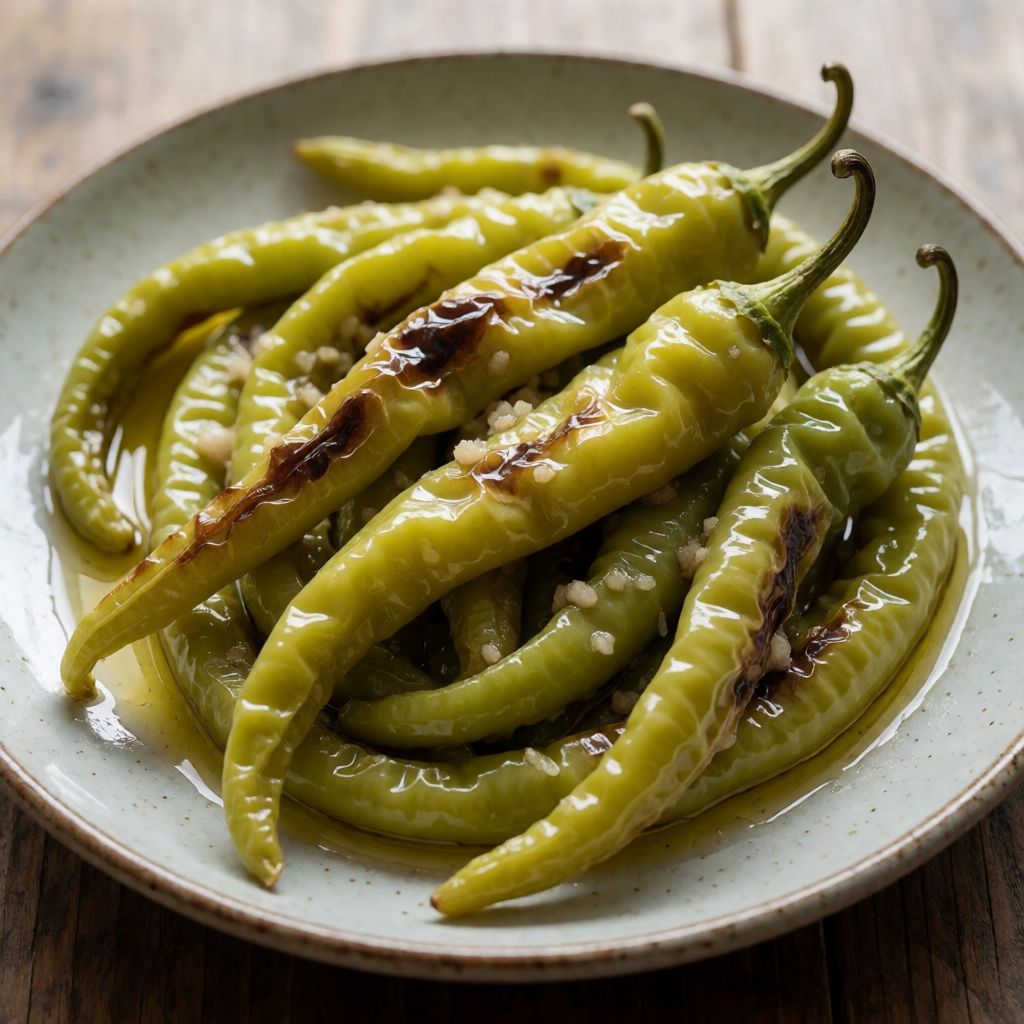
 AI photo
Pan-Fried Friggitelli Peppers
A simple side dish of Friggitelli peppers pan-fried with garlic and olive oil.
Labels are worked out automatically from the ingredients and can be wrong. Check the packaging if it matters to you.
Ingredients
- 500 g Friggitelli Peppers
- 1 clove Garlic unpeeled
- 3-4 tbsp Olive Oil
- 25 ml Water
- pinch Salt to taste




Steps
Rinse the Friggitelli peppers under running water, removing any dirt near the stalk, and pat dry with a paper towel.
Pour the olive oil into a frying pan, add the unpeeled garlic clove and sauté.
Add the Friggitelli peppers and cook over high heat, turning frequently.
Pour in the water, add a pinch of salt and cook with the lid on.
Simmer until the peppers are soft and slightly wilted.
13 minRemove the garlic clove, check the salt to taste and turn off the heat.
Friggitelli are small, pale-green, thin-walled peppers — the Italian word literally means "fryers," because frying is the only sensible thing to do with them. They're sweet, never hot, and the skin is thin enough that you don't peel or seed them: doing that would be fighting the vegetable's whole reason for existing. This is not a bell pepper in disguise, so don't treat it like one.
What decides this dish is the two-stage heat, not a clock. First you want real heat, hot enough that the skin blisters and goes dark and glossy in patches — that's surface browning, flavour building on the outside while the inside is still raw and firm. Then you pull the heat back, add the water, put the lid on: now it stops being a fry and becomes a steam inside its own skin. Skip that second stage and you get peppers charred outside, crunchy and faintly bitter inside — the beginner's mistake, where it looks finished and isn't.
Done is something you see: the skin goes from taut and shiny to wrinkled and matte, as if it's shrunk around something softer underneath, and a fork sinks in without a fight. If it still snaps, it isn't ready — lid back on, no mystery, no clock-watching.
It's a plain vegetable side — good next to a roast, or cold meats, or just with bread, because its job is to be the green, slightly charred, slightly sweet thing on the plate that cuts through something heavier.
Choose peppers that are firm, unblemished, pale green, with the stalk still green and not shrivelled — a soft spot near the stalk means rot's already started inside, and no amount of frying fixes that. If friggitelli aren't on the shelf, the substitution rule is: any pepper with a thin, tender skin and no real heat to it — young Spanish padrón, Turkish çarliston, or the long sweet "frying peppers" some UK supermarkets sell under that Turkish label. Don't reach for a bell pepper. Its walls are too thick; it will never wilt the way this dish needs, because the whole mechanism depends on skin and flesh being thin enough to cook through together, fast.
The garlic clove stays unpeeled on purpose. Peeled garlic dropped into hot oil scorches in under a minute and turns bitter — people blame this on time, "I left it too long," but the real cause is contact: bare garlic has nothing between it and the heat. The skin is the insulation. It lets the oil slowly pick up the aroma without the clove itself burning. You take it out at the end because its job was to flavour the fat, not to be eaten.
Olive oil matters here for the same reason the dish is Mediterranean in the first place: the oil isn't just a medium for heat, it's a flavour in its own right, and a little of its fruitiness is meant to show. If you want a neutral version, any oil with no smell of its own and a reasonable tolerance for brief high heat will do the frying job — but you'll have lost a bit of what makes this this dish, not just fried peppers.
The water is a small, deliberate amount — just enough to make steam under a lid, not to braise anything. That's the whole economics of this recipe: no stock, no wine, nothing that costs money or needs planning. Tap water does the steaming, because steaming is all that's needed once the skin's already blistered. Salt goes in with the water, not before, because salt pulled out too early by high heat drags moisture to the surface and gets in the way of browning; and you check it again at the end because the little water that's left reduces and concentrates, so a pinch can turn into plenty.
On a normal UK hob, be honest with yourself about what "high heat" means. A domestic ring is not a restaurant burner or an open flame under a kazan — your blistering stage will take a bit longer and look less dramatic, and that's fine, the same thing is still happening, just slower. A dinner plate set over the pan, or a sheet of foil pressed down, does exactly what a lid does: traps the steam in long enough for the inside of the pepper to catch up with the outside.
Patience is the real ingredient twice over here — once at the start, where you leave the peppers alone long enough in the oil to actually blister rather than just warm through from constant turning, and once at the end, where you resist cranking the heat back up to hurry the lid stage. Do that and you dry out the trapped steam before the flesh has softened, and you're back to charred and raw at once, which is the one failure this whole method exists to prevent.