
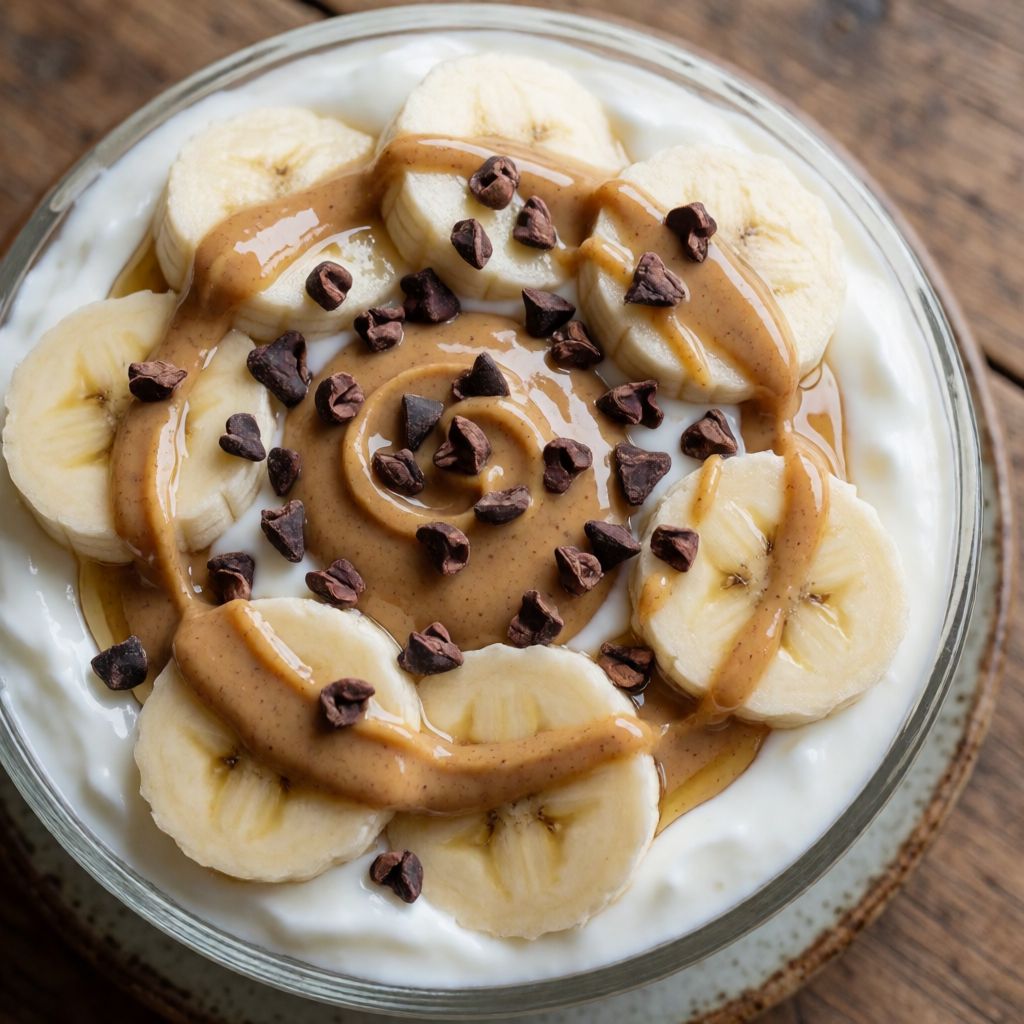
 AI photo
Fruit yogurt with banana, peanut butter and cacao nibs
A quick fruity yogurt dessert layered with peanut butter and crunchy cacao nibs.
Labels are worked out automatically from the ingredients and can be wrong. Check the packaging if it matters to you.
Ingredients
- 700 ml Yogurt Greek yogurt works well
- 0.5 tsp vanilla powder
- 1 pcs Banana ripe
- 1 tsp Honey optional
- 4 tsp Peanut butter
- 2 tsp crushed cacao nibs or finely chopped dark chocolate


Steps
Put the banana, yogurt and vanilla powder in a blender and blend thoroughly; add a teaspoon of honey to taste if you like.
2 minPut a teaspoon of peanut butter and a sprinkle of cacao nibs into each glass.
1 minSpoon the yogurt mixture on top and sprinkle with cacao nibs.
1 min
This is not a smoothie, though it starts like one — it's a parfait, built in layers meant for a spoon to break through, not a blender to grind into one grey-brown mush. Four glasses, four people, and what decides whether it works is restraint: the peanut butter and cacao nibs stay at the bottom and on top. Fold them in and you've made a milkshake with crumbs in it, not this.
The banana is doing the sweetening and the thickening both. Ripe means actually spotted and soft under a thumb, not merely yellow — a yellow banana can still be half starch. That starch is exactly why an underripe banana blended into yogurt turns thin and faintly chalky instead of creamy: ripening is the process that converts starch to sugar and softens the pectin holding the fruit together, and that softening is the body you're buying, not whipping air into it.
Some say low-fat yogurt is the sensible choice for a dessert like this. No — because fat is what carries flavour and coats the tongue, and strip it out and the yogurt's sourness has nothing to lean against, so you end up spooning in more honey to cover the gap. Pick a yogurt thick enough to hold a spoon upright for a second before it tips.
There's no heat anywhere in this, which makes it forgiving on a weeknight — the only clock running is the banana's, and that one you can't rush with a hob.
Greek-style strained yogurt is specified because straining removes whey and concentrates the protein and fat, so it holds its shape in the glass instead of pooling thin under a spoonful of peanut butter. Straining yogurt is old thrift, not a health-food trend — in places without reliable fridges, pulling out the water slowed spoilage and made the yogurt dense enough to keep a few days longer. If all you've got is ordinary yogurt, tip it into a clean tea towel over a sieve for twenty minutes before you start; you lose watery whey and gain the thickness this needs.
Vanilla powder is dried, ground vanilla pod — used here rather than extract because extract carries a thin, slightly boozy note that sits oddly on top of yogurt tang. A scraped pod does the same job if you have one; a bottle of pods is a real expense but one pod will see you through several batches. Extract works at a pinch — use half the amount, since it's sharper.
Peanut butter sitting at the bottom of the glass is doing two jobs: supplying fat, since the yogurt is already tangy and fat softens that, and giving the spoon something to find. Stir it into the blender instead and it vanishes into the mix — you taste neither banana nor peanut clearly, because flavours layered read stronger than flavours blended flat. The criterion for swapping it is simple: any nut butter with no added sugar or heavy salt. Almond or cashew work the same way; tahini if you want a more bitter edge than sweet.
Cacao nibs are the roasted, cracked cocoa bean, nothing added — crunchy and genuinely bitter in a way melted chocolate can't be, because melted chocolate has sugar and fat worked through it that softens the bite. That crunch against smooth yogurt is the one texture contrast in the whole dish, so don't skip it for convenience. Finely chopped dark chocolate, the given substitute, will do the job but goes soft quickly once it meets cold wet yogurt — nibs stay crisp longer, which matters if this sits ten minutes before anyone eats it.
Honey is marked optional because a properly ripe banana should already carry enough sugar on its own; taste before you tip it in, since reaching for honey out of habit rather than by taste is how a light pudding turns cloying. If you want something closer to the sweetness of milky tea rather than floral honey, golden syrup or maple does the same job — it's liquid sugar, nothing structural.
No cooking step means no pan, no need to argue about a kazan — just a blender and a fridge. But patience still earns its place: in the banana left on the counter a day or two past merely ripe, and in chilling the glasses for ten minutes before you spoon the yogurt in, so it doesn't warm through the moment it touches the glass. Any UK fridge runs cold enough for that — use it.