
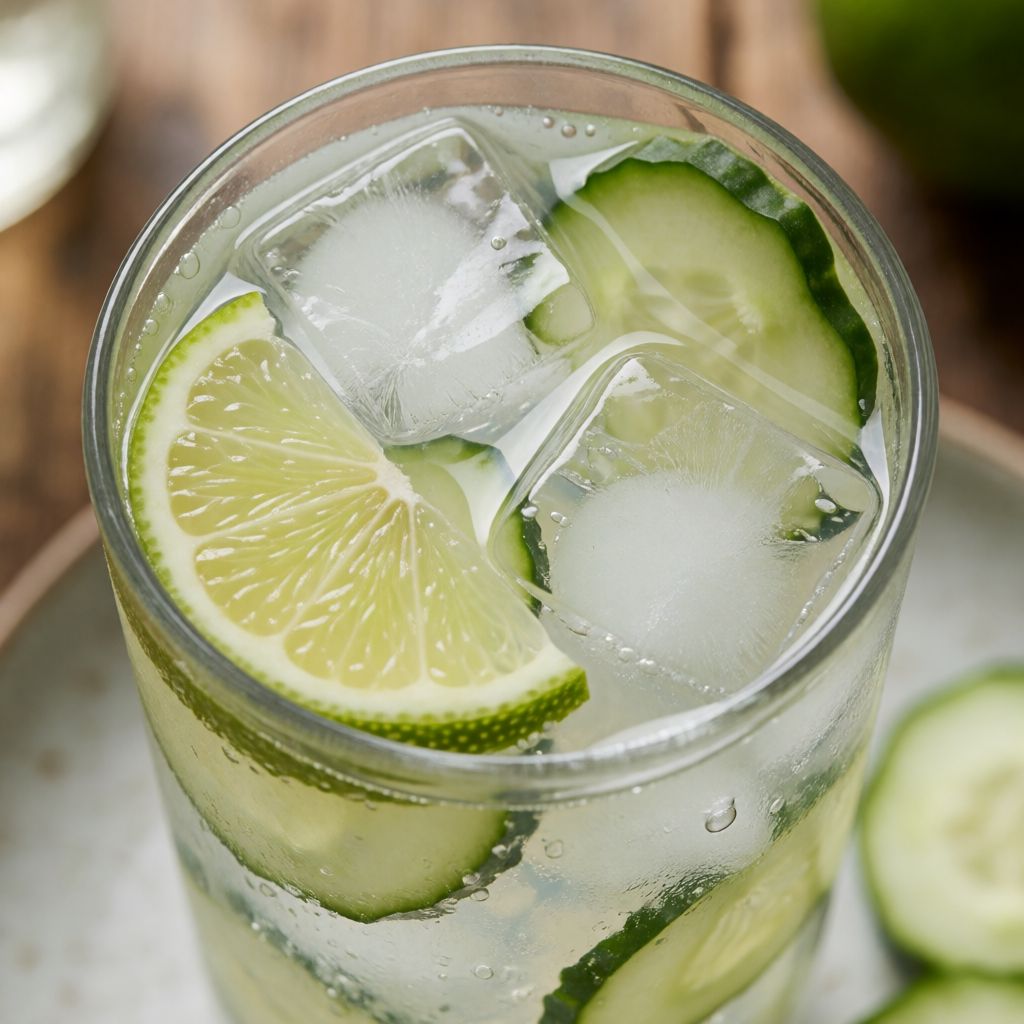
 AI photo
Gin and Tonic
A classic gin and tonic, garnished with cucumber and lime, served over plenty of ice.
Labels are worked out automatically from the ingredients and can be wrong. Check the packaging if it matters to you.
Ingredients
- 50 ml Gin
- 100 ml Tonic Water
- 2 pcs Cucumber Slices
- 0.25 pcs Lime a quarter, cut into wedges
- Ice Cubes plenty

Steps
Pour the gin and tonic into a glass and stir, then add plenty of ice cubes.
2 minAdd a few cucumber slices and the lime to the glass, then serve.
3 min
A gin and tonic is not really a drink you build — it's a controlled collision between two kinds of bitter. The gin brings juniper and whatever else the distiller threw in; the tonic brings quinine, dressed up in sugar so it doesn't taste like medicine, which is exactly what it started life as. Cold is what keeps the two from fighting too hard. Warm the glass up and the quinine gets sharper, the juniper gets oilier, and what felt balanced at the first sip turns bitter and flat by the third.
What decides whether it works isn't the brand of gin on the label, it's three plain things: how much ice you actually use, how fast you pour, and whether the tonic still has its fizz when it hits your mouth. Skimp on ice and the drink warms, which melts the ice faster still — a small amount of ice in a warm drink disappears quicker than a lot of ice in a cold one, it's not a straight trade-off, it's a loop that runs away from you. So the instinct to go easy on ice "so it doesn't get watered down" does the opposite of what people think.
Some say stirring kills the bubbles — no, time and warmth kill the bubbles, stirring is nearly incidental. One brisk stir to marry the gin and tonic before the ice goes in does nothing to the carbonation worth worrying about. What does the damage is a drink left standing, or poured down the inside of the glass so gently it takes thirty seconds, by which point half the fizz has already walked out the door.
Start with the gin, because everything else is tuned against it. There's no single correct style — London dry is driest and most juniper-forward, other gins lean citrus or floral — and the only real test is whether you'd want a small neat sip of it on its own. If you wouldn't, the tonic won't save it, it'll just dilute the parts you didn't like in the first place. There's no honest substitute for gin in a gin and tonic; pour vodka instead and you've made a vodka and tonic, a different, blander drink, not a cheaper version of this one.
Tonic water is where people get caught out, because not all tonic is the same product wearing different labels. Proper tonic carries real quinine bitterness underneath the sugar; the cheapest supermarket tonics are mostly sugar water with a whisper of bitterness added for the memory of it. Taste it on its own before you commit a bottle of good gin to it. The 50:100 ratio here, one part gin to two parts tonic, is a reasonable middle ground — push it to one-and-a-half parts tonic if you want the gin to carry more weight, or more tonic still if you want something lighter and longer. There's no fixed law, only what your palate wants that evening.
Ice is the one ingredient people treat as free and endless, and it's the one that decides the texture of the drink. Use the biggest cubes your freezer tray gives you — standard UK trays tend toward small cubes, which melt faster simply because there's more surface relative to the mass of ice. If that's all you've got, fill the glass properly anyway rather than going light; a glass packed with small ice still outlasts a glass with three cubes rattling around in it. Crushed ice, if that's the only option, will dilute the drink noticeably faster — fine, but then drink it a bit quicker too, there's no fighting that physics.
Cucumber slices are a relatively modern addition to this drink, popularised alongside certain gins built with cucumber and rose in the botanical mix; with a classic juniper-heavy gin they're pleasant but add little. If you haven't any, a sprig of mint does a similar cooling job, or leave it out entirely — the drink doesn't collapse without it.
The lime wedge matters more than the cucumber because it's doing actual work: the acid cuts the sweetness tonic is built with, and tonic is sweetened specifically because quinine on its own is nearly undrinkable. That's the whole history of this drink in one sentence — quinine was issued to the British in India as an anti-malarial, someone sweetened it to get it down, and then someone else had the sense to pour gin into it. Nothing mystical, just people trying to make a bitter drug tolerable, and inventing a classic by accident.
Last thing, and it costs nothing: give it a moment after you pour, don't drink it the second the tonic stops fizzing on the surface. A few seconds lets the cold settle through evenly instead of sitting coldest at the rim and lukewarm at the bottom. Patience here is small, but it's still the ingredient that separates a drink you built from one you just assembled.