
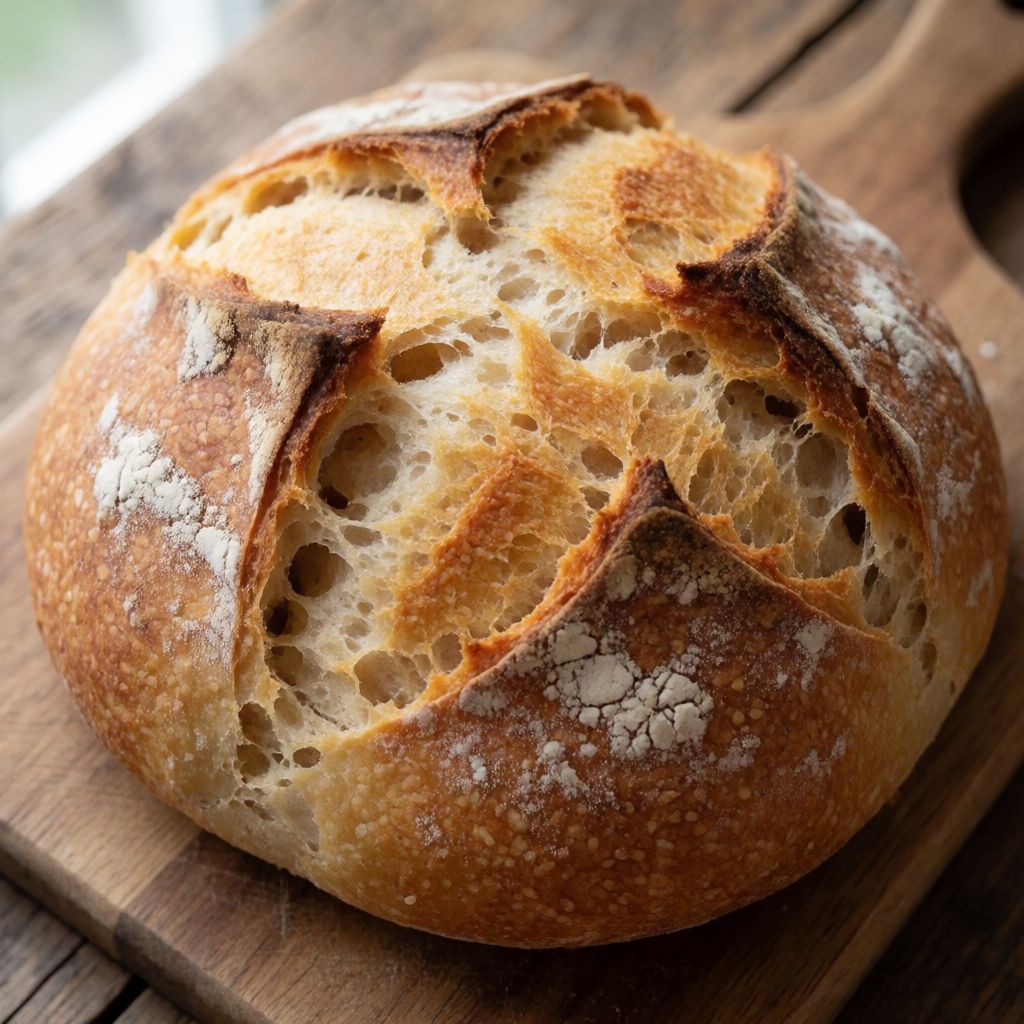
 AI photo
No-Knead Gluten-Free Bread
A simple no-knead gluten-free loaf that rises twice and bakes in a covered pot for a crisp crust.
Labels are worked out automatically from the ingredients and can be wrong. Check the packaging if it matters to you.
Ingredients
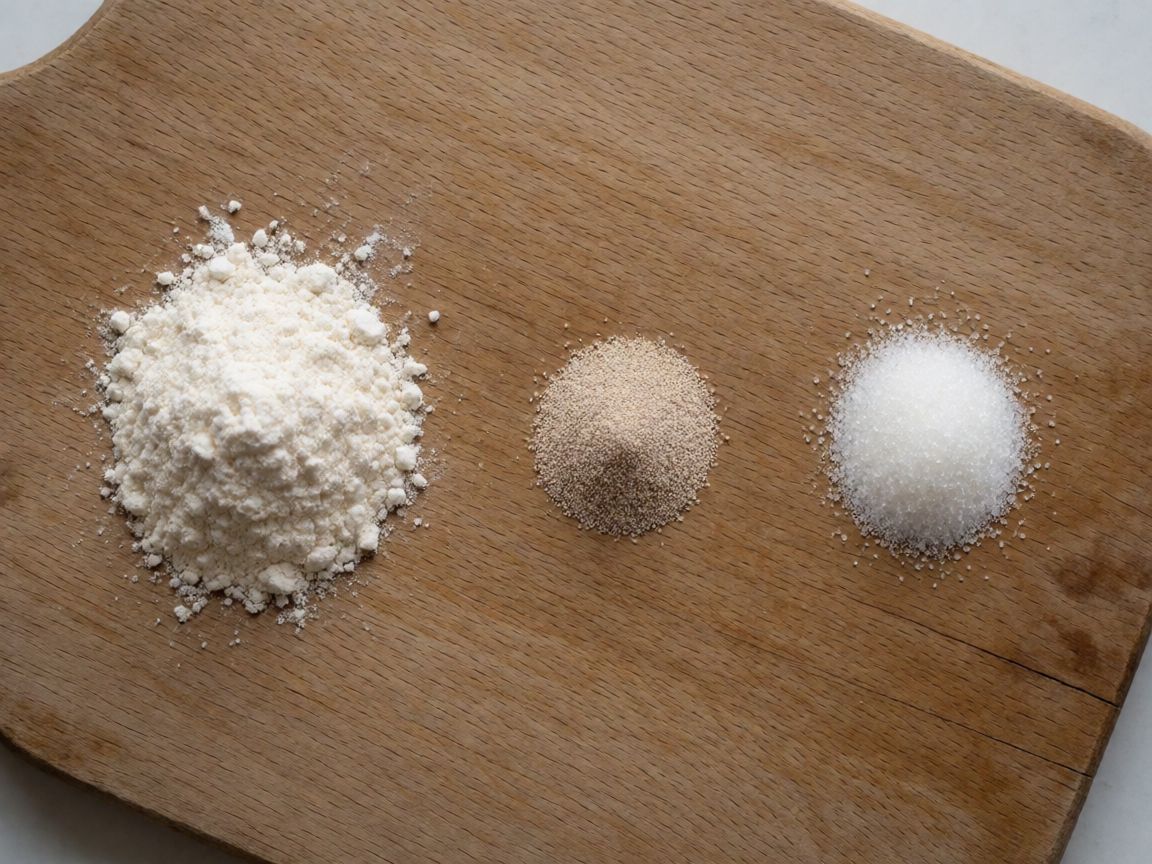
- 450 g gluten-free flour mix
- 300 ml water
- 4 g fresh yeast or 1.5 g dried yeast
- 0.5 tsp salt
- 0.5 tsp sugar




Steps
Pour the water into a large bowl, dissolve the yeast in it, then add the sugar.
Gradually stir in the flour mix with a wooden spoon, add the salt, and mix until smooth.
Cover the bowl with cling film and leave to rise at room temperature.
Dust the work surface with flour, turn out the dough, and do a few strengthening folds.
Transfer the dough to a tea towel dusted with flour, seam-side down, and cover with the towel.
Leave the dough to rise.
120 minPreheat the oven to 230°C and place a lidded casserole dish or Dutch oven inside to heat.
30 minRemove the hot dish, turn the dough into it, and return to the oven covered with the lid.
30 minReduce the temperature to 210°C and bake until golden.
20 minLet the bread cool completely before slicing.
This is yeast bread built for a dough that has no gluten to hold it together — most gluten-free flour mixes are blends of starches and gums standing in for the elastic network wheat gives you for free. That's why nobody kneads it: there's no gluten strand to stretch or develop, so working it longer just knocks the air back out for nothing. Some say real bread needs ten minutes of kneading — no, because kneading is a gluten trick, and gluten isn't in the room here.
What decides whether this loaf turns into bread and not a flat, damp brick is two things: how wet the dough is, and how well you trap steam in the first part of baking. The water-to-flour ratio here is high — closer to a thick batter than a wheat dough — because gluten-free starches drink water differently and need the extra moisture to gelatinise properly in the oven, giving you a crumb instead of chalk. The hot lidded pot does the other job: it holds the dough's own steam against the crust long enough for the loaf to push upward and outward before the crust sets hard. Skip the lid and the surface skins over in the first two minutes of heat, and the bread simply can't rise — it bakes into the shape it went in at.
The flour mix is doing the job gluten normally does, so don't choose it by brand loyalty — choose it by what's in the bag. You want a blend that already combines a starch (rice, tapioca, potato) with a gum or husk (xanthan, guar, psyllium) that gives the dough some stretch and lets it hold gas bubbles. Plain rice flour alone, with nothing binding it, will give you a crumbly loaf no amount of folding fixes — the fix has to be in the bag before the water goes in. If your mix doesn't list a gum on the label, add a small spoon of psyllium husk or xanthan yourself; that's the substitution, not a brand swap.
Water here is nearly two-thirds the weight of the flour, which looks like a lot next to a wheat loaf, and it should. Gluten-free starches need more liquid to gelatinise fully in the heat of the oven — too little water and the crumb stays dry and sandy no matter how long you bake it; too much and the dough won't hold a dome on the towel at all, it just spreads. Three hundred millilitres to four hundred and fifty grams is the working balance for most shop mixes — if yours drinks differently, you'll feel it: the dough should be loose, sticky, pourable off a spoon but not liquid.
Yeast is just the gas-maker, and fresh or dried both work — the swap is roughly a third the weight in dried for fresh, which is why the recipe gives four grams fresh against one and a half dried. Dissolve it in the water before anything else touches it, because yeast works faster in a liquid than fighting through dry flour, and the sugar that follows is there to feed it a quick meal so the rise starts promptly rather than waking up slowly.
Salt does two jobs at once: it's flavour, obviously, since a loaf with none tastes flat under any amount of good crust; but it also slows the yeast down a touch, which matters more here than in wheat bread, because a gluten-free dough overproofs and collapses faster — there's no elastic gluten net to catch it if it goes too far, just the gums doing their best. Half a teaspoon is a light hand on purpose.
On the pot: a heavy lidded casserole dish does exactly what a clay pot or kazan does in other traditions, and for the same economic reason — a thick-walled vessel holds heat evenly and traps the loaf's own steam, so you don't need a steam-injection oven, which no ordinary flat has anyway. If you haven't got a Dutch oven, any oven-safe pot with a lid that seals reasonably well works — even a large ovenproof bowl turned upside down over a tray will trap enough steam to matter. The point isn't the brand of pot, it's the lid doing the job a professional oven's steam function would otherwise do.
The oven drop from 230°C to 210°C isn't arbitrary — the first blast is what gives you the rise, forcing steam and gas outward fast before the crust can set; the second, lower heat is for finishing the inside without the crust burning while it waits for the centre to catch up. And once it's out, let it go properly cold on a rack before the knife goes near it — this loaf is dense enough, and tolerant enough of a long cooling, to sit through a Sunday roast and still be good sliced for toast afterwards with a cup of tea, which is more patience than most people expect from bread, but it's what this one needs.