
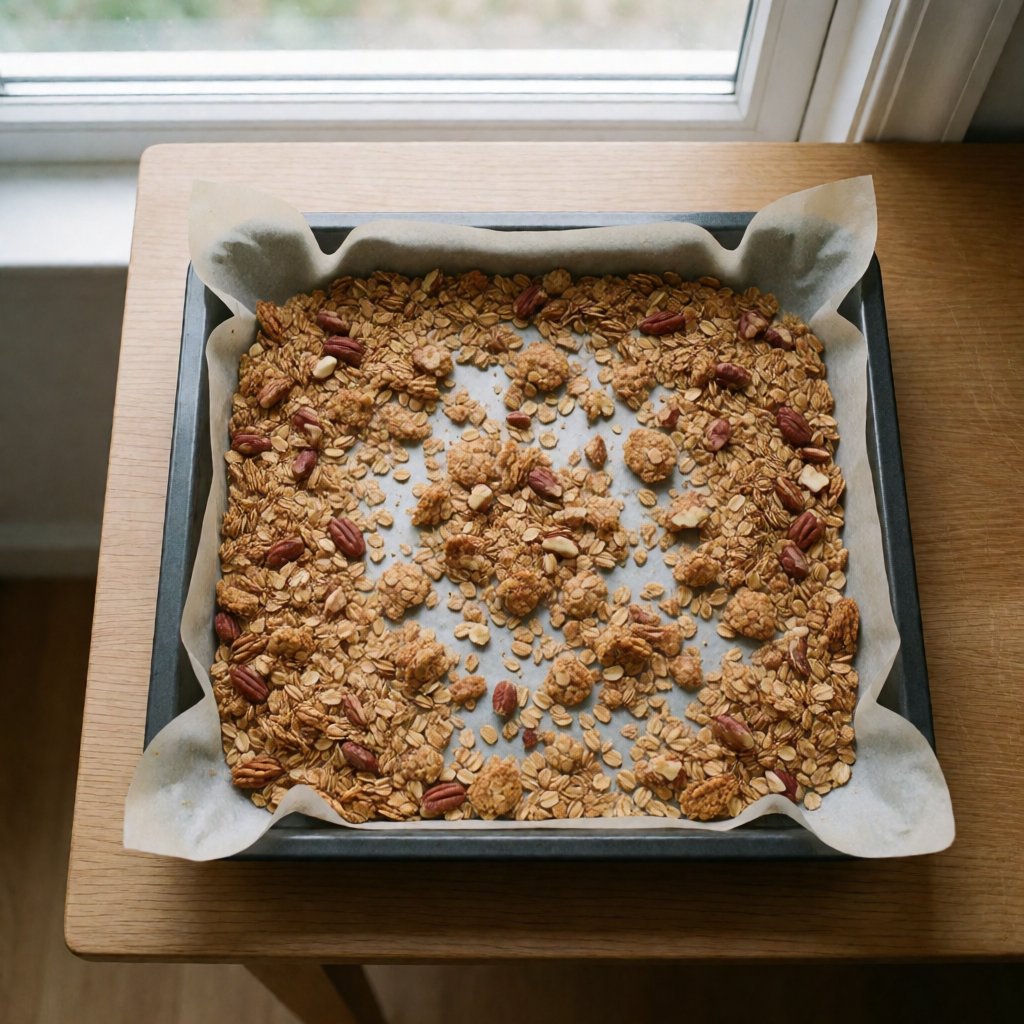
 AI photo
Nut Granola
Crunchy oat and nut granola baked until golden and fragrant.
Labels are worked out automatically from the ingredients and can be wrong. Check the packaging if it matters to you.
Ingredients
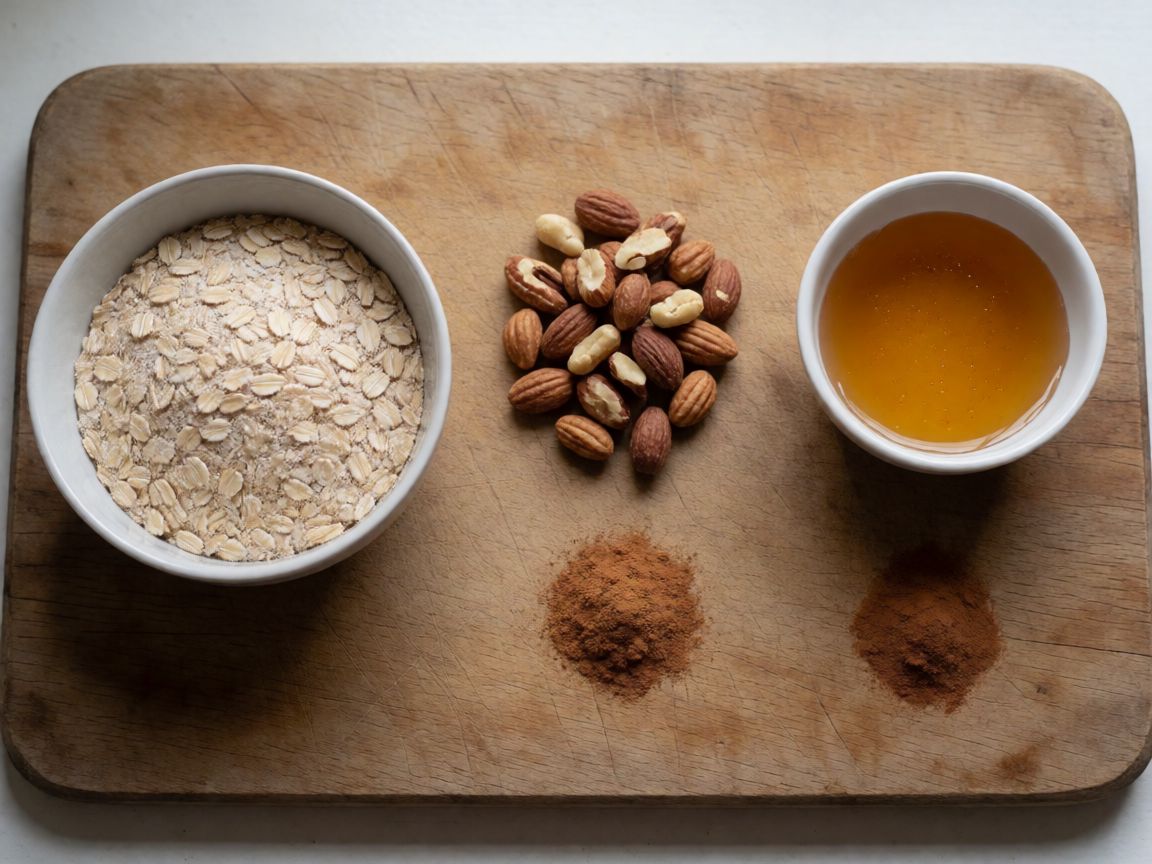
- 120 g Oats
- 30 g Mixed Nuts
- 1.5 tbsp Sunflower Oil
- 1.5 tbsp Honey
- 1 pinch Cinnamon to taste


Steps
Mix everything together and spread in a thin layer on a parchment-lined baking tray.
Place the tray in the oven at 160°C for 12 minutes.
12 minStir the granola and bake for another 13 minutes.
13 minRemove the tray from the oven and let it cool without stirring — it will form clumps.
This is not porridge baked dry — it's sugar glass holding toasted oats together. Two things decide whether you get crisp clusters or just burnt flakes on a tray: the thickness of the layer, and what you do with your hands once the tray comes out.
Spread it thick and you're not baking granola, you're steaming oats in their own moisture with a sweet coating on top — soft in the middle, dark at the edges, and nothing crunches. A thin layer lets the water in the oats actually leave the pan instead of just moving from the bottom to the top and back. That's the whole point of "thin layer on parchment" — it's not presentation, it's ventilation.
160°C for roughly 25 minutes, with a stir in the middle, is not a medium heat you eyeball — it's a temperature gentle enough that the honey caramelizes slowly instead of scorching into bitterness, while the oats toast rather than char. You'll smell it before you see it: oats go from a flat cereal smell to a warm, nutty one, and the colour shifts from pale straw to light gold, not brown. If it's going brown fast, your oven runs hot — pull it ten minutes early and judge by colour, not by the clock.
Oats: use rolled (porridge) oats, the kind sold for breakfast, not instant oats and not whole oat groats. Instant oats are pre-cooked and cut fine — they'll scorch before the honey has caramelized. Whole groats are raw and tough — they won't soften or toast evenly in 25 minutes at this heat. Rolled oats are already flattened and partly gelatinised, which is exactly why they toast evenly and still hold shape.
Nuts: any mix you've got, roughly chopped so the pieces are nut-sized, not whole, so they toast at the same rate as the oats around them. Use raw, unsalted nuts. Pre-roasted ones are already coloured and partly dried out — another 25 minutes in the oven pushes them from toasted to bitter, and salted ones will throw the balance of the honey off. If you've only got salted roasted nuts, use them, just shorten the final bake and watch the colour rather than the clock.
Oil: the job here is simply to carry heat evenly over the oats and stop them from drying into dust before the honey catches up — so the criterion is an oil with no smell of its own, sunflower or a light rapeseed, something that won't compete with the honey and cinnamon. Olive oil works in texture but brings its own flavour to a dish that doesn't need it; save it for the roast.
Honey: this is your sugar syrup and your glue, not just sweetness. It's a liquid sugar that spreads thin over hot oats and sets as it cools — that's the mechanism behind the clumps. Granulated sugar can't do this; it won't coat evenly and it won't re-set into sheets. If you're out of honey, golden syrup or maple syrup do the same job by the same logic — thick, pourable, high in sugar that caramelizes under heat.
Cinnamon is flavour only, no mechanism to protect — a pinch, to taste, and nobody will fault you for leaving it out or doubling it.
On quantities: 120 g oats is roughly a full mug, enough with the rest to feed two at breakfast, more as a topping for yoghurt across the week. If you're already running the oven hot for a Sunday roast, there's no reason not to batch a double portion afterwards while it cools from roasting heat down toward 160°C — just don't put it in while the oven's still searing temperature, or you'll get the burnt-edge, soft-centre problem the thin layer was meant to prevent in the first place.
·