
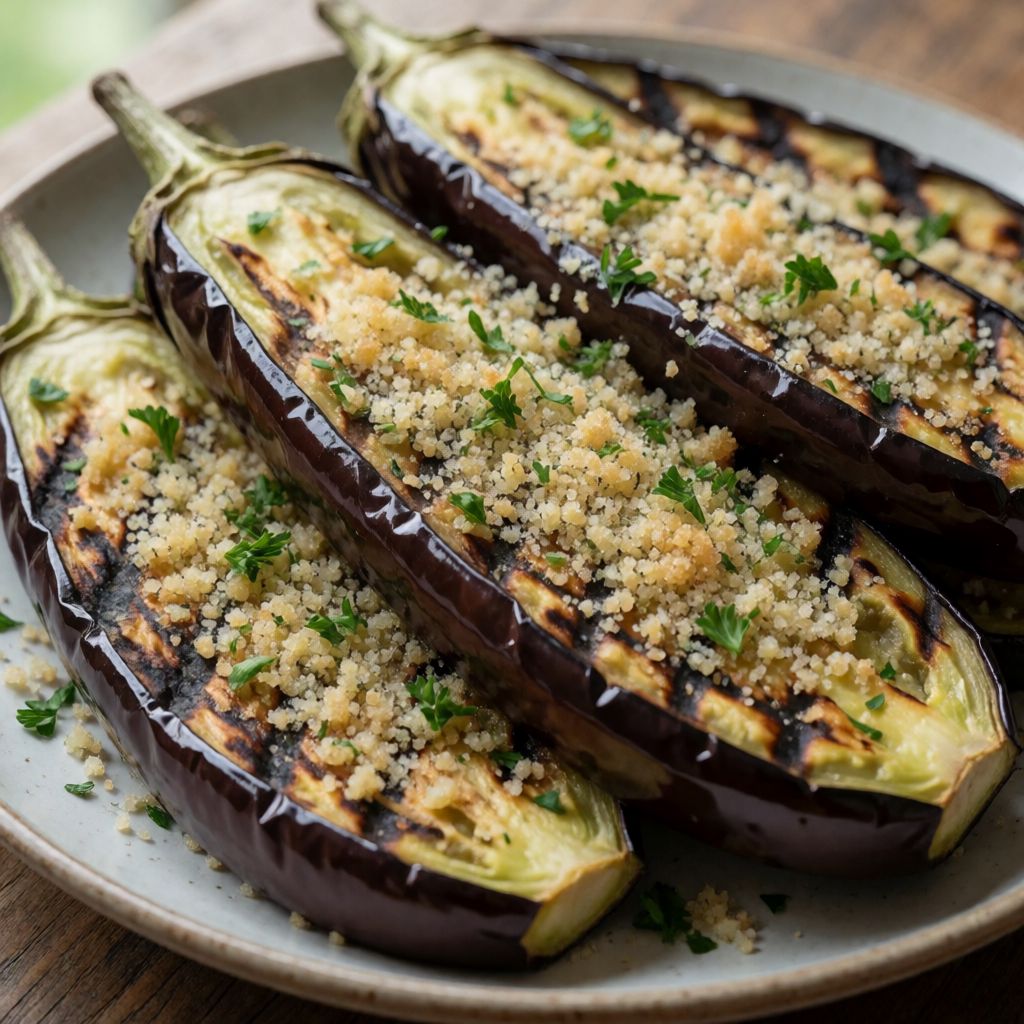
 AI photo
Grilled Aubergine
Chargrilled aubergine slices layered with a garlicky parsley and breadcrumb mixture.
Labels are worked out automatically from the ingredients and can be wrong. Check the packaging if it matters to you.
Ingredients
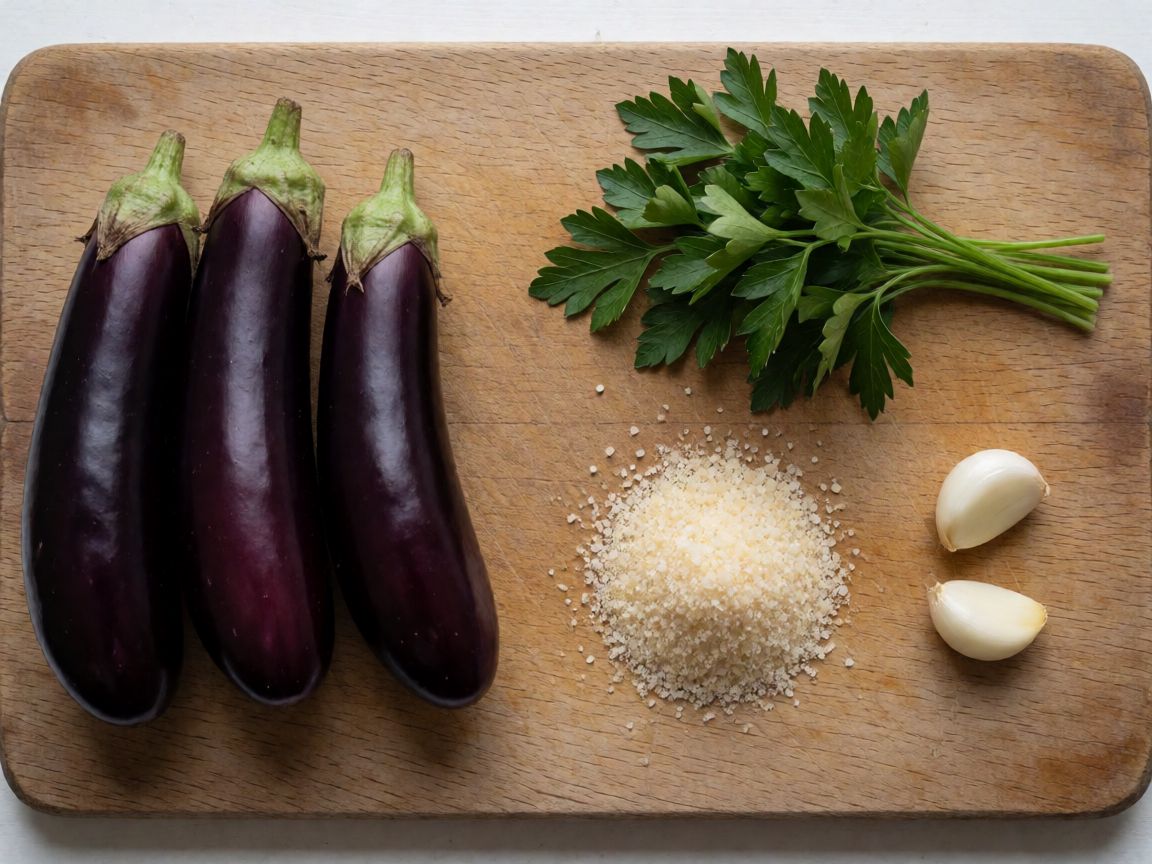
- 3 pcs Aubergine
- 1 bunch Parsley
- 2 clove Garlic
- 100 g Breadcrumbs or Parmesan
- Salt to taste
- Olive Oil to taste





Steps
Cut the aubergines into slices about 0.5 cm thick, sprinkle with salt and leave for 30 minutes.
30 minFinely chop the garlic and parsley, then mix with the breadcrumbs, a pinch of salt and olive oil.
Rinse the salt off the aubergine slices and grill on both sides.
10 minLayer the grilled aubergine slices in a baking dish, spreading the breadcrumb mixture over each slice.
Drizzle with a little more olive oil and serve warm or cold.
This is not really a cooked dish so much as a dressed one: you grill aubergine slices dry, then dress them, raw, with garlic, parsley and oil carried by something dry enough to hold it all — breadcrumbs or hard cheese. It sits somewhere between a side and a cold starter, the kind of thing Mediterranean kitchens make in batches because it keeps and because it tastes better once it's had time to think about itself.
What decides whether it works is mostly settled before the pan ever gets hot. Aubergine flesh is full of tiny air pockets — cut it raw and lay it straight on heat, and it behaves like a sponge, soaking up oil and turning slippery rather than firm. Salting for half an hour pulls water out of those cells and collapses them a little, so the slice holds its shape on the grill and doesn't drink everything you pour near it later. Some say the salting is there to "take out the bitterness" — no. Most aubergines sold today have been bred mild; the bitterness myth survives from varieties nobody grows commercially anymore. What the salt actually fixes is texture and oil uptake, not taste.
Aubergine is the dish, not a stand-in for one — there's no real substitute, so the job is choosing it well rather than replacing it. Look for skin that's tight and glossy, a fruit that feels heavy for its size. Light and spongy means the inside has started drying out and separating, and no amount of salting will firm that back up. Three medium ones sliced at half a centimetre will cover one generous portion as a side, more as a shared starter — this is a dish that scales by weight of aubergine, not by complexity.
Parsley wants to be the flat-leaf kind if you can get it — it has actual flavour, where the curly variety is mostly decorative and goes a bit grassy-bitter when chopped fine. If you're out of parsley, use a herb that stays green and doesn't collapse into slime when chopped raw — basil works, though it shifts the dish's whole character toward something more Italian than Mediterranean-neutral. What you're avoiding is anything that wilts and darkens the moment the knife touches it, like soft lettuce leaves would.
Garlic goes in raw, so its bite is part of the point here, not something to be cooked away. Two cloves finely chopped is enough to carry through the breadcrumbs without taking over — if raw garlic sits badly with you, warm it gently in the olive oil you're about to drizzle on, just enough to blunt the sharp edge, and let it cool again before mixing.
Breadcrumbs or Parmesan are doing the same job by different means: giving the oil and herbs something dry to cling to, so they sit on the aubengine as a coating rather than running off it. The criterion is dryness and a bit of texture — stale bread blitzed up, or a hard, salty cheese that will partly melt into the warm slices and partly stay granular. Soft fresh breadcrumb, straight from a supermarket loaf, is too wet for this; it clumps instead of scattering, and you lose the contrast between crisp topping and soft aubengine underneath.
Olive oil is the one place where the usual substitution rule flips: normally you want an oil with no character of its own, so it doesn't fight the dish. Here the oil is uneaten raw, dressing rather than cooking medium, so you actually want one with flavour — a fruity, cold-pressed extra virgin rather than a light refined one. A neutral oil will leave the whole thing tasting mostly of garlic and salt, with nothing underneath to carry it.
If your Sunday is already given over to a roast, this is a dish that works around it rather than against it: it doesn't need the oven, it's happy made ahead and left to sit, and it tastes as good pulled out cold at room temperature next to whatever else is on the table as it does warm. That's not a modern convenience — it's the same economics that made dishes like this common in hot climates long before fridges: things that taste right cold travel further, keep longer, and don't demand you stand over a stove right before people sit down to eat.