
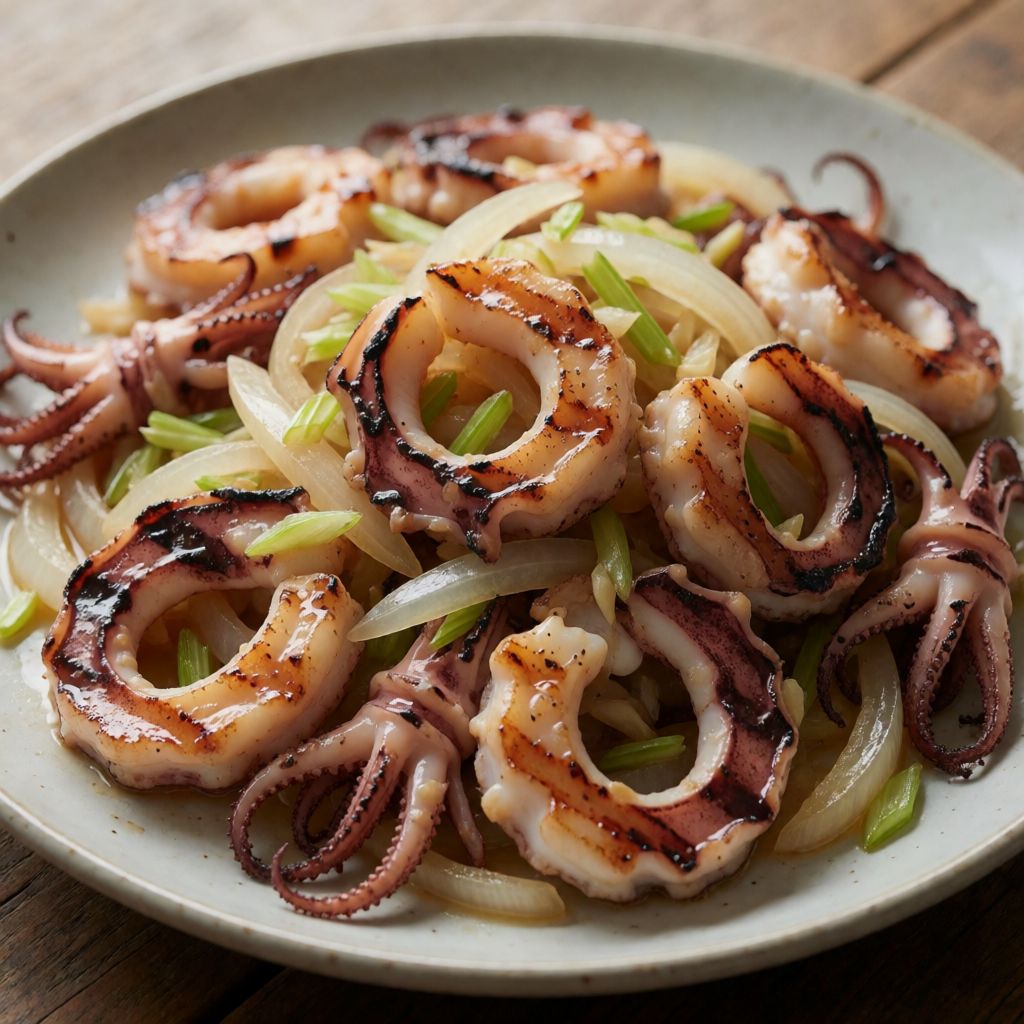
 AI photo
Grilled Squid in Marinade
Tender grilled squid marinated in a zesty vinegar dressing with capers, parsley and Gaeta olives.
Labels are worked out automatically from the ingredients and can be wrong. Check the packaging if it matters to you.
Ingredients
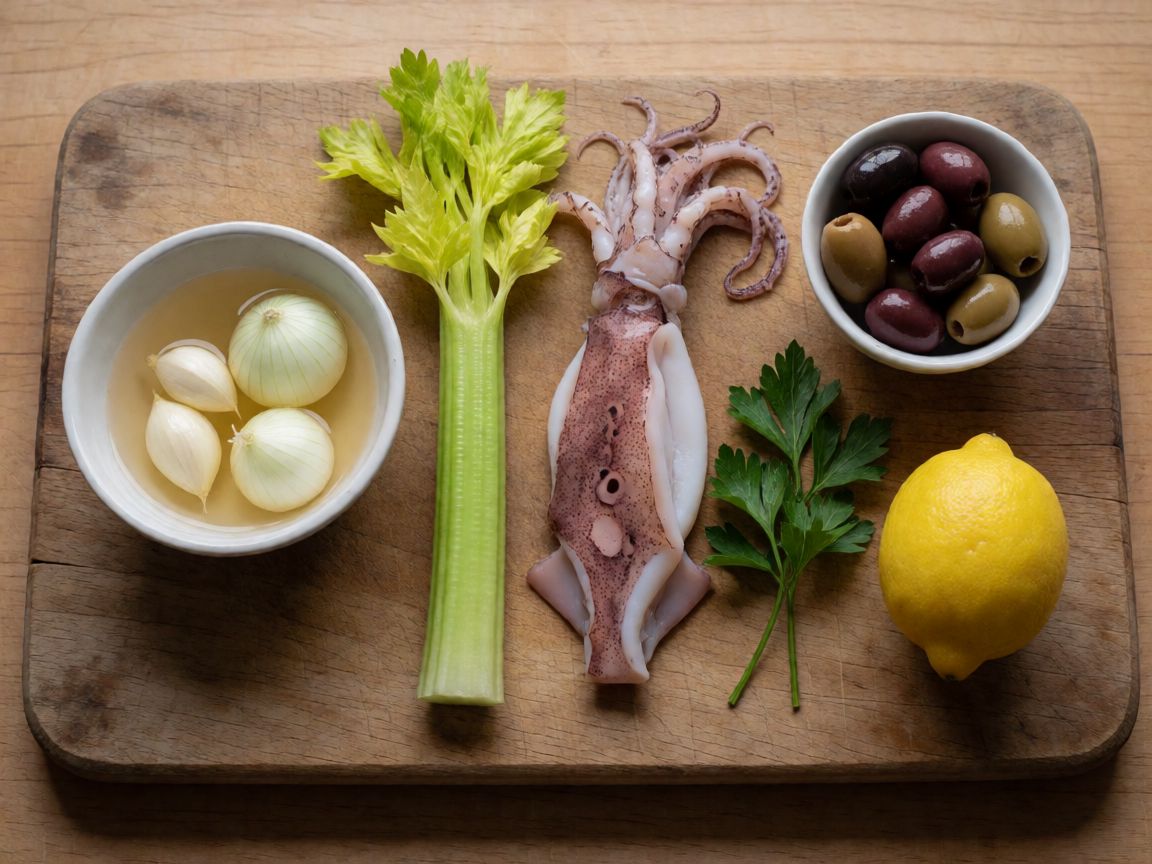
- 8 tbsp Vinegar
- 400 ml Water
- Garlic to taste
- Onion to taste
- 1 pcs Celery stick
- 800 g Squid
- Parsley to taste
- 1 pcs Lemon
- 100 g Gaeta olives
- 2 tbsp Capers in apple cider vinegar










Steps
Grill the squid until cooked through. It is ready when the thickest part reaches 63°C.
Bring the water to the boil with the vinegar, finely chopped onion and garlic, and the celery stick.
Pour the marinade over the grilled squid.
Add the parsley and let the dish cool.
Add sliced lemon, Gaeta olives and capers in apple cider vinegar.
60 min
This is squid that's grilled hard and fast, then dunked warm into a hot vinegar bath studded with onion, garlic and celery, and finished cold with lemon, olives and capers. It's a close cousin of escabeche — the old trick of pickling something that's just been cooked, so it keeps without a fridge and tastes better the next day than it did an hour after cooking. Whether it works comes down to two moments that have nothing to do with each other: how hot your grill was in the first two minutes, and how hot the squid still was when the vinegar hit it.
Squid has almost no connective tissue to break down — no long slow render like a shoulder of lamb. It's thin muscle wrapped round nothing, so it goes from translucent and tender to a tyre inner tube in the space of maybe thirty seconds on a pan that isn't hot enough. That's the mechanism the 63°C refers to — past that, the proteins have already squeezed out their water and set hard. Some say squid needs long cooking to go tender. No — that's true only for squid stewed low and slow in its own ink for an hour, a completely different route to tenderness via collagen breakdown. Here there's no collagen to speak of, so slow is just a slow way to ruin it.
Garlic and onion going into the boiling vinegar aren't a garnish, they're the backbone of the liquid — simmered a few minutes, just until the onion loses its raw bite and turns translucent at the edges, not until it collapses. The celery stick does the same job it does in any stock: a background green, grassy note under the vinegar's sharpness, stopping the marinade from tasting like straight pickling liquid. Pull it out or leave it in, it won't matter much either way by the time you eat.
On vinegar: any clean vinegar with no odd aftertaste works — white wine vinegar, cider vinegar, even malt if that's the cupboard you've got, though malt brings its own flavour along, which may or may not suit you. What matters is dilution, not brand: eight spoons into 400ml of water gives you a mild, drinkable acidity, not a pickling jar. If your vinegar is unusually sharp, add a splash more water rather than less vinegar — you want the squid seasoned, not stunned.
Squid itself: buy it already cleaned if you can, tubes and tentacles, fresh or frozen — frozen squid is, if anything, a touch more tender, since the ice crystals do some of the fibre-breaking work for you. Avoid anything that smells of ammonia, that's old squid, no marinade fixes that. If squid genuinely isn't available, cuttlefish grills on the same logic — fast, hot, same window of doneness — though it stays slightly chewier by nature.
A domestic hob won't give you charcoal, and that's fine — what the squid actually needs is a dry, very hot surface, not smoke. A ridged griddle pan, or the grill element in your oven turned to its hottest, both work if you let them heat properly before the squid goes anywhere near them, and if you pat the squid dry first — wet squid on a hot pan steams instead of searing, and steaming is exactly the slow route to rubber the whole method is built to avoid.
Lemon, Gaeta olives and capers go in only once the dish has cooled — that's the point where the marinade has already done its work penetrating the warm flesh, and these three are there for contrast, not cooking. Capers in apple cider vinegar specifically, rather than the brined kind, because you've already got a vinegar base going and brine would just add salt on top of acid without adding anything new. If Gaeta olives aren't to hand, any small, oil-cured black olive with some bitterness to it does the same job — the point is a note that isn't sweet and isn't fresh, something with age in it to sit against the sharp lemon.
The hour the dish spends resting after the last additions isn't optional padding — that's the patience the recipe is asking for, the time the lemon and capers need to lend their edges to the oil and vinegar around them without you doing anything at all. Serve it cold or just cool, for four people as a starter, and don't rush it onto plates the moment it's assembled — it's better twenty minutes later than it is the second you finish building it.