
 AI photo
Rustic Pastry with Ham and Smoked Scamorza
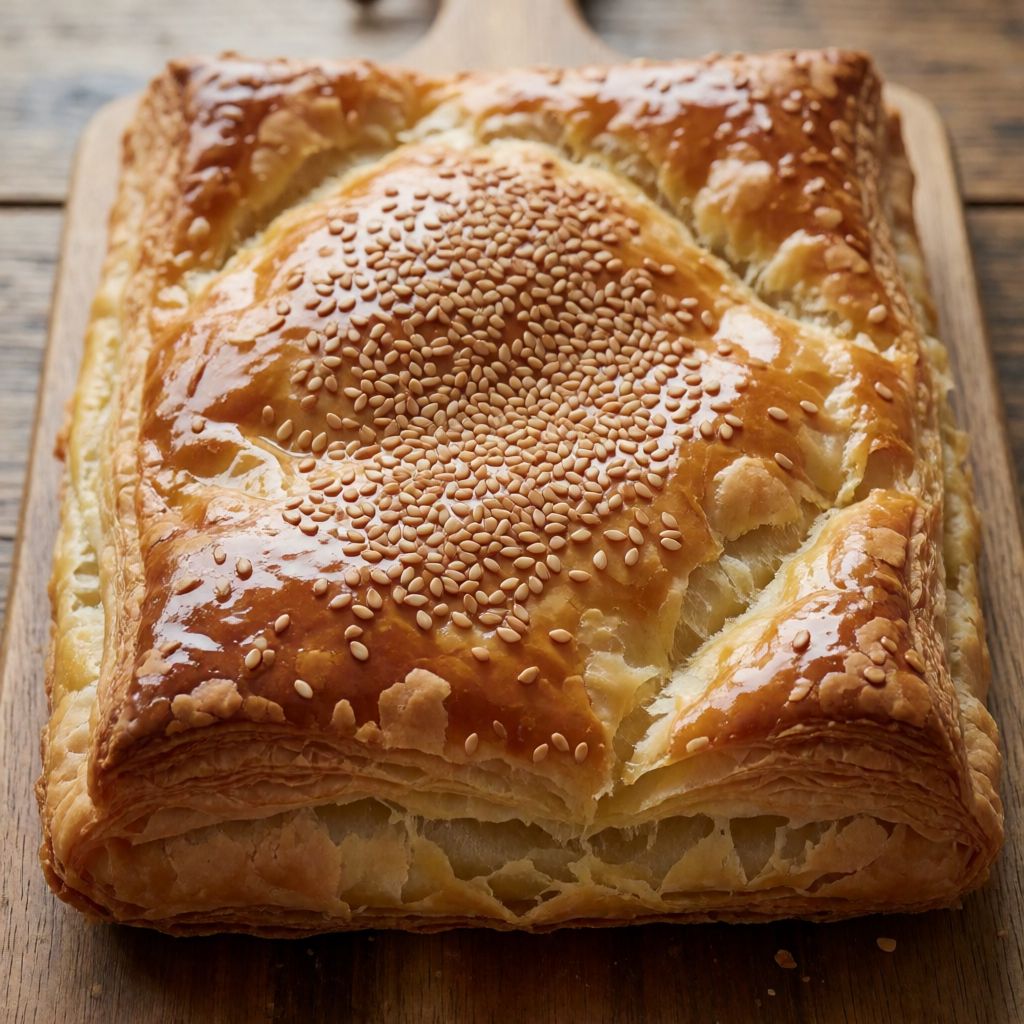
A ready-rolled puff pastry roll filled with ham and melted smoked scamorza, topped with sesame seeds.
Labels are worked out automatically from the ingredients and can be wrong. Check the packaging if it matters to you.
Ingredients
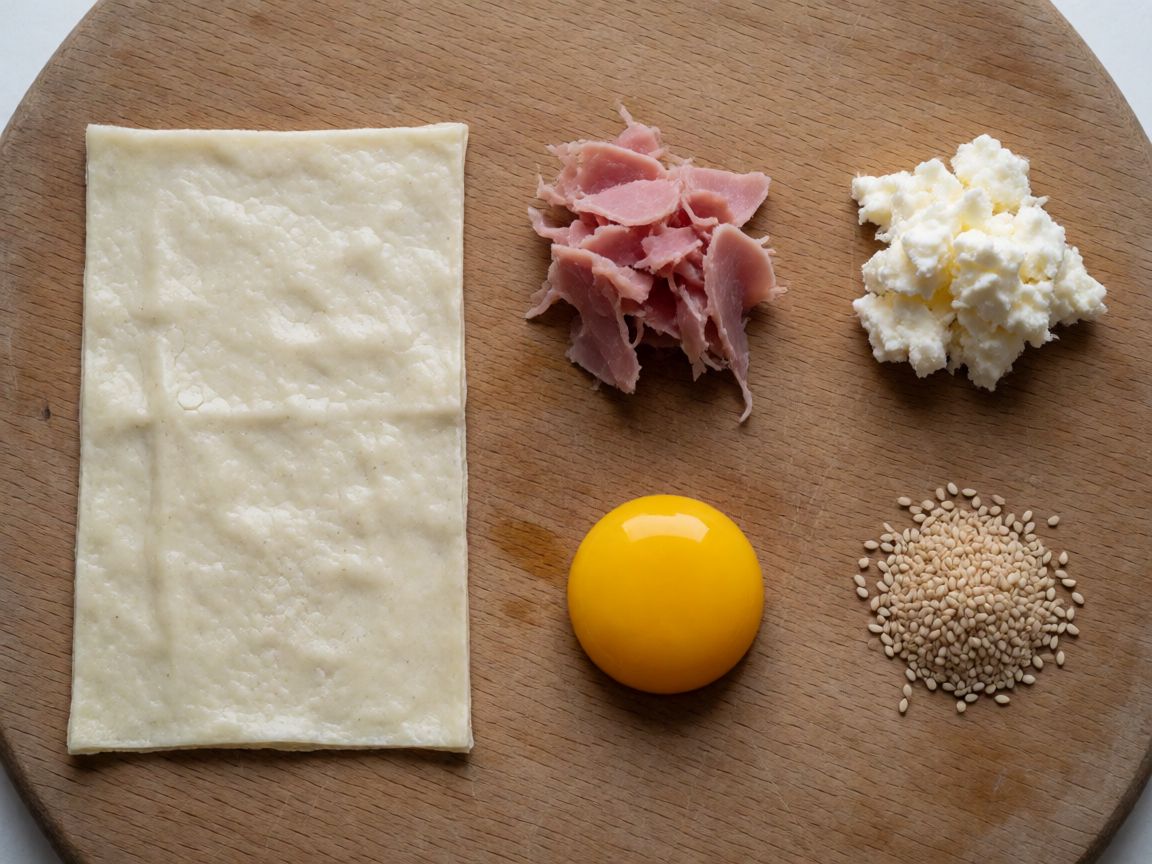
- 1 pcs Ready-rolled puff pastry
- 100 g Ham
- 200 g Smoked scamorza
- 1 pcs Egg yolk
- 1 pinch Sesame seeds to taste




Steps
Lay the puff pastry together with its baking paper on a baking tray.
Using the cardboard insert from the packaging as a guide, divide the pastry horizontally into three equal parts.
On the two outer sections, make diagonal cuts about 1.5–2 cm apart, with the cuts on the right running in the opposite direction to those on the left.
Lay the ham slices and pieces of smoked scamorza in the central section.
Close the filling by crossing the strips of pastry from both sides in turn, and pinch both ends firmly to seal.
Brush the whole surface with the beaten egg yolk and sprinkle with sesame seeds.
Bake in a preheated fan oven at 200°C for about 20–25 minutes, until the pastry is golden brown.
23 min
This is a pastry case made from a single rolled sheet, cut into a fringe on both long sides so it can be plaited over its own filling, like a visible rib cage holding the ham and cheese in place. No separate lid, no parcel glued shut with egg wash - the braid does the holding, and the gaps between the plaited strips do the breathing. That's the whole trick: puff pastry wrapped tight around a wet filling steams itself soggy from inside; pastry plaited with gaps lets the steam out while the strips still overlap enough to stop the ham and cheese sliding onto the tray.
What decides whether it works is less the filling and more two things: how cold your pastry stays while you're cutting it, and how fast your oven gets hot enough to make it rise. Puff pastry is a cold sandwich of a hundred-odd paper-thin layers of fat between paper-thin layers of dough. Cut it while it's gone soft and warm from the kitchen, and the layers smear into each other under the knife - you lose the separation that gives lift, and end up baking something closer to a biscuit. Keep it properly chilled until the moment it goes in, and the water trapped in each dough layer flashes into steam fast enough to push the fat layers apart before the fat has a chance to just melt and run.
Ham: any thin-sliced cooked ham does the job - its role here is salt and a bit of chew against the stretch of the cheese, nothing more. If there's a joint left over from Sunday's roast, that's exactly the economics this kind of recipe was built for: a way to use up good meat, sliced thin enough that it heats through in the time the pastry needs to rise rather than drying out.
Smoked scamorza is a semi-firm Italian cheese, related to mozzarella but aged a few days longer and often smoked over wood chips, which draws some of the moisture out of it. That matters here - a very wet, fresh cheese weeps under heat and soaks the pastry floor from underneath before it's had a chance to set and rise, which is the real cause of a soggy base, not "the oven wasn't hot enough." Scamorza melts stretchy but holds its shape better than fresh mozzarella because it's already partly dried. The criterion if you can't find it: a cheese firm enough to slice, that melts without flooding the tray, and carries its own smoky note rather than leaning on the ham for flavour - smoked provolone, smoked cheddar, smoked gouda will all do it, though cheddar won't stretch the way scamorza does.
Egg yolk, not whole egg: yolk alone browns deeper and glossier, because it's nearly all fat and protein with none of the white's water and albumen, which otherwise bubbles under heat and leaves a patchier, paler finish. If there's only whole eggs in the house, use one well beaten - the shine will be a shade less even, nothing worse than that. Sesame seeds are there for texture against the smooth glaze, not for flavour that carries through baking; poppy seeds, nigella seeds, or nothing at all behave exactly the same in the oven.
The diagonal cuts on the two outer strips aren't decoration first - they're what lets you plait the pastry over the filling without folding and sealing a parcel shut. Use the cardboard sleeve the pastry comes rolled around as your ruler for marking the thirds; it's exactly the right width, and saves hunting for a ruler in a kitchen drawer - packaging earning its keep for once. And that's the reason you pinch only the two ends, not every seam: some say pastry parcels need sealing tight all round to stop the filling leaking, but seal the gaps between the plaited strips and you trap the steam coming off the melting cheese against the pastry instead of letting it lift away - that's what gives you a soggy middle, not careless sealing. The plait, pressed down by its own weight once it's crossed, does the holding; the gaps do the breathing.
A fan oven at 200°C is doing a specific job: getting heat into the pastry fast and evenly from all sides before the fat in the layers melts and runs rather than lifting them apart. Without a fan setting, go up by about 15°C on conventional to compensate for less even heat, and watch the pastry rather than trusting the same 20 minutes - a conventional oven often browns the top before the base has caught up, so a lower shelf helps there.
Feeds four as a light lunch, or thinly sliced as a starter before whatever's roasting for Sunday - it wants nothing beside it but something sharp, since everything inside the parcel is already rich and quietly smoky. Fifteen minutes of handling, cold pastry, a hot oven - but it's the second of those two that patience really needs spending on, not the clock.