
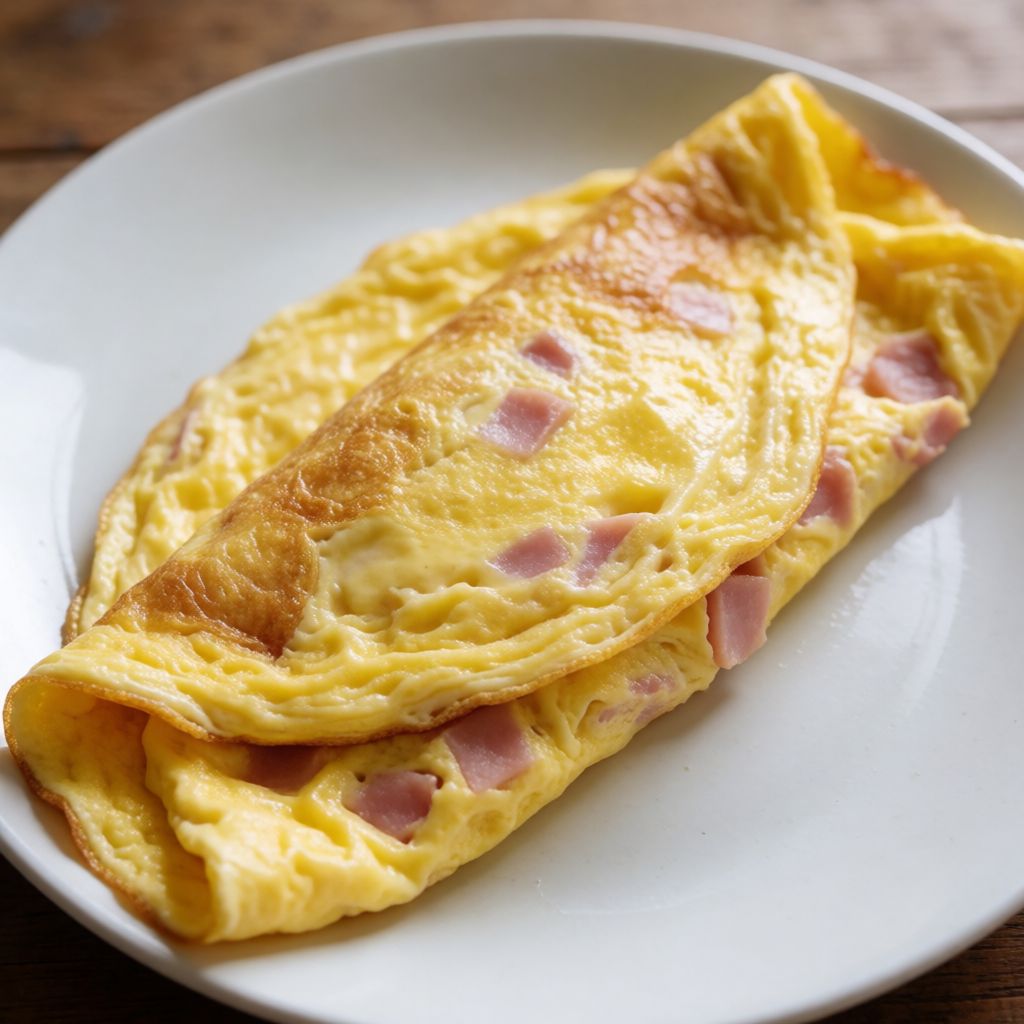
 AI photo
Ham Omelette
A quick, fluffy omelette filled with diced ham, ready in minutes.
Labels are worked out automatically from the ingredients and can be wrong. Check the packaging if it matters to you.
Ingredients





Steps
Crack the eggs into a bowl.
Whisk the eggs vigorously, add a pinch of salt, pour in the milk and mix until the mixture becomes slightly frothy.
Melt the butter in a non-stick frying pan, pour in the egg and milk mixture and let it start to set slightly.
Cover the pan with a lid and cook the omelette over medium heat.
5 minScatter the diced ham over one half.
Fold the omelette in half into a half-moon shape, transfer to a plate and serve immediately.
This is the French-style folded omelette with ham tucked in, not the flat Spanish kind and not a frittata you finish in the oven. Two people, ten minutes, and the whole dish stands or falls on one thing: whether the egg sets like custard or seizes like rubber.
What decides it is heat control, not a clock. Egg protein is a net that tightens as it warms. Go in too hot and the net clamps shut fast, squeezing out water as it goes — that's the thin puddle of liquid you sometimes see weeping out of a "done" omelette, and it's also why the texture turns springy instead of soft. The fix isn't a lower number on a dial you don't actually have calibrated; it's watching the eggs. The moment the edges stop looking wet and go matte — like satin instead of varnish — you're close. The lid (or, if your pan's lid doesn't fit, a plate pressed over the top works fine) traps steam so the top sets gently without you having to crank the heat to force it, and without flipping something this soft, which would just tear it.
Some say milk makes an omelette tough, so leave it out. No — it's the opposite. Milk is mostly water, and water dilutes the egg protein and buys you a few extra seconds before it clamps tight. That margin is what keeps the inside tender while the outside has time to set. Leave the milk out and you've removed your safety margin, not added richness.
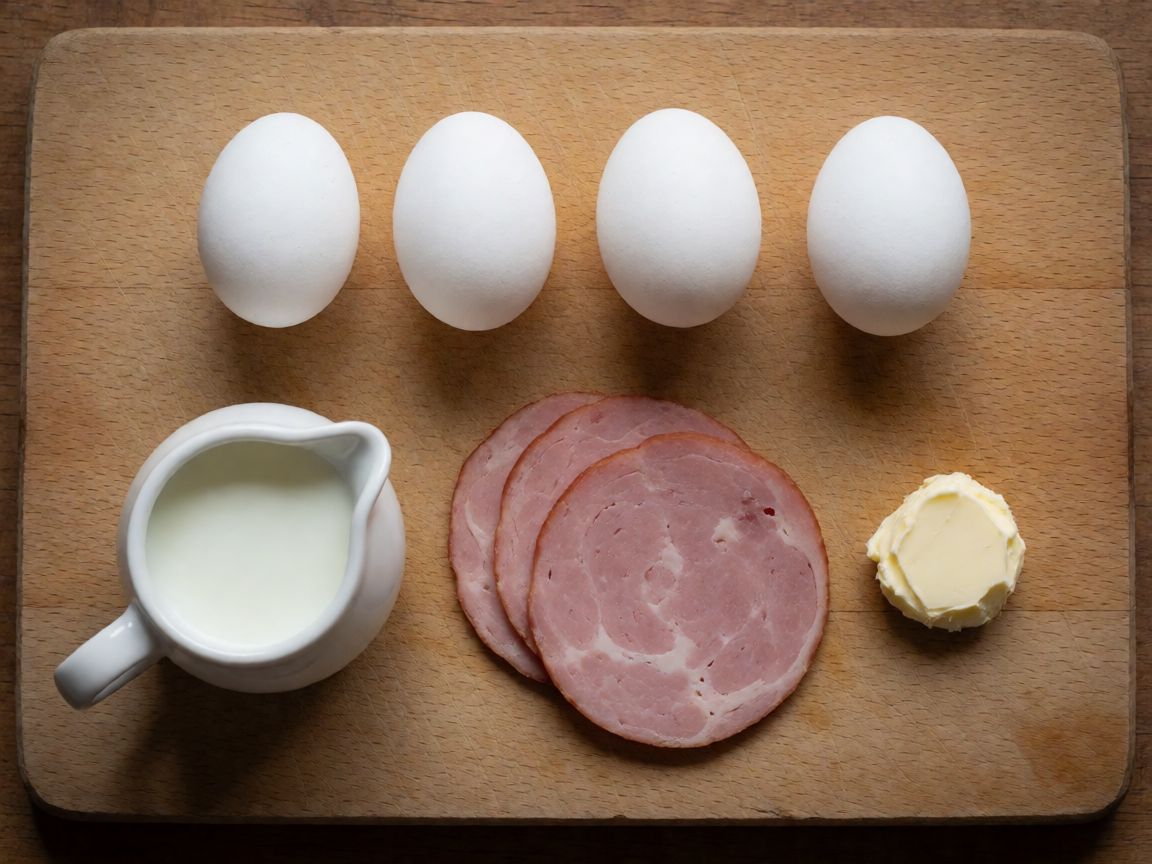
Eggs: four, straight from the fridge is fine, you're not making a soufflé where temperature matters for volume. What matters more is how hard you whisk — vigorous whisking folds air into the mixture, which is why the eggs look slightly frothy before they hit the pan. That air is what keeps the texture light rather than dense; skip it and you get something closer to a thin pancake.
Milk: sixty millilitres, about four tablespoons if you're measuring by spoon rather than jug. Its job, as above, is dilution and a tenderness buffer, not flavour — you won't taste it. If you've only got cream, use less of it, since cream's fat does something similar but more aggressively and too much will make the eggs greasy rather than soft. Water works in a pinch too, though you lose a touch of richness.
Ham: two or three slices, diced. This is exactly the kind of thing a Sunday roast earns its keep for — gammon or leftover roast ham from the weekend, sliced thin and kept in the fridge, is better here than a pre-packaged ham with added water and gum, because it holds its texture when it warms through instead of going slightly slimy. If you've no ham, any cooked, salted meat cut small does the same job: bacon fried crisp first, or chorizo. The point of the ingredient is a salty, savoury pocket against the mild egg, not a specific meat.
Butter: melted in the pan before the eggs go in, and its job is flavour, not just lubrication — a non-stick pan will release the eggs on its own, so you're not relying on the butter to stop sticking, you're relying on it to taste like butter. That's also why the substitution rule here is about neutrality in the other direction: if you must swap it, use something with a flavour you actually want in the dish, since there's nowhere for a bland fat to hide. Oil with no smell of its own — a light vegetable or sunflower oil — will cook the eggs fine but won't taste of anything, so you've traded flavour for nothing you've gained.
Salt: a pinch, into the eggs before cooking, not after. Salted early, it has time to just start breaking down the protein structure slightly, which is part of why a rested, salted egg mixture whisks up a little looser than one salted at the last second. It's a small effect, but it's real, and it costs you nothing to do it in the right order.
Patience, finally, counts as an ingredient here even though it's not on the list. The whole dish takes ten minutes, but almost all the ways it goes wrong come from trying to make it take five — turning up the heat to rush the set, which is exactly the mechanism that gives you rubber instead of custard. Let the lid and the steam do the slow work; your job is just to watch, not to hurry.