
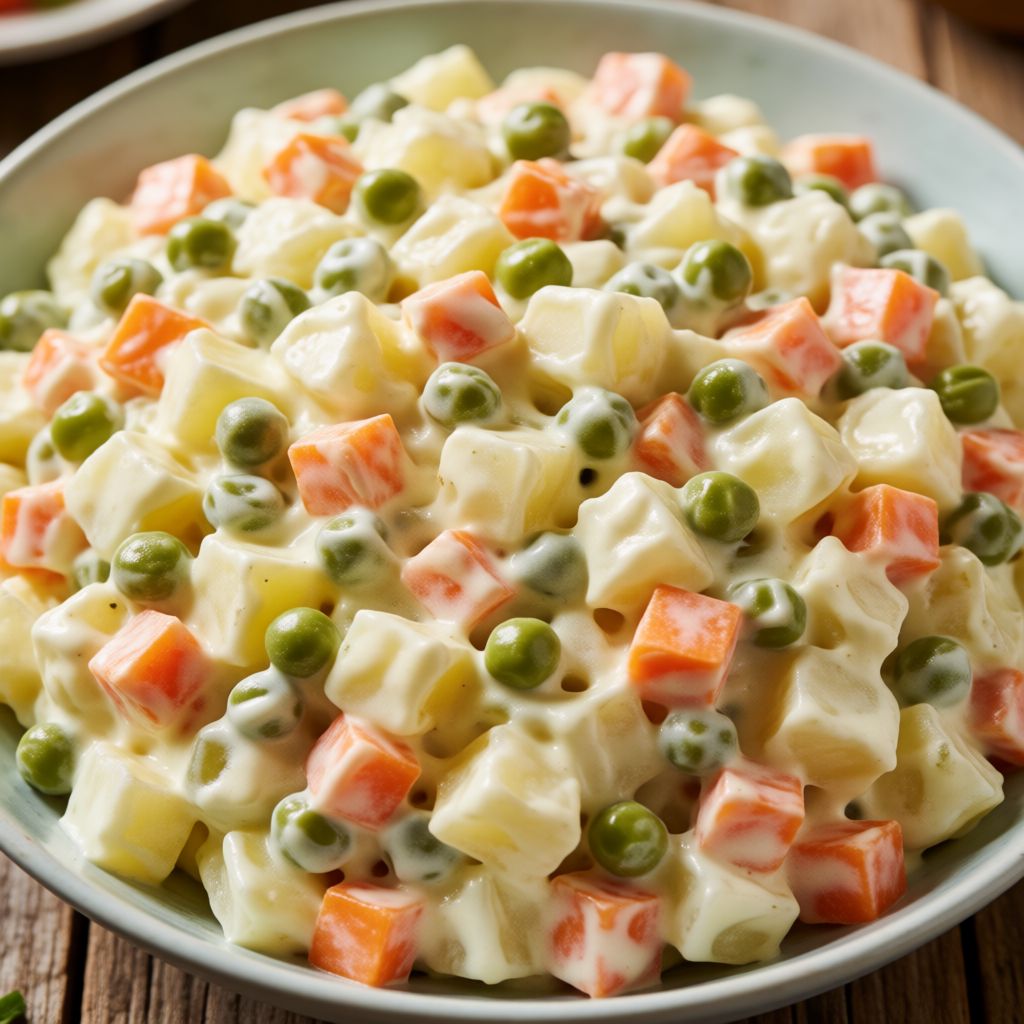
 AI photo
Italian Vegetable Salad with Mayonnaise
A simple Italian-style vegetable salad with potatoes, carrots and peas in mayonnaise, with optional tuna.
Labels are worked out automatically from the ingredients and can be wrong. Check the packaging if it matters to you.
Ingredients
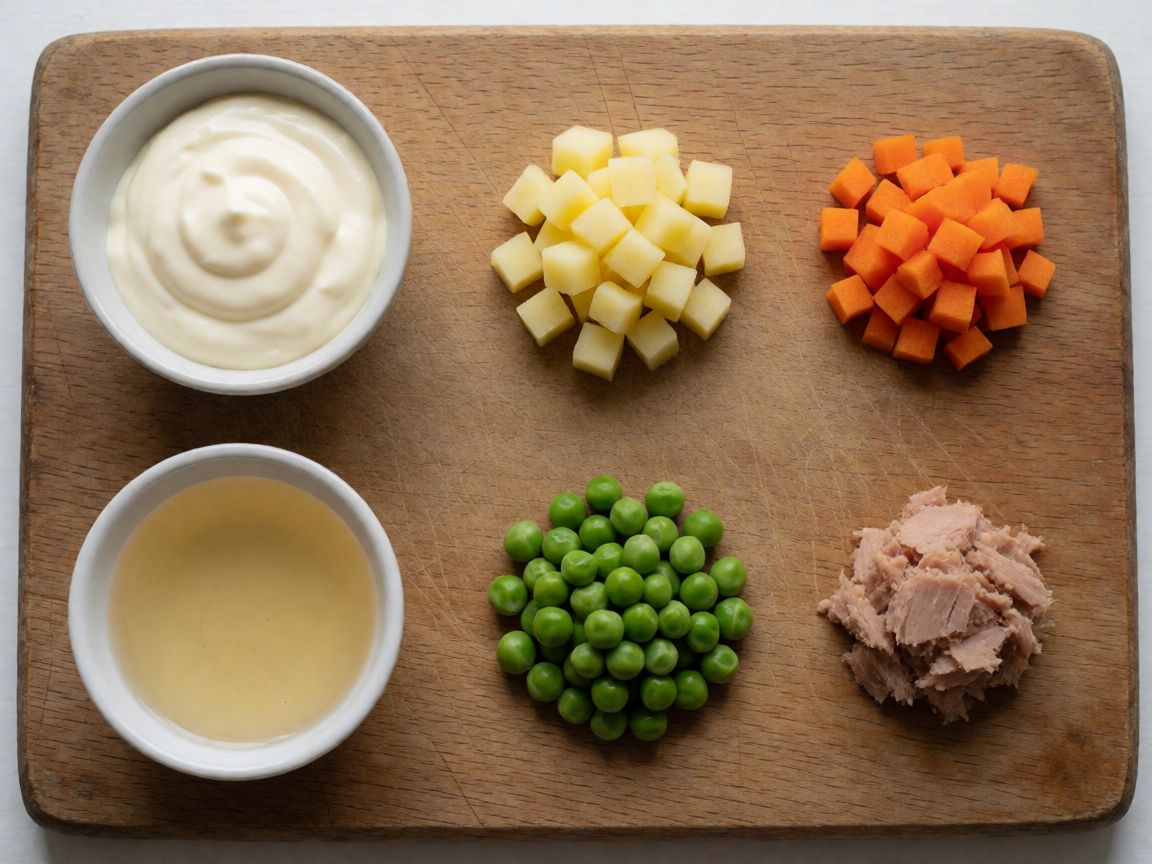
- 200 g Mayonnaise
- 150 g Potatoes
- 100 g Carrots
- 80 g Peas Frozen; fresh peas also work
- 50 g White wine vinegar
- 200 g Water
- Salt to taste
- 150 g Tuna optional






Steps
Pour the water and white wine vinegar into a saucepan and bring to the boil.
Peel the potatoes, dice them finely, salt the water and cook the potatoes.
16 minPeel the carrots and dice them.
Drain the potatoes, then cook the carrots in the same water.
12 minDrain the carrots well and steam the peas.
3 minTransfer all the vegetables to a bowl, add the mayonnaise and mix well.
Place in the fridge until ready to serve.
If you like, add 150 g of well-drained tuna.
Call it what it actually is: a dish that borrowed a passport. The Italians who eat this call it "insalata russa" – Russian salad – and in Russia nobody calls it Italian. Food does this constantly: it takes the name of whoever it reminded someone of, not the name of whoever first stirred it. Don't look for a Roman grandmother behind it. Look at the bowl.
What's in the bowl is simple on purpose: potato and carrot cut small, peas, all of it bound tight in mayonnaise, served cold. The whole dish stands or falls on two things that have nothing to do with flavour yet decide it entirely – the size of the dice, and how dry the vegetables are before the mayonnaise touches them. Cut unevenly and some cubes go to mush while others stay raw-firm; that's not rustic, that's carelessness showing. Drain badly and the water sitting inside the potato leaches into the mayonnaise in the fridge overnight – you get a salad swimming in its own puddle by morning, and everyone blames the mayo.
Doneness here isn't a clock, it's a bend. A cooked carrot cube should flex slightly under a fork, not snap like raw carrot and not collapse like baby food. Potato should hold its corners when you stir it through the mayonnaise – if it's already rounding off and clouding the water, it's past where you want it, pull it.
Potato: choose a waxy one, not a floury one. In a UK kitchen that means Charlotte or Jersey Royal or any "new potato" bag, not Maris Piper or King Edward – those two are bred for roasting and mashing, which is exactly the opposite of what you want here. Waxy potato keeps its cube shape when boiled and then folded into mayonnaise; floury potato starts breaking down the moment it leaves the water, and you end up with something closer to potato salad's melted cousin.
Carrot doesn't ask for a decision the way potato does – just match the dice size to the potato, so the pieces read as one salad and not two separate chopping jobs. It's cooked after the potato in the same water for economy, not technique: one pot, one boil, no extra kettle to wash. That's a small-flat habit worth keeping, not a compromise.
The vinegar-and-water bath both vegetables cook in is doing more than flavouring. Acid firms the pectin in the cell walls as the vegetable heats, which is exactly what keeps each cube distinct instead of dissolving into the water around it – and it seasons the vegetable from inside rather than coating it afterward with a splash of vinegar at the end, which only ever sits on the surface. Use white wine vinegar or cider vinegar – anything thin and without a loud flavour of its own. Skip malt vinegar even though it's the one in every cupboard here; it's too dark and too sharp, and it'll tint the potato grey and argue with everything else in the bowl.
Peas, frozen, are not the lesser option – they're often the better one. Frozen peas go into the freezer within hours of picking; "fresh" peas sitting in a net bag on a shelf have usually had a day or two to start turning their sugar into starch, which is why they taste duller than you remember. Steam them rather than boil them in the vinegar water – boiling would grey their skin and start softening them past the point where they still pop between your teeth.
Mayonnaise is the one thing here with no honest substitute – it's binder, dressing, and seasoning all in one tub, so don't reach for a "light" version to feel better about it. Light mayonnaise is mostly water and stabiliser; it won't hold the vegetables together, it'll weep in the fridge, and you'll have made a different, worse salad by accident. Use a proper full-fat mayonnaise, bought or made, and trust it to do the whole job.
Tuna, if you add it, has to be pressed dry in a sieve first – properly dry, not just tipped out of the tin. Any leftover brine undoes the draining you were careful about three steps earlier, and all that water ends up exactly where you didn't want it: pooling at the bottom of the bowl under a salad that was supposed to be dry.