
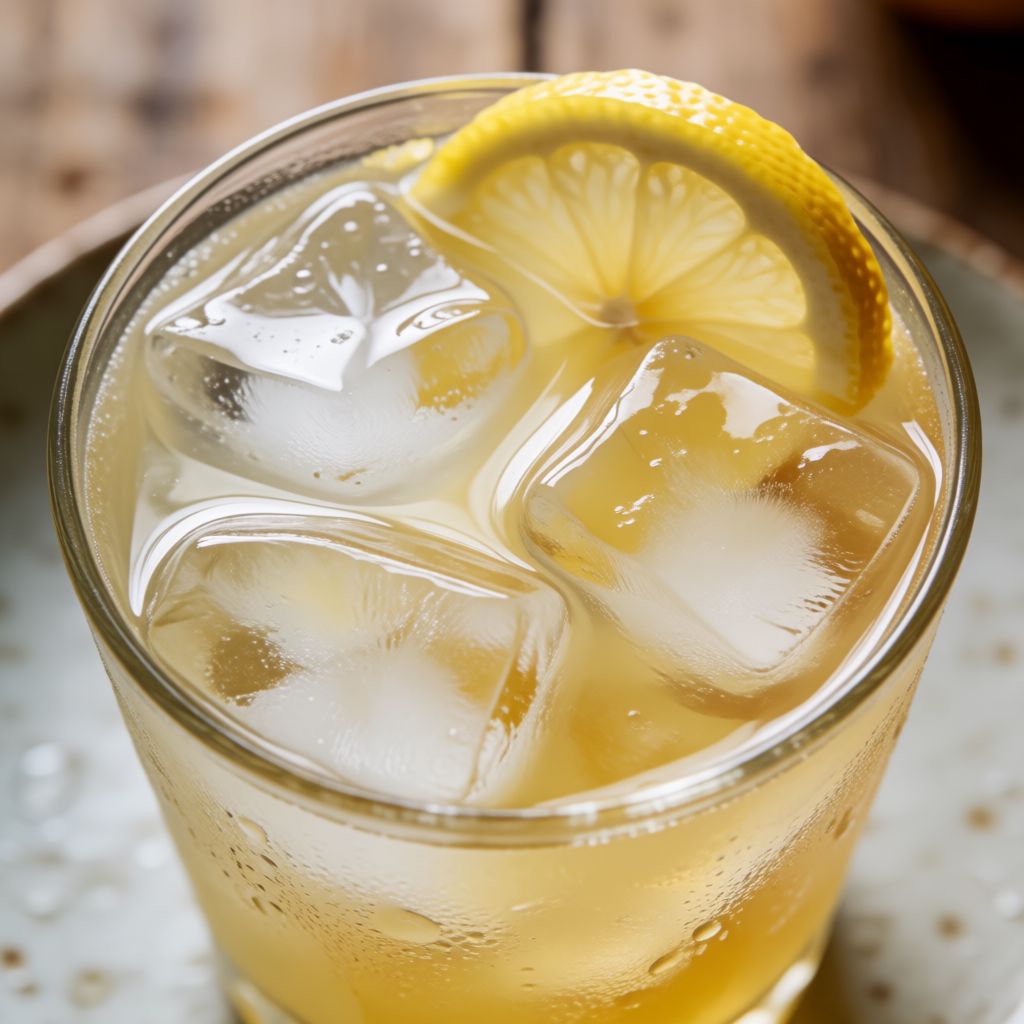
 AI photo
Lemon Cocktail
A refreshing vodka and lemon cocktail finished with a homemade sugar syrup and a sugared rim.
Labels are worked out automatically from the ingredients and can be wrong. Check the packaging if it matters to you.
Ingredients
- 2 pcs Ice cubes
- 80 ml Vodka
- 40 ml Grand Marnier or triple sec
- 50 ml Sugar syrup
- 2 pcs Lemon 50 ml juice from them plus zest cut into thin strips
- 100 ml Water
- 90 g Sugar
- 1 tbsp Glucose syrup
- 1 tbsp Sugar
- 0.5 pcs Lemon cut into slices



Steps
Rub the rim of the glass first with syrup, then with sugar, to give it a neat decorative edge.
Put the vodka, Grand Marnier, sugar syrup and freshly squeezed lemon juice into a shaker with ice.
Shake well, then strain through a sieve into the glasses.
Add a slice of lemon to the glass.
For the sugar syrup, boil equal parts water and sugar until the sugar dissolves.
The syrup can be kept in a small bottle behind the bar for a long time.
What was changed
The orange liqueur was swapped for Grand Marnier, a comparable option on UK shelves.
This is a lemon sour — vodka and orange liqueur pulled into line by sugar syrup and fresh lemon juice, shaken hard and served cold enough to fog the glass. Nothing here gets cooked except the syrup, so what decides whether it works isn't heat, it's ratio: how much spirit against how much sweet, how much sour. Get that wrong and you've either made rocket fuel or lemonade with a headache hidden in it.
The second thing that decides it is cold — real cold, the kind you only get from shaking properly, not swirling the shaker about like you're thinking of something else. Some say shaking "bruises" the spirit, roughs it up. No — vodka has nothing in it to bruise, no oils, no herbs, no skin; that myth belongs to gin, and even there it's mostly bar talk with no mechanism behind it. What shaking actually does is drive fine shards of ice through the liquid fast, which chills it properly and lets in a little meltwater — water this drink needs, because neat spirit and straight juice on their own taste sharp and thin, never as round as the same thing slightly diluted.
The sugared rim isn't decoration. It's a second texture waiting at the edge of the glass, a little grit of sweetness before the sour hits your tongue. It only works if the rim is sticky before the sugar goes on, and sugared on the rim only — if it runs down the inside, you get a wet clump sliding into the drink and oversweetening the first mouthful while the rest stays sharp.
Vodka is the right base here precisely because it has no opinion of its own — no smell, no taste beyond the burn, so the orange liqueur and the lemon get to do all the talking. That's the criterion if you want to swap it: any spirit with no flavour of its own, which rules out gin (it brings its own botanicals to the argument) but lets in a clean white rum at a push, with a slightly rounder finish.
Grand Marnier, or triple sec in its place, is doing two jobs: it's sweet, and it carries the bitter-bright smell of orange peel that lemon alone can't give you. This drink is a cousin of the old "Daisy" family — spirit, citrus, orange liqueur, sugar — a pattern that spread through bars once citrus could be shipped reliably and a splash of liqueur covered for spirit that wasn't always well made. Not magic, just a formula that survived because it reliably tasted better than its parts.
The lemon is doing two separate jobs too, and that's why it's used two ways. The juice gives sourness and body — the thing your tongue reads. The zest, cut in thin strips so you take only the coloured skin and none of the white pith underneath, gives aromatic oil — the thing your nose reads before the glass even reaches your mouth. Cut too deep into the pith and you get bitterness with no payoff; that's the usual reason a zest twist tastes wrong, not the lemon's fault.
Sugar syrup exists because sugar doesn't dissolve in something cold and alcoholic — drop it straight into the shaker and you'll find it sitting gritty at the bottom of the glass, undissolved, no matter how hard you shake. Dissolving it in hot water first does the work once, properly, and the syrup then sits in a bottle for weeks — the same bit of economy any working bar runs on, and just as useful if you're making drinks for more than one evening. Judge it done by sight: the liquid turns from cloudy to clear, not by a clock.
Glucose syrup is for the rim specifically, and it's thicker for a reason: a thin syrup runs down the glass before the sugar sets, leaving a patchy, uneven band. Some rub the rim with a cut lemon instead — no, because lemon juice is wet but not sticky, and the sugar won't hold to it in a clean ring. If you've no glucose syrup, honey or golden syrup will cling the same way, though honey brings its own smell along with it.
Two ice cubes from a standard UK tray won't give you much of a shake — fill the shaker properly, because a weak shake means weak dilution and a drink that's cold on the surface and warm underneath. Judge it by the shaker itself: once it's frosted over and uncomfortable to hold bare-handed, you've shaken enough — that's your doneness cue, not a count of seconds. In pub measures, 80ml of vodka is a little over three singles, 40ml of Grand Marnier under two — useful to know if you're pouring by eye rather than by jigger. And let the syrup cool before it goes anywhere near the shaker; hot syrup melts your ice early and you lose the dilution before the drink's even been shaken.