
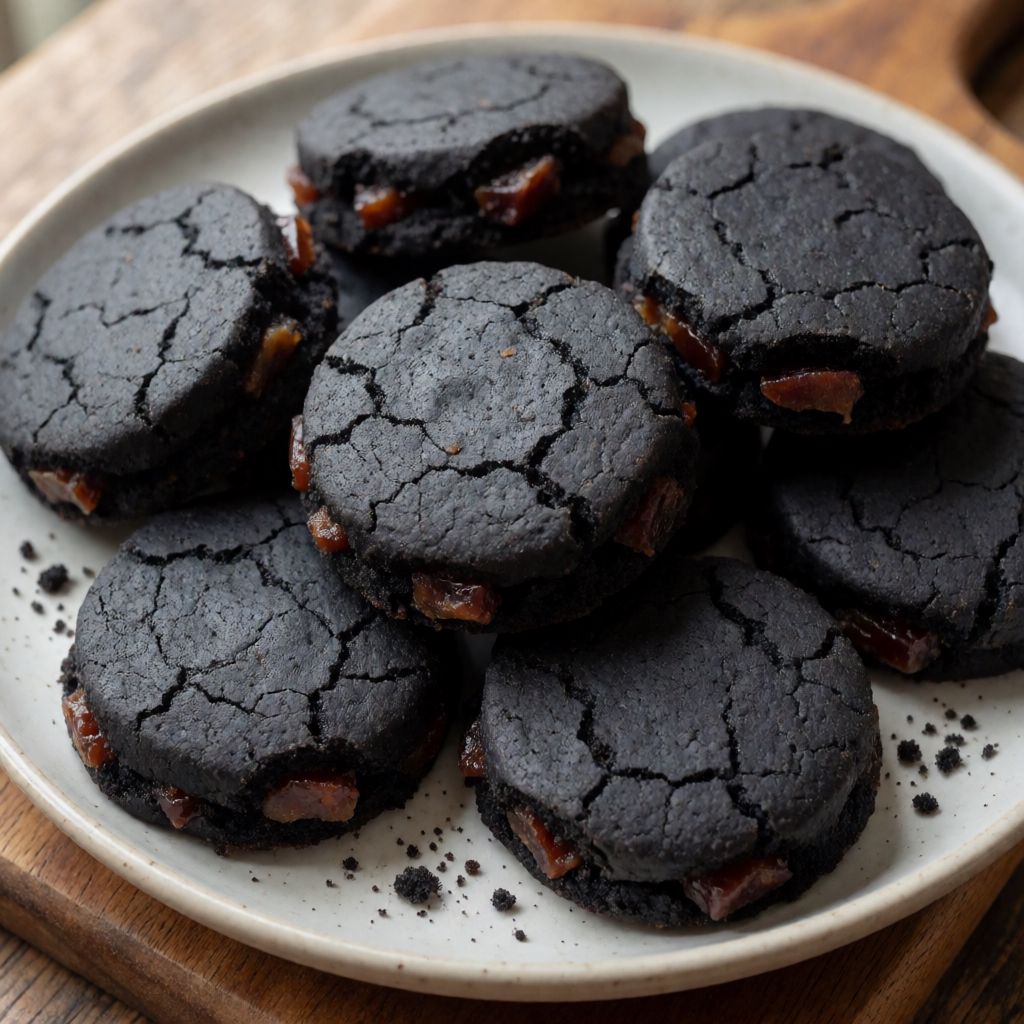
 AI photo
Liquorice and Date Biscuits
Crisp liquorice biscuits studded with sweet dates, perfect with a cup of tea.
Labels are worked out automatically from the ingredients and can be wrong. Check the packaging if it matters to you.
Ingredients
- 250 g Plain flour
- ½ tsp Baking powder
- 225 g Caster sugar
- ½ tsp Liquorice powder
- 100 g Dates
- 200 g Butter
- 1 pcs Egg
- 1 pinch Salt








Steps
Mix the flour, baking powder, sugar and liquorice powder together. Add the dates and butter, mix until smooth, then bind the dough with the egg.
Roll the dough into logs about 3 cm in diameter, wrap in baking paper and chill in the fridge for at least 1 hour.
60 minCut the dough into slices about 1 cm thick and place on a baking tray lined with baking paper.
Bake in a preheated fan oven at 180°C for 8–10 minutes, until the edges turn golden.
9 minLeave the biscuits to cool on a wire rack.
This is a refrigerator biscuit — the kind the bakery trade invented, not family tradition. You make one dough, shape it into a log, and the oven does fifty identical biscuits without you touching a rolling pin fifty times or hunting for a cutter. That's the whole point of the method: consistency by geometry, not by skill.
What decides whether it works is the temperature of that log when you slice it, and that's decided by patience, not by touch. The surface of a chilled dough firms up long before the middle does — press it after twenty minutes and it feels solid, but the core is still soft butter waiting to spread. Give it the full hour. What you're really chilling is the butter's fat crystals, so that in the oven they melt slowly, inside a crumb that's already starting to set around them, instead of melting fast and running the biscuit out flat into a sugary puddle on the tray.
Some say liquorice powder will make these taste like the black sweets from a corner shop — no. Half a teaspoon against 250 g of flour is a background note, not a flavour. It does for the date what salt does for caramel: makes the sweetness taste like something instead of just sugar. If it dominates, you've measured wrong, not followed the recipe right.
Doneness is the rim, not the clock. You want the edge turning gold while the centre is still pale — the centre keeps baking for a minute after it leaves the oven, on its own residual heat, while sitting on the tray. Pull it when the whole biscuit looks gold and you'll find it hard and dry once it's cooled.
Flour here isn't doing any lifting — it's the carrier that holds the fat and sugar together once they're rubbed in. Baking powder is only half a teaspoon because this isn't meant to rise like a cake; it just gives the biscuit a short bite instead of the flat density of plain shortbread. Don't be tempted to add more thinking it'll make them lighter — too much and you get a biscuit that puffs and then collapses, with a bitter metallic edge from the powder itself.
Caster sugar is chosen for its fine grain, which matters because this dough is rubbed, not beaten and creamed like a cake batter. Fine sugar dissolves into the fat as you work it; granulated sugar, with its bigger crystals, would leave gritty undissolved pockets in the finished biscuit. If all you have is granulated, blitz it a few seconds in a blender first — you're not changing the ingredient, just its particle size.
Dates need to be the soft, sticky kind, not the dry pressed block sold for baking that's been sitting in a cupboard since last Christmas. Soft dates break down into the dough and stay tender once baked. Hard, dried-out dates stay as hard pellets inside the finished biscuit — that cracked tooth isn't a bad batch, it's unsoaked fruit. If yours are stiff, sit them in just-boiled water for a few minutes and pat dry before chopping; that's the fix, not a different recipe.
Butter has to be cold and cubed, straight from the fridge, because the fat needs to coat the flour in small solid pieces, not melt into it. That's what keeps the texture short rather than greasy. Spreadable butter blends, the kind sold for toast, carry water and oils designed to stay soft at fridge temperature — exactly what you don't want here, because they melt too early in the oven and the biscuits spread thin before they've set. Any firm fat that's solid in your fridge will do the job; lard works structurally, though it changes the flavour, which is why butter stayed the standard once it became cheap enough for ordinary households to bake with regularly rather than save for special occasions.
Liquorice powder, if you haven't got it, isn't worth a special trip for. A pinch of ground aniseed or fennel seed gives a similar bitter-aromatic backbone against the sweetness of the date. Leave it out entirely and you've just made a plain date biscuit — nothing wrong with that, it's not the part holding the recipe together, it's the part giving it a personality. The egg is simply the glue: just enough moisture to pull a crumbly, rubbed-in dough into a log that holds its shape when you cut it, nothing more.
Fifty biscuits from this batch means it's built for a tea table with company, or for freezing the uncut log and slicing off what you need as you need it — that's the real advantage of the method over baking a single tray of a dozen. A fan oven is worth trusting at the temperature given, because the moving air bakes every tray evenly without you rotating anything halfway through; a conventional domestic oven without a fan runs patchier, so keep an eye on whichever biscuits sit nearest the element and don't assume every batch behaves the same.