
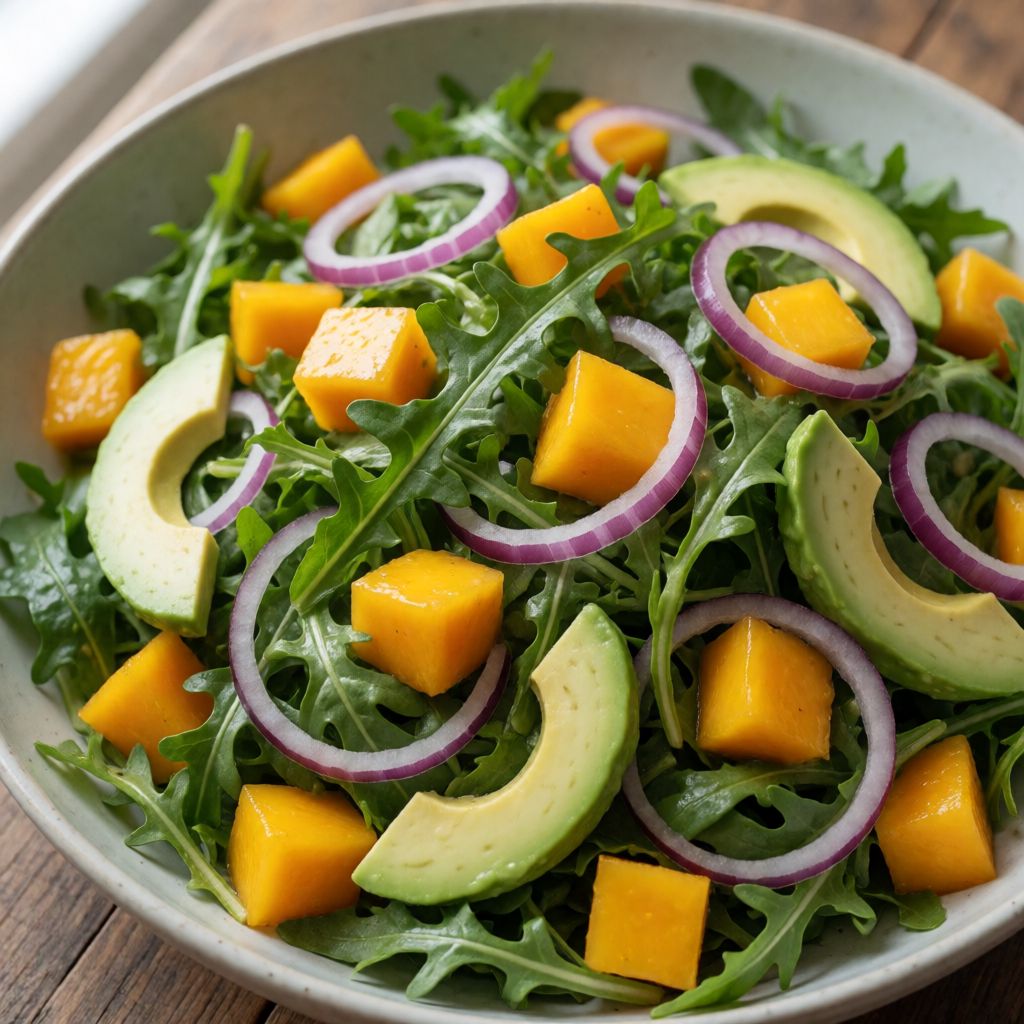
 AI photo
Mango, Rocket and Avocado Salad
A fresh, vibrant salad combining sweet mango, peppery rocket and creamy avocado with a light citrus dressing.
Labels are worked out automatically from the ingredients and can be wrong. Check the packaging if it matters to you.
Ingredients
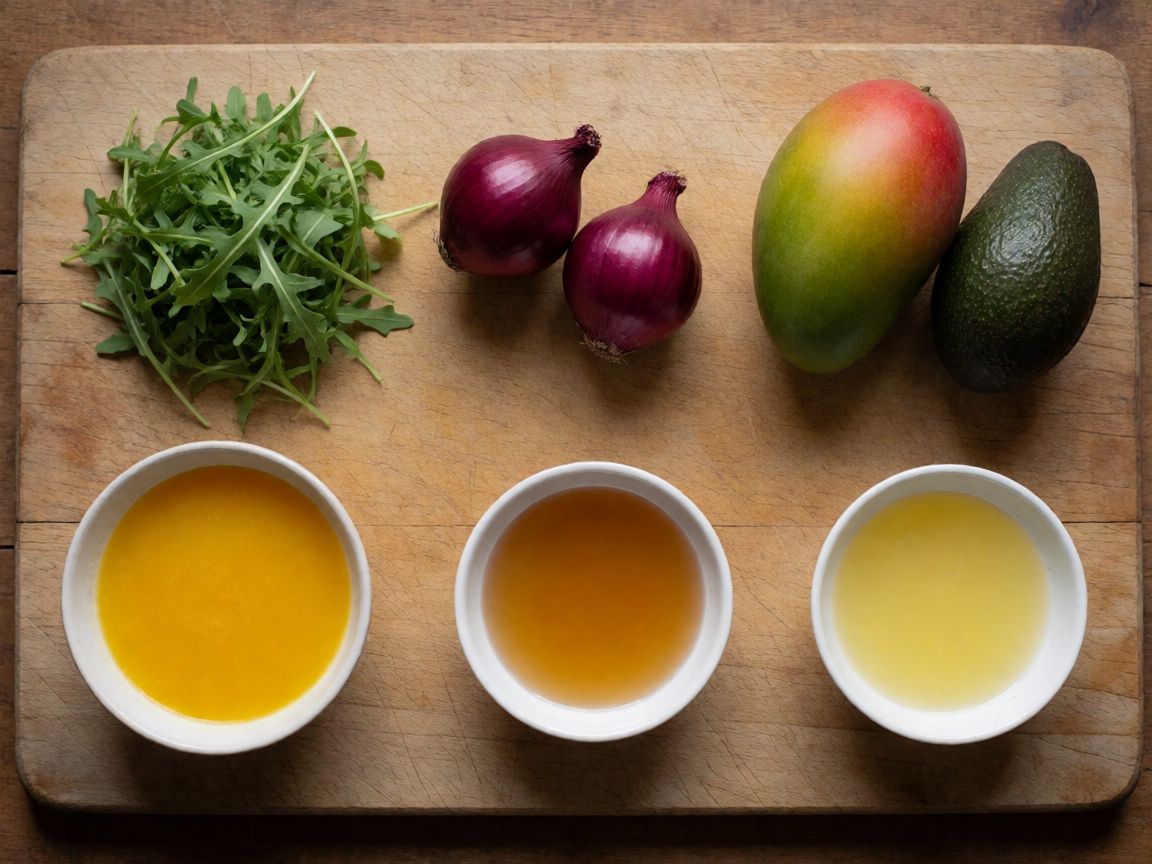
- 250 g Rocket
- 2 pcs Red onion
- 1 pcs Mango
- 1 pcs Avocado
- 5 tbsp Olive oil
- 2 tbsp Orange juice
- 1 tbsp Apple cider vinegar
- 1 tbsp Lemon juice for drizzling
- Salt to taste
- Black pepper to taste








Steps
Thoroughly wash the rocket under running water, then spin it dry in a salad spinner and spread it out on a towel to dry further.
Peel the mango, remove the stone and cut into slices about 0.5 cm thick.
Peel the avocado, remove the stone, cut into slices and sprinkle with lemon juice.
Slice the onion into thin half-rings, place in cold water for 5 minutes, then drain and pat dry.
5 minPrepare the dressing: mix the olive oil, apple cider vinegar and orange juice, then add salt and black pepper to taste.
Combine all the salad ingredients, add the dressing and toss gently. Serve immediately.
This is a salad that lives or dies in about three minutes — the time between dressing and plate. Everything before that is just getting pieces ready; the salad itself only exists for as long as it takes you to eat it.
What decides it is water, in three different states. The rocket must be bone dry — spin it, then lay it on a towel like a wet dog before oil touches it. Any water left on the leaf dilutes the dressing, and the oil slides off instead of clinging, pooling uselessly at the bottom of the bowl. The onion, by contrast, you put into water on purpose — cold, five minutes — not to clean it (onions aren't dirty), but to pull out the sulfur compounds that make raw onion bite your tongue. Thin slices, cold water, osmosis does the rest. The mango and avocado get no water at all. They get lemon juice, and only on the avocado, because its flesh browns the second air touches it — an enzyme doing its job, not spoilage.
Some say bitter leaves need a long soak to take the edge off. No — rocket's pepper isn't bitterness you wash away, it's the whole point of the leaf; it's there to argue with the sweetness of the mango. Soak it long and you drown the argument along with the flavour.
Get the ripeness of the fruit right and the dressing barely matters — it's only there to carry fat and acid across the leaf. Get it wrong, hard mango, bruised avocado, and no amount of orange juice will save it.
Start with the rocket itself, because it tells you what the whole dish is for. Peppery, almost hot on the tongue — that's the mustard oils in it, the same family that makes horseradish sharp. Buy it by smell: if it smells of nothing, it's old, no matter how green it looks on the shelf. No salad spinner in the flat? A clean tea towel, leaves spread thin, does the same job slower — you're chasing the same result, a dry leaf, not a particular gadget. Any leaf with real bite can stand in — watercress, young mustard leaves, even a handful of baby spinach bulked out with something sharper — the criterion is a leaf that argues with sweetness, not one that just sits there being green.
Mango and avocado are both climacteric fruit — picked hard and green because that's the only way they survive a boat from the tropics, and left to finish ripening on your counter, not in the fridge, because cold stops the enzyme that does the softening. This is worth knowing in a British kitchen, where supermarket mangoes and avocados are routinely sold rock-hard: buy them two or three days before you need them and leave them on the worktop, not chilled. A ripe mango gives slightly under your thumb near the stem — skin colour tells you almost nothing, especially with the Kent variety sold here, which stays greenish even dead ripe inside. A ripe avocado yields like a ripe pear, not a stone. If you can't get either in good shape, look for the same thing in a different fruit — a firm, sweet-acid flesh that holds a slice: ripe peach, nectarine, even papaya for the mango; there's no real substitute for avocado's fat and cream, but cubed cucumber will at least give you the coolness, if not the richness.
The red onion isn't there for heat, it's there for crunch and colour, and the cold-water soak is what lets it give you crunch without punishing you for it. If raw onion in any form upsets your stomach or your evening, use a milder variety — a sweet white onion or a shallot — and skip the soak, since there's less sulfur to chase out in the first place.
The dressing is simple on purpose: oil to carry fat-soluble flavour across the leaf, vinegar for a clean sharp acid, orange juice for acid with sugar riding alongside it. Olive oil is chosen here because its own grassy taste sits well with the rocket's pepper — but if you find olive oil's flavour too assertive, that's a fair complaint, not a failure of taste; any oil with no smell of its own, sunflower, a light vegetable oil, will carry the dressing just as well, it'll simply stop arguing back. Salt and pepper go into the dressing, not onto the leaves directly, so they dissolve into the liquid and spread evenly instead of sitting on one leaf and drawing water out of it in a dark wilted spot.
And the lemon on the avocado only — not the dressing — because its job is narrow: stop oxygen reaching cut flesh, nothing more. If you dress the whole salad in lemon instead of orange juice and vinegar, you'll get a flatter, one-note acid with none of the orange's sweetness to balance the rocket's bitterness.
Last thing, and it's not really a step: patience is an ingredient here too, mostly in the days before you cook. Rush the ripening and you're dressing hard fruit no amount of good oil will fix. Get that part right, and the rest of this takes you fifteen minutes, which is roughly how long the salad itself has left to live once you've tossed it.