
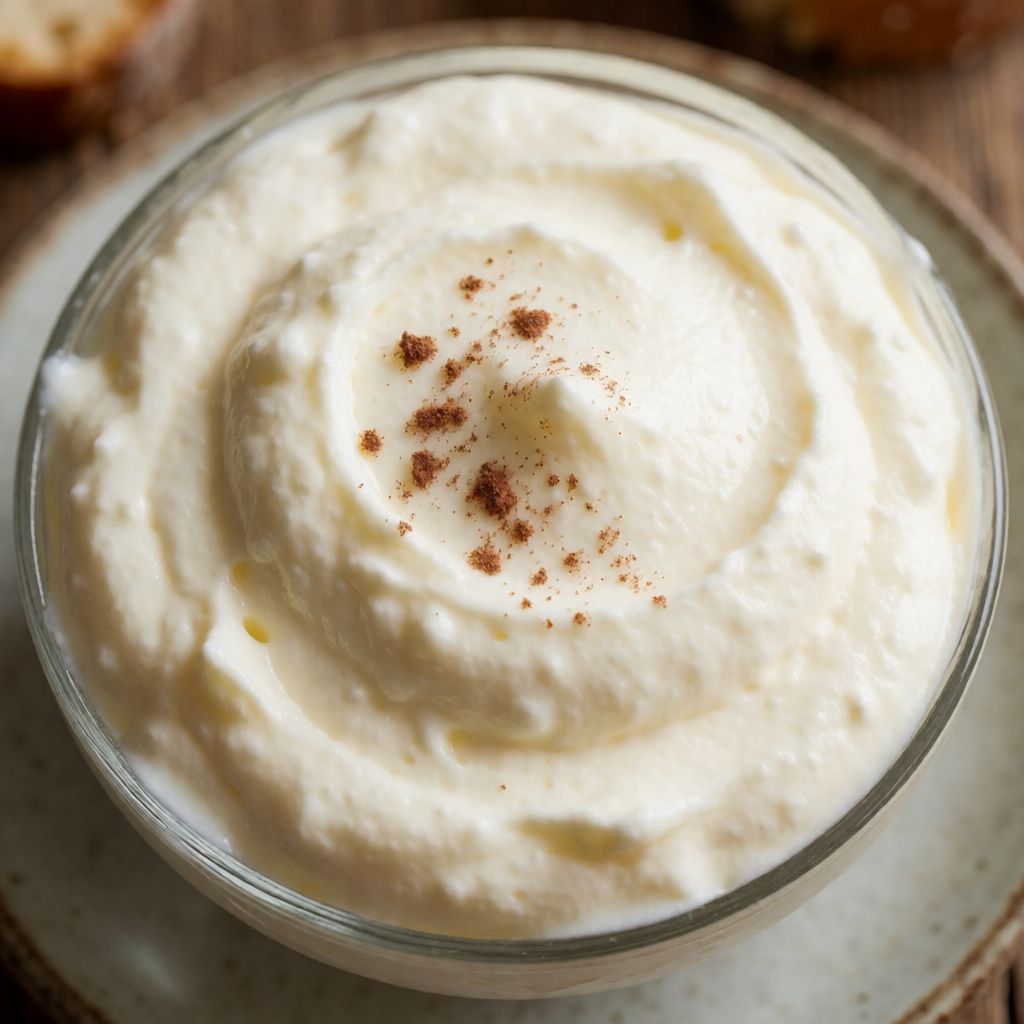
 AI photo
Mascarpone Cream for Pandoro and Panettone
A light, creamy mascarpone filling spiked with rum, perfect for spooning over pandoro or panettone slices.
Labels are worked out automatically from the ingredients and can be wrong. Check the packaging if it matters to you.
Ingredients
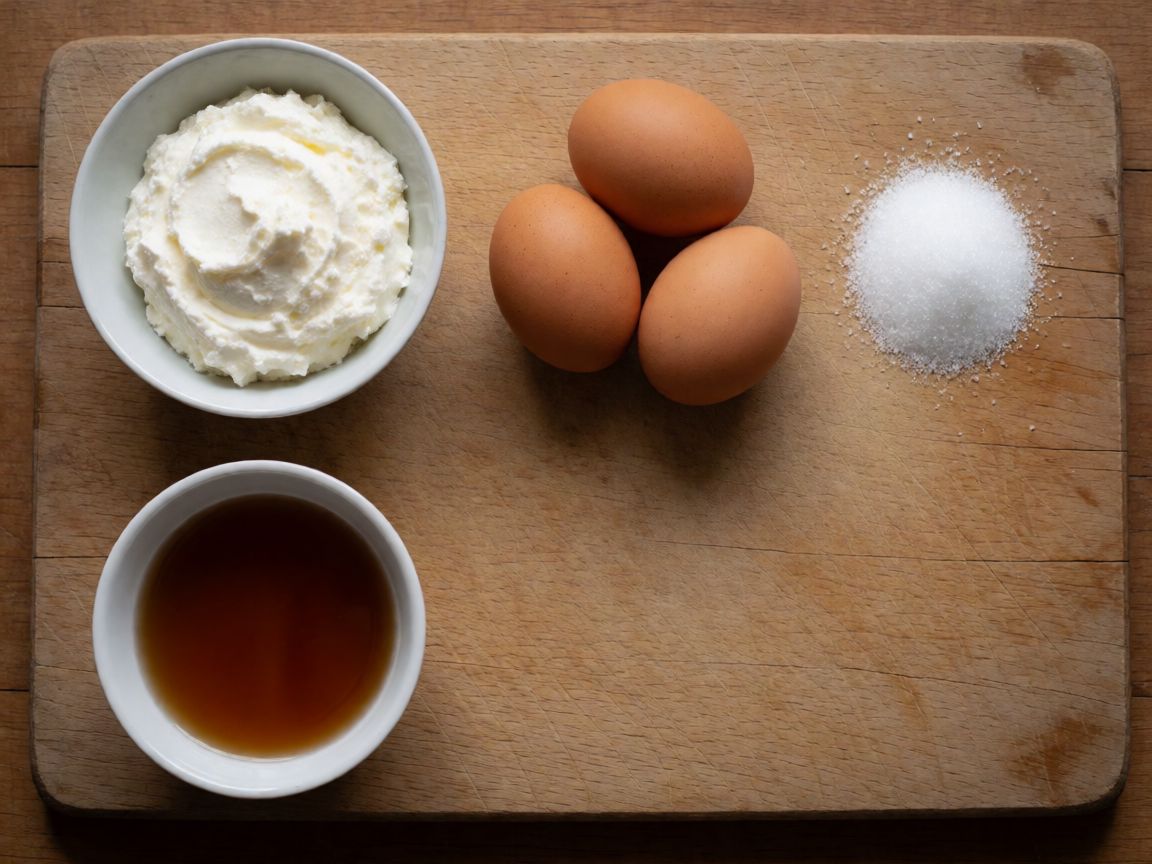
- 400 g Mascarpone
- 3 pcs Eggs
- 100 g Sugar
- 3 tbsp Rum




Steps
Take all the ingredients out of the fridge at least an hour ahead so they come to room temperature.
Separate the yolks from the whites and whisk the whites until thick and firm.
In another bowl, whisk the sugar with the yolks for a few minutes until the mixture is pale and fluffy.
Add the mascarpone and rum, continuing to whisk until smooth.
Very gently fold in the whites with a spatula, using bottom-to-top movements.
Place the bowl of cream in the fridge for 1 hour before serving.
60 minFill slices of panettone or pandoro with this cream, or simply serve it by the spoonful.
There's no stove in this recipe, and that's the whole point. What holds this cream up is just two mechanical tricks: fat (from the mascarpone) and air (beaten into egg whites). Nothing sets by heat, nothing cooks. So the few minutes of whisking you do at the start decide everything — there's no later fix, no simmer to rescue a mistake.
That's why room temperature matters more than it sounds. Cold mascarpone doesn't loosen, it seizes — you get little white lumps in the cream that no amount of extra whisking will break down, because the fat is too stiff to take on the yolk mixture smoothly. Cold egg whites are worse for a different reason: their proteins are tighter and don't unfold as readily, so you beat longer for less air and end up with a thinner foam that collapses faster once folded in.
Some say raw egg in a dessert is risky. In Britain specifically, that's largely out of date: eggs carrying the Lion stamp come from flocks vaccinated against salmonella, and the Food Standards Agency has said since 2017 that Lion eggs are fine raw even for pregnant women and small children. If your eggs aren't stamped, use pasteurised liquid egg from a carton instead — same job, no worry.
The fold at the end is the one place people wreck it without meaning to. Stir the whites in like you'd stir sugar into tea, and you knock the air straight back out — the cream turns heavy and slightly grainy instead of light. Fold bottom to top, slowly, and you're protecting the only lift this dish has.
Mascarpone itself is worth understanding, because it isn't cheese in the way Cheddar is. It's cream, warmed gently and thickened with an acid — citric or tartaric — rather than set with rennet and cultured for months. That's why it has no rind, no real age, and a fat content around 45%, which is what lets it carry the whole dessert's body without any cream being whipped separately. If you can't get it, full-fat cream cheese loosened with a spoon of double cream gets you close in richness, though cream cheese is cultured with lactic bacteria and will always taste sharper — you're trading a little tang for availability.
The eggs do two separate jobs, which is why they're split. Yolks bring richness, colour, and a fat that binds smoothly with the mascarpone and sugar. Whites bring nothing but air — structurally, they're the only rising agent in a dish that never sees an oven. Three medium-to-large eggs is the right scale for 400g mascarpone; go smaller and the cream turns heavier than it should.
Sugar's job is to dissolve into the yolk while you whisk, not to sit there as grit. Caster sugar does this fastest because the grains are small enough to vanish in a couple of minutes of beating; ordinary granulated will get there too, just slower. Demerara or other coarse sugars won't fully dissolve in the time you're whisking and will leave a faint crunch in a dessert that's supposed to be smooth throughout.
Rum is there for aroma and to cut through the fat, not because rum specifically is magic. The real criterion is any aromatic spirit without a raw, biting edge — brandy or Marsala work the same way. If you'd rather skip alcohol, a shot of strong espresso does a similar job of cutting the richness, though it nudges the whole thing toward tiramisu territory rather than pandoro cream, which is no bad thing.
The hour in the fridge is not a formality — it's the step where the cream actually becomes a cream rather than a wobbly, slightly warm sauce. Cold firms the fat a little and lets the beaten structure settle; skip it or rush it and you're serving something closer to eggnog than filling. Patience here is cheap — it costs you nothing but waiting — but it's the one ingredient you can't substitute.
Pandoro and panettone are, by design, dry cakes — they were built that way so they'd survive weeks of being baked ahead for Christmas and still be edible later. This cream is the wet half of that equation, the same logic that gives Britain its own bread and butter pudding: a dry baked good rescued by an egg-rich custard. Different countries, same arithmetic — stale cake plus moisture equals dessert.