
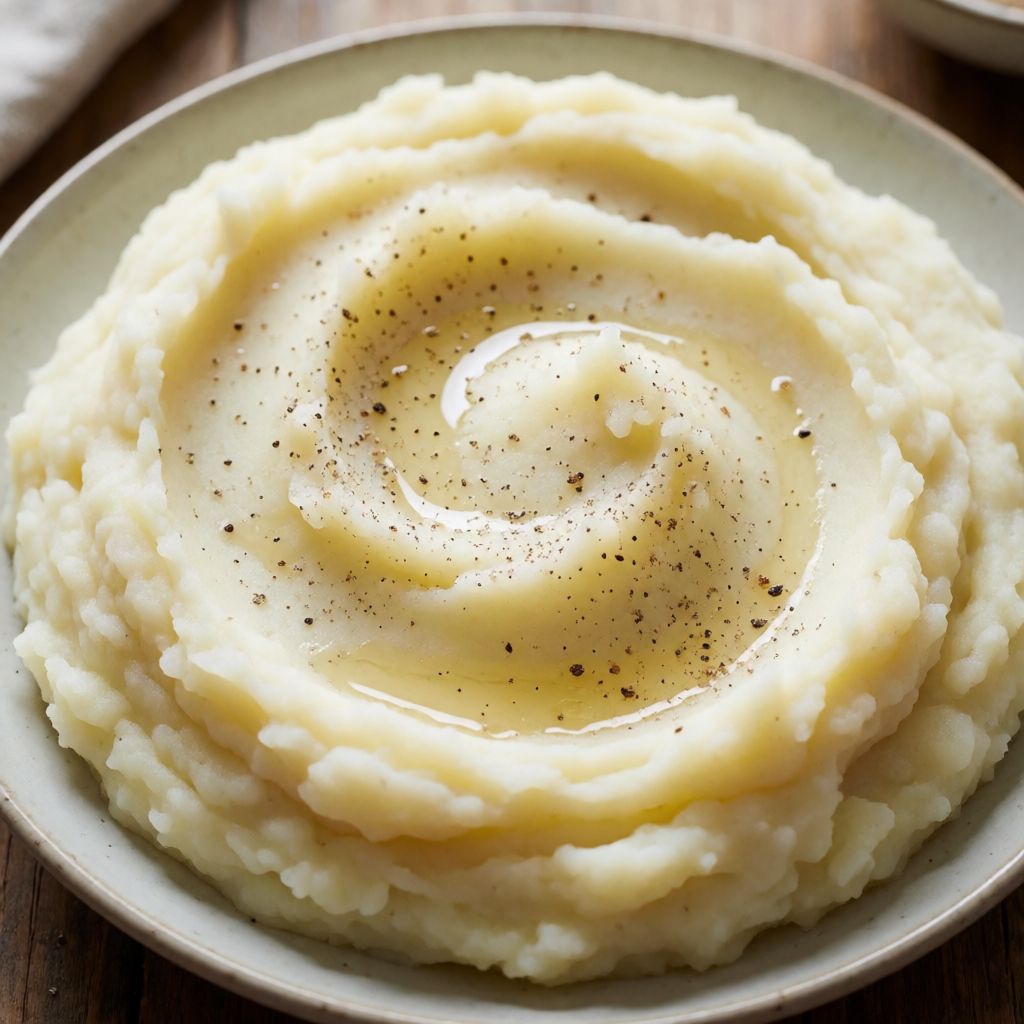
 AI photo
Mashed Potatoes
A creamy, buttery mashed potato side dish.
Labels are worked out automatically from the ingredients and can be wrong. Check the packaging if it matters to you.
Ingredients






Steps
Boil the potatoes in unsalted water until tender.
15 minWarm the milk in a saucepan to about 50°C.
3 minMash the hot potatoes with the butter and whip with a mixer, gradually adding the hot milk.
5 minSeason with salt, pepper and freshly grated nutmeg to taste.
1 min
Mashed potatoes look like the simplest thing in the kitchen, and that's exactly why they go wrong so often. The two real fights here are against starch turning to glue, and against temperature shocks that leave lumps. Get those two things right and the dish makes itself.
The first rule nobody explains properly: boil the potatoes in water with no salt in it. People think this is about saving the seasoning for later, but the real reason is physics. A potato cell takes in salt slowly, and fifteen minutes in boiling water isn't enough for salt to travel from the water right into the middle of a whole peeled potato. Salt it early and you season the surface while the heart stays bland - that's uneven seasoning wearing the costume of a seasoned dish. Salt at the end, once everything's mashed together, and every spoonful gets the same hit, because now the salt only has to travel millimetres through broken cells, not centimetres through a whole potato.
The second fight is against glue. Potato starch, once it's swollen with heat, is one wrong move from becoming wallpaper paste. Some say a food processor gives the silkiest mash - no, because its blade shears the starch cells open and the burst amylose binds the whole pot into something closer to dough. A hand masher, or a short, brisk pass with a mixer while everything is still hot, breaks the cells apart without shredding them to ribbons. Work it hot, work it briefly, then stop your hand.
Potato choice decides half the outcome before the pan is even on the heat. You want a floury type - Maris Piper or King Edward, the same ones that go crisp-edged under a Sunday roast - because their cells are loosely packed and fall apart under heat instead of holding their shape. A waxy or new potato keeps its structure and its water, and gives you a mash that stays wet and faintly gluey no matter how carefully you work it. That's a potato problem, not a technique problem, and no extra whipping fixes a potato that was wrong from the start.
Butter goes in cubed and cold, not melted, and this matters more than it looks. Cold butter cut small melts gradually as it meets the hot potato, so each cube coats a little starch at a time instead of flooding the pot with fat that splits and turns greasy. Without butter, any fat with a clean flavour of its own can stand in - a mild oil, a spoon of double cream used alone - but know you're trading away some of what dairy fat specifically does to a starch cell. There's no real substitute here, only compromises you choose with open eyes.
Milk is there to loosen and enrich, not just to add liquid. Whole milk is the honest choice; skimmed thins the mash without giving anything back. For something richer, swap part of it for single cream, which carries more fat and leaves a noticeably silkier result - just keep it at the same gentle warmth before it goes in.
After draining, give the potatoes a minute uncovered before you start mashing - a shake in the colander, a short pause. This isn't fuss. A boiled potato carries trapped steam and surface water, and mashing that straight in adds liquid you never meant to add, which is how mash turns loose and sloppy. Letting the steam escape tightens the texture - the ordinary hob's version of what open heat over a kazan would do for you without being asked.
Nutmeg at the end is old economics more than magic. It was once a spice worth sailing dangerous routes for, a mark of a table that could afford it, and it happens to cut through dairy richness in a way pepper alone can't. A pinch, freshly grated if you have a whole nutmeg, because the pre-ground version loses its oils to the air within weeks and leaves you with dust that remembers flavour rather than carrying it.
None of this holds together if you rush the whipping or the warming. The whole dish takes twenty-five minutes start to finish, so patience here isn't about long hours - it's about not skipping the minute the potato needs to dry, the minute the milk needs to warm gently instead of flash-heating, the restraint to stop beating before starch turns to glue. Mash is fast food that still asks you to wait exactly as long as it needs, no more, no less.