
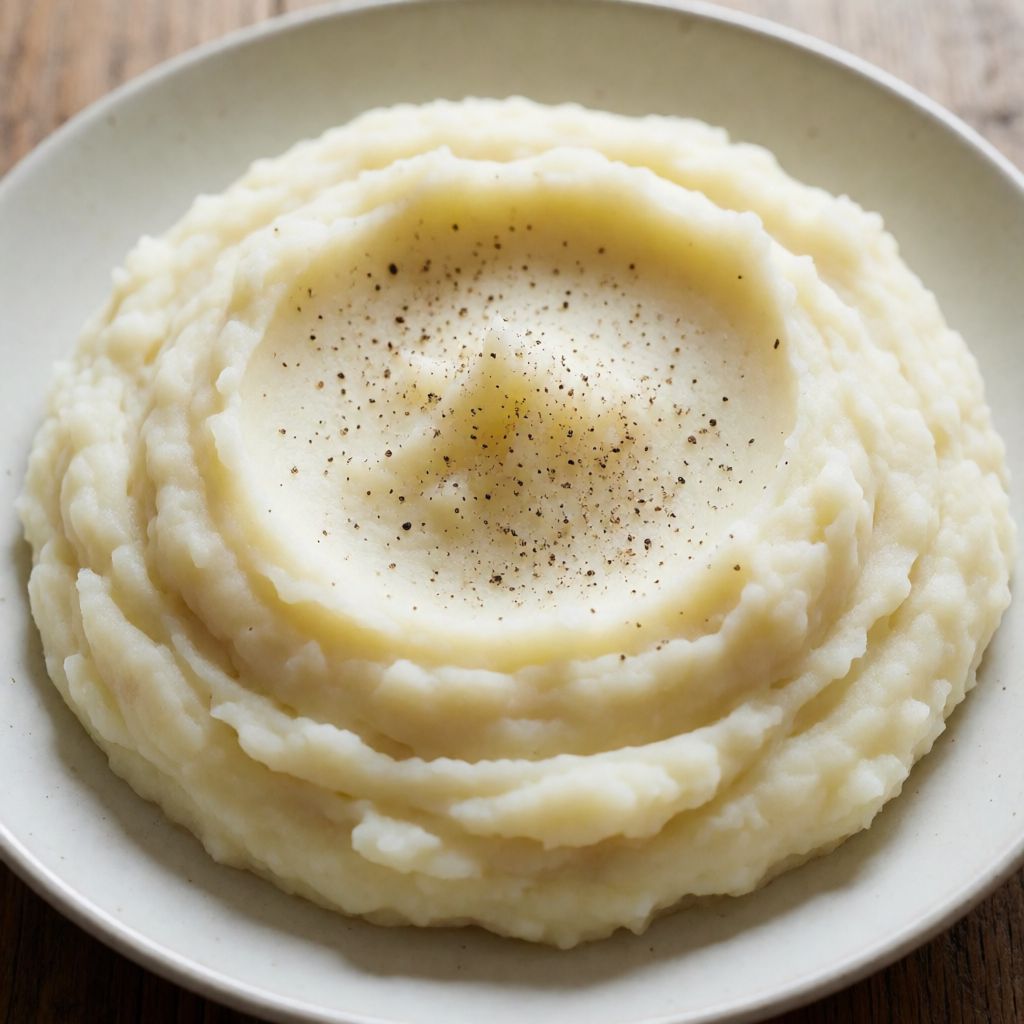
 AI photo
Creamy Lump-Free Mashed Potatoes
A smooth, creamy mashed potato made without any lumps.
Labels are worked out automatically from the ingredients and can be wrong. Check the packaging if it matters to you.
Ingredients
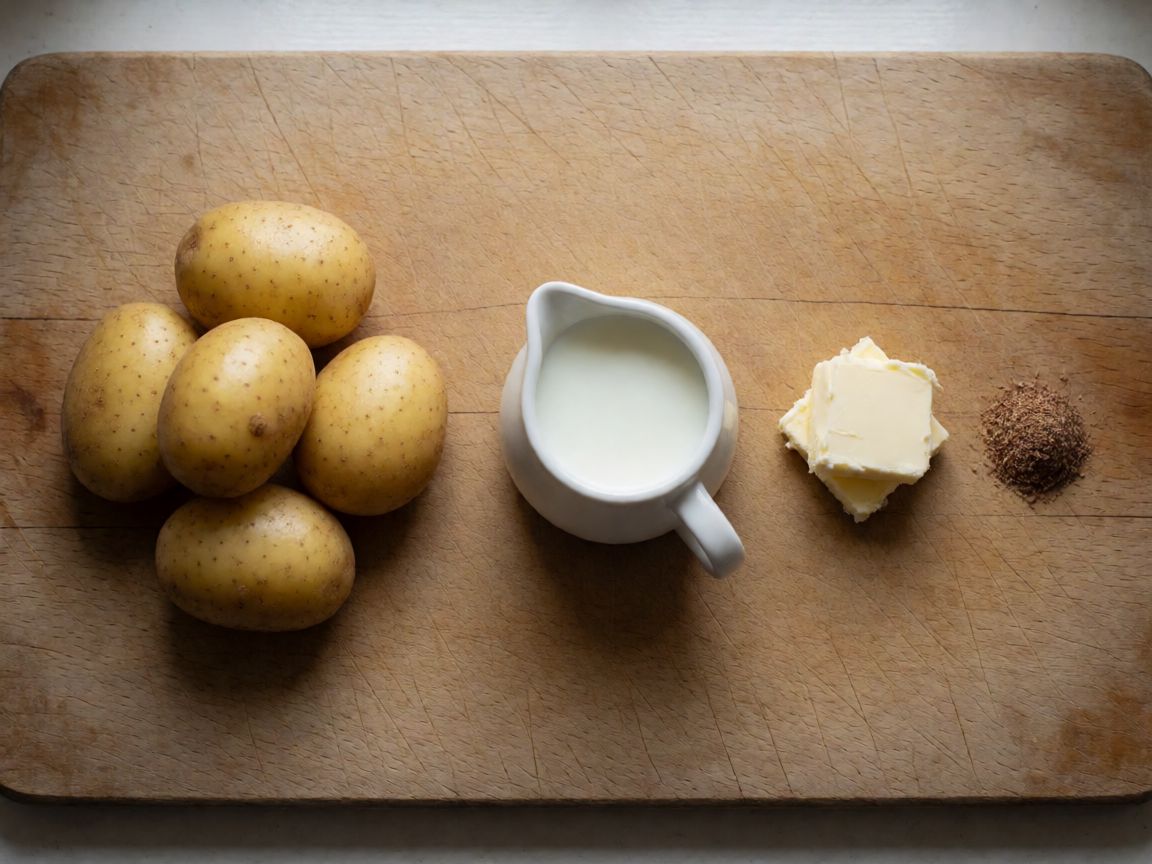






Steps
Choose potatoes of similar size, wash off any soil, then cover with cold water.
Boil the potatoes for at least 40 minutes until tender.
40 minDrain the water and carefully peel the hot potatoes.
Mash the potatoes with a potato masher in a bowl.
Melt the butter over low heat.
Add the mashed potatoes, nutmeg and salt, and mix well.
Pour in the milk in small amounts, letting each addition absorb before adding the next.
Season with pepper and turn off the heat. The mash is ready.
This is mash the way it should behave: you lift the fork, it folds back on itself instead of sitting there like wallpaper paste. Four people, one plate of butter melting into it on the side of the Sunday roast. What decides whether it works isn't the masher you own or how hard you beat it — it's what you do to the starch inside the potato.
A potato cell is a little sack of starch granules. Boiling swells them; mashing breaks the cell walls so the starch can spread out and thicken the liquid you give it. Do this gently and you get fluff. Do it violently — blender, food processor, electric whisk — and you tear the granules themselves, and they release a glue that no amount of butter fixes afterwards. Some say a blender gives the silkiest mash. No — because silk from a blender is actually gluten-free wallpaper paste; a masher or a ricer stops at the cell wall, a blade doesn't.
Starting the potatoes in cold water and picking pieces of a similar size isn't fussiness, it's arithmetic: heat needs to travel from the outside of a potato to its centre, and if the pieces are different sizes, the small ones go to mush while the big ones are still raw in the middle. Cold start means the whole potato heats at the same rate it cooks at, so the centre finishes just as the outside does. Doneness is a knife sliding in without an argument — forty minutes is the floor, not the answer, because potato size and your hob's real output change the number.
Potatoes: you want a floury one, not a waxy one — high starch, low moisture, the kind that falls apart a little at the edges when boiled, rather than holding its shape like a boiled egg. In Britain that's a King Edward or a Maris Piper; a waxy salad potato will give you something closer to lumpy porridge no matter how long you mash it, because it simply doesn't have enough starch to swell into cloud. If you only have what's in the cupboard, the test is simple: cut one raw and look — if it's starting to go a bit translucent and sticky at the cut, that's floury enough.
Milk's job here is fat and moisture together, and it works best not icy from the fridge — a splash of cold shocks the hot starch and is exactly how you get those small cold lumps that won't dissolve back in, the ones people usually blame on bad mashing. Let it lose its chill on the counter while the potatoes drain, or warm it briefly, and you'll stop fighting lumps you created yourself. Any milk with real fat in it will do the job; thin it with a little water if all you've got is skimmed, or use single cream cut with water if that's what's in the fridge after making tea.
Butter's first duty is mechanical — coating the starch, as above — and its second is flavour, which is why unsalted is worth using if you've got it, so you're deciding the salt yourself rather than guessing how much is already in there. If you've none, any rich, mild-tasting fat will hold the starch the same way, but you lose the dairy roundness that makes this dish what it is; a flavourless cooking fat gets you texture without the point of the exercise.
Nutmeg is a whisper, not a seasoning — one pinch, no more, and its job is cutting the flatness that pure butter-and-milk richness has on its own. This pairing is old English kitchen habit, going back to when nutmeg was one of the few spices that reliably turned up in a British larder and dairy was the one thing every farm had too much of. Some treat it as decoration. No — leave it out and the mash tastes rounder but also duller, a fraction one-note.
Salt goes in with the mash, not the boiling water, in this version — which means you're seasoning what you can taste directly, rather than hoping some fixed amount in a pot of water found its way into the potato. It's a small thing, but it's the difference between seasoning by guess and seasoning by tasting a spoonful and deciding.
None of this is fast, and that's the actual ingredient people skip: patience. Forty minutes of simmering so the centre really is done, and then the slow, splash-by-splash business of adding milk rather than pouring the lot in at once because you're hungry and the roast is nearly out of the oven. Rush either stage and you get the two classic failures — a gritty core from underboiling, or a gluey bowl from flooding hot starch with cold milk — and both get blamed on the recipe when they're really a clock being ignored.