
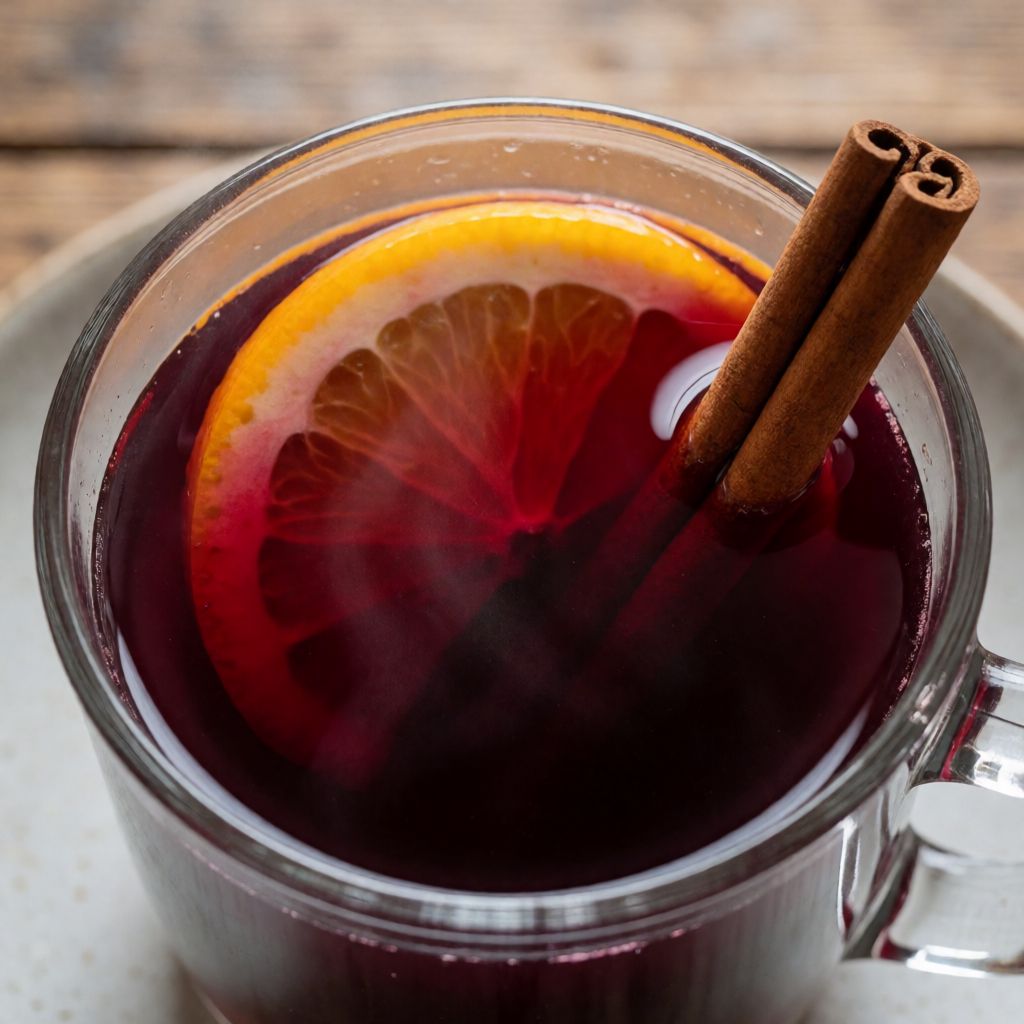
 AI photo
Mulled Wine
A warming spiced wine, simmered with orange, cinnamon and cloves for a cosy winter drink.
Labels are worked out automatically from the ingredients and can be wrong. Check the packaging if it matters to you.
Ingredients






Steps
Pour the red wine, orange juice and zest into a saucepan, then add the cinnamon, cloves and sugar.
Heat slowly until almost boiling.
Cover with a lid, turn off the heat and let it infuse for 1-2 hours.
90 minStrain through a sieve into a clean saucepan.
Taste and add more sugar if you like, then reheat until almost boiling.
Add the rum and serve in glasses with orange slices.
Mulled wine is not a boiled drink, it's an infusion that happens to need heat to get started. The whole point of step two — heat until almost boiling — is to get the wine hot enough to pull the oils out of the cinnamon bark, the clove buds and the zest, without letting it actually bubble. Push past that point and you're cooking the wine, not seasoning it: the alcohol and the top aromatic notes go up with the steam, and what's left tastes thin, scorched, more like a candle shop than an orchard in December.
Some say you have to boil mulled wine hard, to burn the alcohol off and make it "safe" for the evening. No — a brief simmer barely touches the alcohol (that takes long, sustained reduction), and the first thing a hard boil actually destroys is the smell, which is most of what you're paying for. You end up with something weaker in every way, not safer.
What decides whether this works is two things: keeping the wine at a shiver rather than a boil, on a hob where that line is easy to cross if you walk away, and giving it the full hour or two off the heat afterwards to actually steep. The first heating just opens the spices up. The standing time is where the work gets done — rush that and you've made hot orange squash with a cinnamon stick floating in it, not mulled wine.
Start with the wine. You want something cheap-ish and tannic with a bit of grip, not a wine you'd be sorry to drink on its own — the whole tradition of mulling exists because spice and sugar were historically used to rescue wine that had gone rough or thin through a winter, and later, to show off the spice itself, which was once worth more than the wine. A delicate, expensive bottle is just wasted here; you're masking it, not showcasing it, so spend your money on the rum instead.
Cinnamon stick, not ground: bark releases its oil slowly and cleanly into hot liquid, while ground cinnamon leaves grit that sits at the bottom of the pan and won't come out in a sieve. Since you're straining the whole lot through a sieve at step four, anything that doesn't filter cleanly ends up in the glass, and nobody wants spice silt in their drink.
Cloves are strong enough to be used as an actual anaesthetic — oil of clove in a dentist's chair — so eight is already a decision, not a rough guess. Too many and the drink stops tasting festive and starts tasting medicinal; if you're nervous, start with six and taste after the steep, before you commit to reheating.
The orange matters twice over: zest for the fragrant oil in the skin, juice for the acid that keeps the sugar from making the drink flat and cloying. Organic is specified because you're eating the peel, effectively — regular citrus is often waxed and sprayed, and no amount of washing under the tap fully shifts that. If organic isn't available, scrub hard in hot water, or use a thin strip of peel and trust that you're straining most of the surface off anyway.
Sugar goes in early so it has time to dissolve in warming wine, but you taste again after the long steep, because the standing time concentrates the spice far more than the sugar — add too much sugar up front and you've built a drink to a guess, not to the actual result sitting in the pan. Rum is there for its own warmth and a faint vanilla-molasses note that sits well next to cinnamon; any dark, clean spirit does the same job, but it should go in at the very end, off the heat, because its entire purpose is to survive the journey into the glass.
On an ordinary hob, if your saucepan doesn't have a lid that fits, a plate on top during the standing hour does the same job — it traps the steam so the oils condense back into the wine instead of perfuming your kitchen ceiling. This isn't a technical drink, in the end — it's closer to the ritual of tea with milk than to anything that needs watching like a sauce. The only real ingredient that can't be bought is the patience to let it stand the full ninety minutes before you taste it and decide what it needs.