
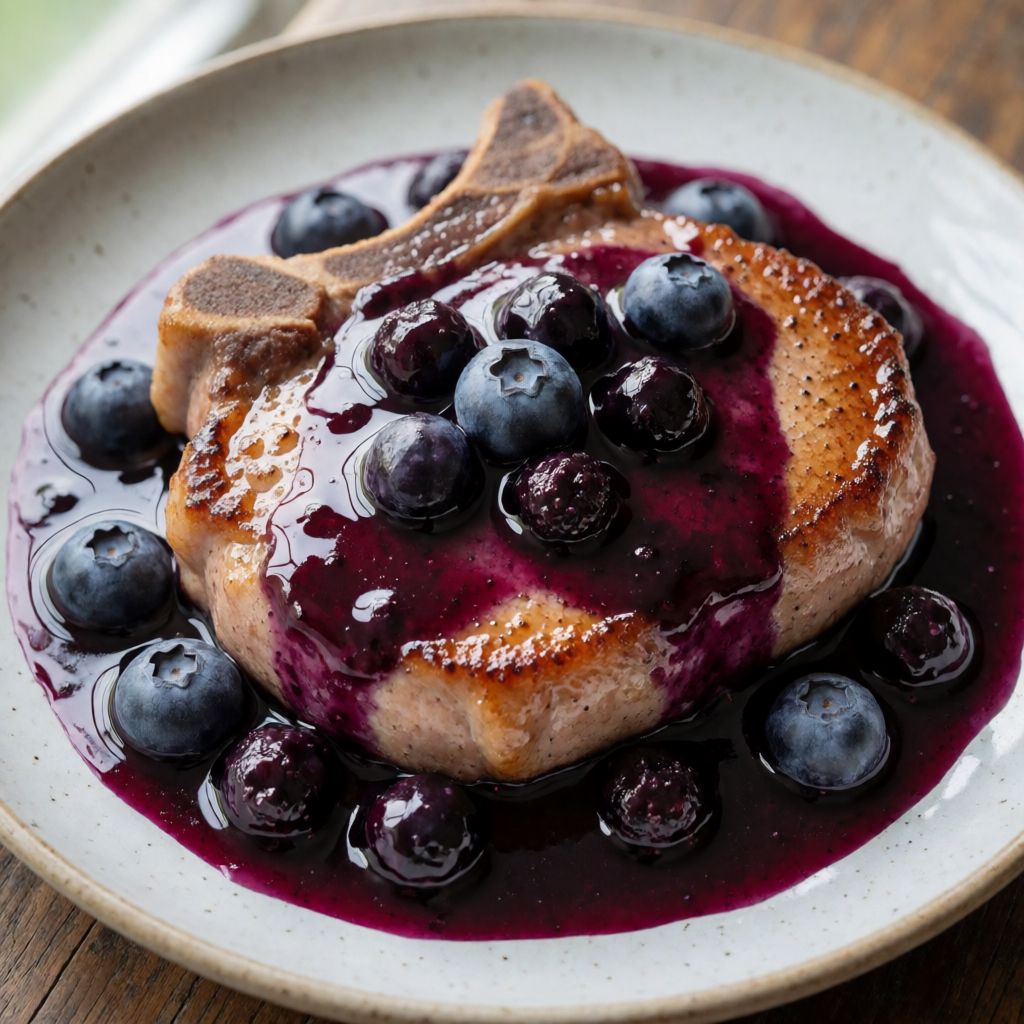
 AI photo
Pork Chops with Blueberries
Seared pork chops finished in a sweet-tart blueberry and brandy pan sauce.
Labels are worked out automatically from the ingredients and can be wrong. Check the packaging if it matters to you.
Ingredients
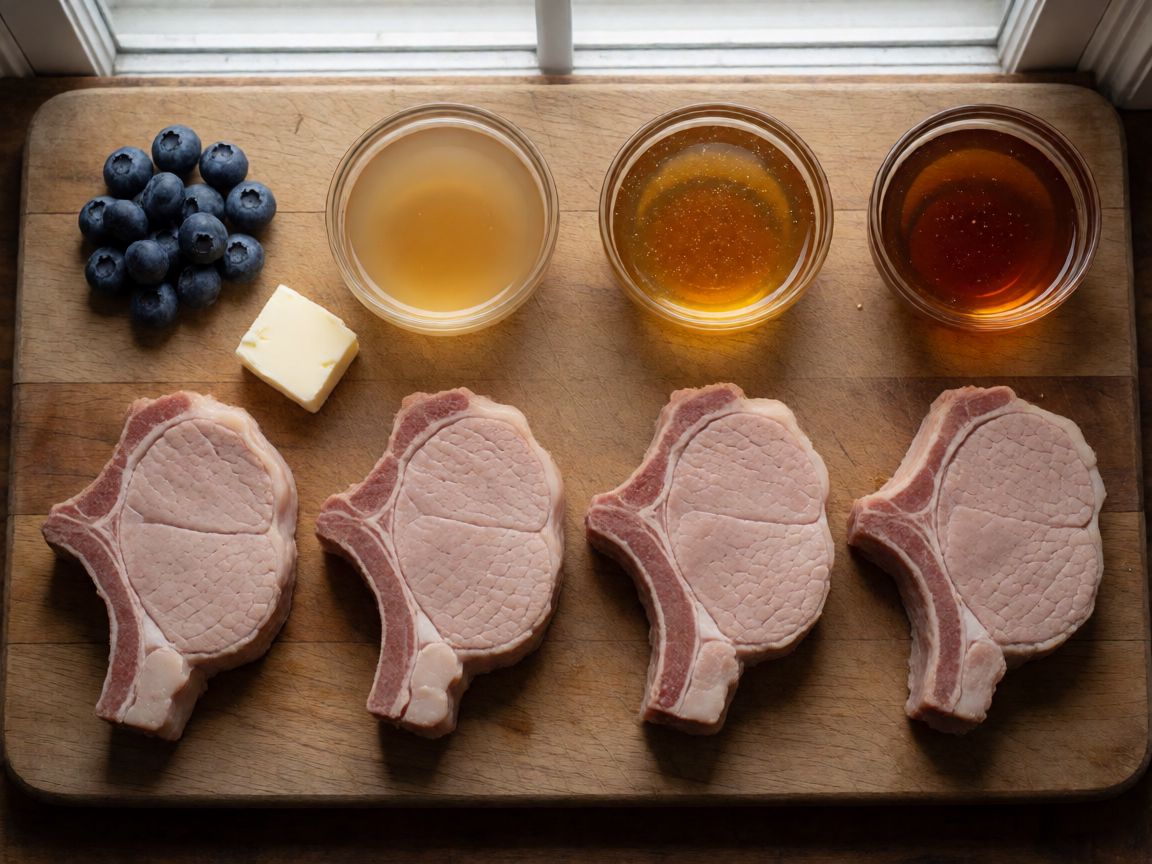
- 4 pcs Pork chop
- 150 g Blueberries
- 20 g Butter
- 3 tbsp Apple cider vinegar
- 2 tbsp Honey
- 2 tsp Brandy
- Salt to taste
- Black pepper to taste







Steps
In a non-stick frying pan, melt the butter until it foams lightly, add the pork chops and fry over high heat.
10 minOnce the chops are nicely browned, lift them out onto a plate with a slotted spoon. Pour off almost all the fat from the pan.
Return the chops to the pan and finish cooking over high heat; season with salt and pepper, pour in the brandy and let it flame briefly, then remove from the heat at once. Doneness: 70°C inside.
Add the blueberries, honey and apple cider vinegar, and cook over high heat.
5 minServe immediately, drizzled with the blueberry sauce.
This is a bistro trick dressed in English Sunday-dinner clothes: you sear a chop hard and fast, then build a sauce in the same pan from whatever fruit, sugar and acid you have to hand. The method is older than the blueberries — French cooks have been deglazing pans with brandy and fruit for pork and duck for a couple of centuries, because a dry-fried fat strip needs something sharp and sweet to cut it. Swap blueberries for apples and you've basically got the condiment that already sits next to your roast pork on a Sunday. Same logic, different berry.
What decides whether this works is heat discipline, twice over. First: the butter has to foam and then quiet down before the chop goes in — that foam is water boiling off the butter, and once it settles the fat is hot enough to crust meat instead of stewing it in its own juice. Second: you brown hard, lift the chop out, pour off the fat, then finish it — because a chop sitting in its own rendered fat doesn't sear, it braises, and you lose the crust you just built.
Some say pork has to be cooked until it's grey through, no pink allowed. No — that's a fear from decades ago when trichinosis was a real risk in badly raised pigs; today's pork is clean enough that 70°C internal is not just safe, it's the point where the chop is still juicy. Push past it chasing "well done" and you're just drying out good meat for no reason.
The fat-pouring step looks fussy but it's solving a real defect: leftover rendered fat in the pan dilutes the alcohol you're about to add, so the brandy won't lift the stuck brown bits (the fond) properly, and your sauce ends up greasy instead of glossy. Flaming the brandy isn't showmanship — it burns off the raw, harsh edge of the alcohol fast, in seconds rather than the minutes it'd take to simmer out. If you're on an induction hob or just nervous about an open flame in a British kitchen with a smoke alarm two feet from the cooker, you don't have to light it — let it bubble hard for a short moment instead. Same chemistry, no fire, you just lose a bit of theatre.
The chops themselves: look for something close to two centimetres thick. Thinner and the inside hits 70°C before any real crust has formed; bone-in gives you a bit of insurance against overcooking because the bone slows heat getting to the meat right next to it. The recipe salts and peppers after the first sear, not before — salting raw meat early pulls moisture to the surface and that moisture is exactly what stops a hard sear happening, so seasoning late here isn't carelessness, it's protecting the crust.
Butter is there for flavour as much as heat — browned milk solids taste of something, plain oil doesn't. The real criterion if you want to swap it: any fat that can sit at a hard sear without burning and still bring some richness — ghee, clarified butter, or a knob of butter cut with a splash of neutral oil to push the smoke point up. Don't reach for a strong olive oil; at this heat it turns bitter before the chop's even coloured.
Blueberries, fresh or frozen, both work — frozen ones have usually been picked ripe and burst open faster in the pan, which is no bad thing here since you want them collapsing into sauce, not sitting whole. The honey gives sweetness and the stickiness that lets the sauce cling to the meat rather than run off the plate; maple syrup or a spoon of brown sugar dissolved in will do the same job, honey's floral note is a bonus, not the mechanism. The vinegar is what stops the whole thing tasting like jam — it's cutting the fat of the chop the same way apple sauce cuts fat on a Sunday roast or redcurrant jelly cuts lamb. Any vinegar with clean acidity and no harsh bite works: sherry vinegar is a fair swap, balsamic will make it too sweet and heavy, and white vinegar too sharp without the fruit behind it.
For the brandy, the thing that matters is alcohol strength around 40%, not the label — a decent whisky or even a dry sherry will deglaze the pan just as well, you'll just get a slightly different warmth in the background rather than brandy's own sweetness.
The sauce itself has its own doneness, and it isn't a number of minutes either: watch it go from watery and loose to something that coats the back of a spoon and holds a shine. Pull it too early and it runs off the meat like juice; too late and the sugar starts to catch and turn bitter on you. Four chops, a reasonably quick fifteen minutes once the pan's hot — this isn't a dish that rewards rushing, but it doesn't ask for much patience either, just attention at the right two moments.