
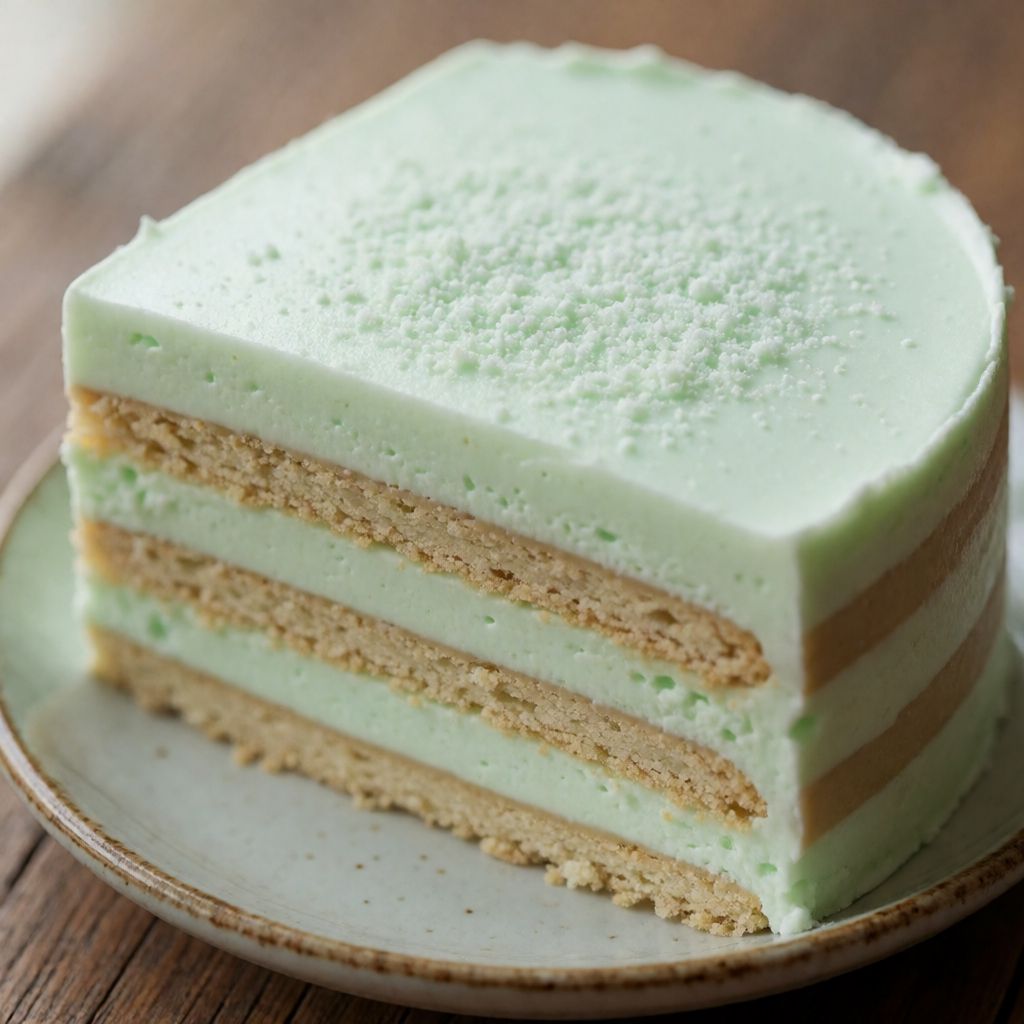
 AI photo
Chilled No-Bake Mint Chocolate Cake
A chilled no-bake cake with mascarpone mint cream layered between biscuits and finished with chocolate ganache.
Labels are worked out automatically from the ingredients and can be wrong. Check the packaging if it matters to you.
Ingredients
- 200 ml Double cream
- 250 g Mascarpone
- 50 ml Mint syrup
- 200 g Digestive biscuits
- Milk as much as needed
- 200 ml Double cream
- 100 g Dark chocolate





Steps
Whip the cream with an electric mixer; you can add icing sugar for extra sweetness.
Add the mascarpone, pour in the mint syrup and mix well.
Spread a layer of the cream in the bottom of the tin, then add a layer of digestive biscuits dipped in milk.
Alternate layers of cream and biscuits, finishing with a layer of biscuits.
Place in the fridge.
30 minIn a small pan over low heat, melt the chocolate with the cream, stirring until smooth.
Let the ganache cool.
Pour the ganache over the dessert and spread it evenly over the surface.
Put it back in the fridge until the cake sets.
What was changed
Swapped the dry biscuits for Digestive biscuits, which are the common choice for this kind of dessert in British kitchens.
This isn't a cake in the oven sense of the word — nothing rises, nothing sets by heat. It's what the English kitchen has quietly called a "fridge cake" for decades: biscuit layers that turn cake-like not by baking but by borrowing moisture from the cream around them until the crumb softens into something you can cut with a spoon. The cold does the cooking here. That's the whole mechanism, and everything else in the recipe exists to serve it.
What decides whether it works is control over two things: fat and moisture. The cream has to be whipped to the point where it holds shape but still folds smoothly into the mascarpone — go further and you're pulling butter grains out of it, not cream. And the biscuit has to take on just enough milk to soften without collapsing into paste, because a biscuit is really just compressed flour and sugar held by fat, and milk is what lets that structure relax.
Some say whipped cream always wants stiff peaks, the kind that stand up like a meringue. No — not here. Stiff peaks are for piping, for holding a shape against gravity on their own. This cream is going to be folded into mascarpone, which already has its own body and fat to lean on. Whip it past soft peaks and you've started the process that ends in butter — the fat globules clump, the texture turns grainy, and no amount of stirring brings it back smooth. Stop while the cream still looks a little loose and glossy.
Double cream appears twice, and each time for a different job, so don't treat the two lots as interchangeable leftovers from one carton. The first batch, whipped with the mascarpone, is there to lighten and spread — it needs enough fat to hold air at all, which is why cream below about 35% fat won't whip properly; it just slops around the bowl. The second batch goes into the ganache, where it's not being whipped for air, it's being heated to carry the chocolate into a pourable, glossy state. If you're short on double cream for the ganache, any cream with real fat in it will do — the mechanism needs fat to emulsify with the cocoa solids, not a particular brand.
Mascarpone is doing more than adding richness. It's an already-thickened dairy, so it stabilises the whipped cream the way a proper custard base stabilises an ice cream — it stops the whole mixture weeping liquid back out in the fridge over the following hours. If you have none, full-fat cream cheese loosened with a touch more whipped cream gets you close, though it carries a slight tang mascarpone doesn't have, so taste before you add the syrup.
Mint syrup is only there for flavour and a little sugar — it's not a thickener, it's not doing structural work, so if you're substituting with peppermint extract, go in cautiously and drop by drop, then make up the lost sweetness separately, because extract is concentrated flavour with none of the body syrup brings.
The digestive biscuit is chosen for its dryness, not despite it. A soft biscuit would collapse the moment milk touched it; a dry, structured one absorbs milk at the edges first and softens inward over the hours in the fridge, which is exactly the slow transformation the whole cake depends on. Any plain, not-too-sweet biscuit with a firm bite does the same job — a rich tea, a graham cracker, even a plain digestive's cousin from the supermarket own-brand shelf. What you want to avoid is anything already soft or heavily iced, because it either dissolves on contact or fights the chocolate for sweetness.
The milk dip is the same logic as dunking a biscuit in your tea, just controlled. A proper dunk, in and straight out, lets the crumb take on moisture without losing its shape; leave it soaking and you get sludge at the bottom of the tin instead of a layer. Use whatever milk is in the fridge — none of this depends on fat content, only on there being liquid to move into the crumb.
For the ganache, the low heat in the pan isn't a formality — chocolate scorches and seizes if it touches direct heat without enough liquid fat around it, turning grainy and refusing to come back smooth. Warming the cream gently until it just shivers at the surface, then letting the chocolate melt into that warmth rather than fighting a dry pan, is what keeps it glossy. Use a dark chocolate with no vegetable fat substituted in for cocoa butter — those bars melt less cleanly and can bloom pale and streaky once chilled, which tells you nothing's wrong with the taste, only that the fat recrystallised oddly in the cold. And once it's poured over the top, give it the time in the fridge the recipe asks for — patience is the one ingredient here you can't buy more of or skip past, because the cake isn't finished cooking until the cold has had its say.