
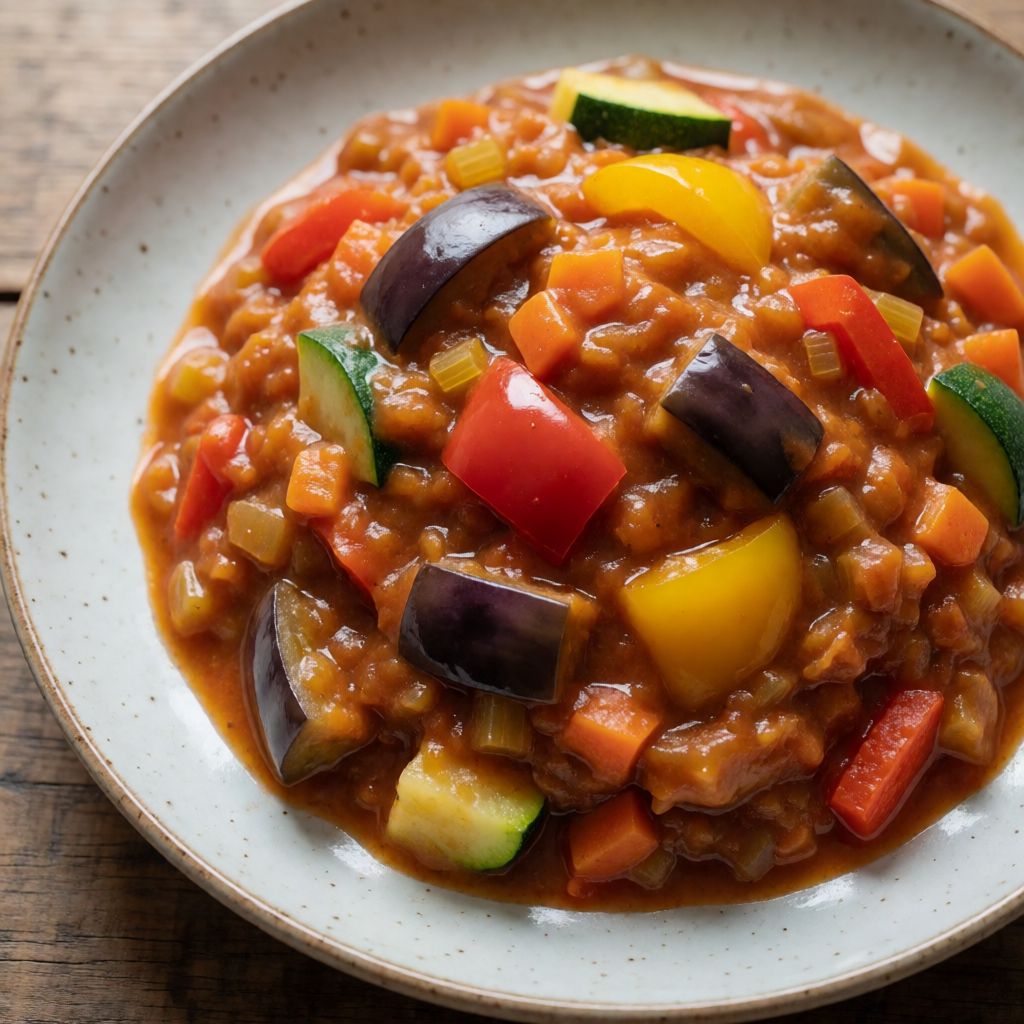
 AI photo
Vegetable Pasta Sauce
A simple, colourful vegetable sauce for pasta, packed with aubergine, courgette and peppers.
Labels are worked out automatically from the ingredients and can be wrong. Check the packaging if it matters to you.
Ingredients
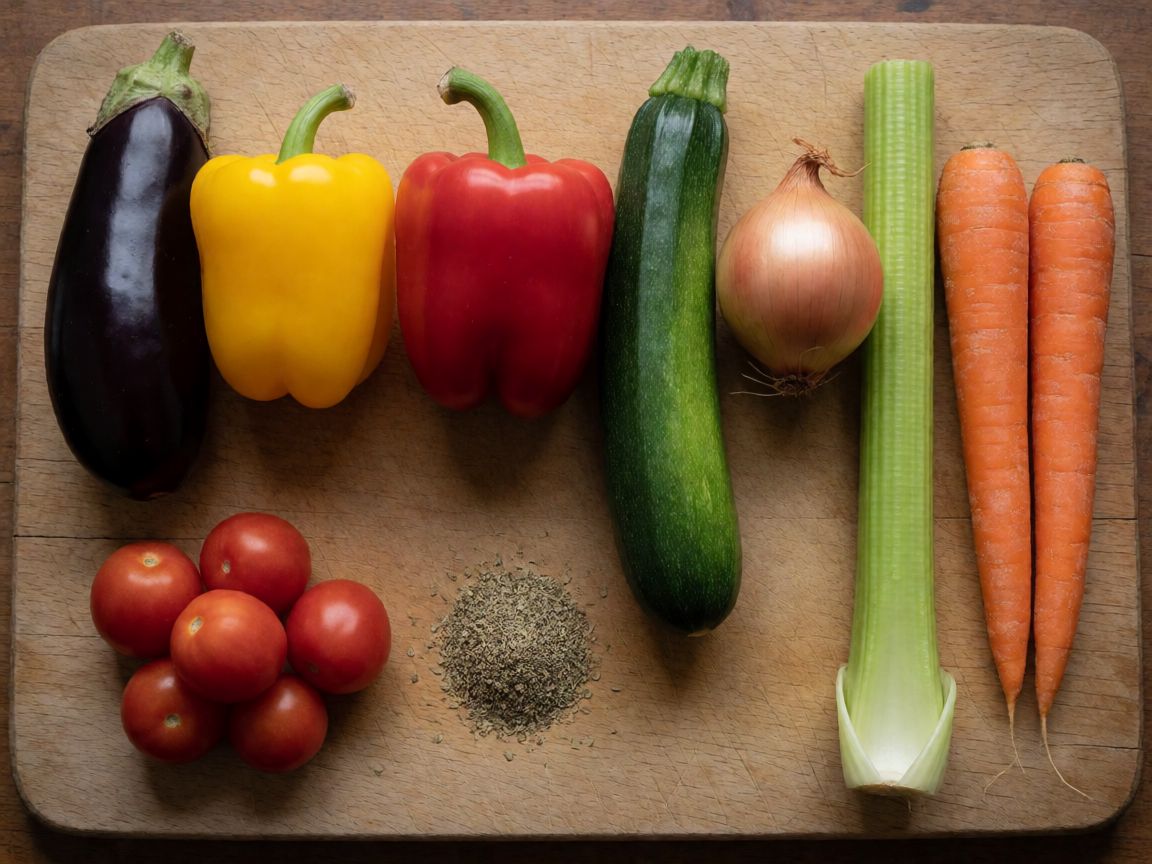
- 1 pcs Aubergine
- 1 pcs Bell pepper yellow or red
- 1 pcs Courgette
- 1 pcs Onion
- 1 pcs Celery stick
- 2 pcs Carrot
- 200 g Cherry tomatoes
- 4-5 tbsp Olive oil
- Oregano
- Salt
- Basil
- Parsley
- Chilli flakes








Steps
Peel the carrots and trim the stalk end off the aubergine. Cut the bell pepper in half and remove the seeds and white membranes. Peel the strings off the celery stick and trim the ends of the courgette. Wash all the vegetables.
Cut the carrots, celery and courgette into rounds, slice the bell pepper into strips, and dice the aubergine and cherry tomatoes. Finely chop the onion.
Heat the olive oil in a large frying pan and sauté the onion together with the celery.
Once the onion is lightly golden, add the diced aubergine.
Add the carrots and cook over medium heat.
5 minAdd the bell pepper strips and cook.
3 minAdd the courgette and cherry tomatoes. Season with salt and add chilli flakes to taste.
Cook over medium heat with the lid on until all the vegetables are soft.
This isn't really a "sauce" in the jam-it-in-a-blender sense — it's a soffritto that grew up, a whole vegetable patch cooked down in one pan until it collapses into something you can spoon over pasta. No tomato tin, no stock, no flour. The liquid that binds it all comes out of the vegetables themselves, which is why the order you add things in matters more than any clock.
What decides whether this works is moisture management, not seasoning. Onion and celery go in first because they're mostly water and need time to soften without colouring hard — you're building a base, not frying a garnish. Aubergine goes in next because it's a sponge: it needs contact with hot oil early to start breaking down its spongy flesh, otherwise it stays rubbery and sits there like a bath toy while everything else turns to mush around it. Carrot, being dense and sugary, needs real heat time to go from raw-crunchy to pleasantly yielding — it's the vegetable you judge by bend, not by the minute mark on the step. Pepper goes in only once that structure's underway, because pepper cooks fast and turns bitter-sweet, not because it needs company. Courgette and cherry tomatoes go in last for the opposite reason: they're almost entirely water, and if you put them in at the start they'd flood the pan, drop the temperature, and you'd be simmering a soup instead of sautéing vegetables — the lid at the end is there to trap and reduce that water back down into body, not to steam things into submission.
Olive oil here isn't for flavour in the showy sense — 4-5 tbsp is enough to coat a wide pan and carry the vegetables through their early stages without sticking, no more. The rule for the oil is simple: it should have no strong character of its own, because six vegetables are already fighting for the top note. Any decent olive oil does the job; if yours has gone rancid or you've only got something heavily flavoured, swap it for a neutral vegetable or sunflower oil and you'll lose nothing structural, only a bit of background roundness.
Aubergine: buy one that feels heavy for its size and has tight, glossy skin — a light, spongy one has already dried out inside and will fry to nothing. You don't need to salt and drain it for this dish; it's going into a long, wet-ish cook, not a quick fry where bitterness and water would be a problem. Courgette and bell pepper want firmness — press gently, no give, no soft spots. A soft courgette has already started to break down on its own, and it'll turn to mush before the carrot's even bent.
Carrot and celery are the backbone, not the stars — they're there for sweetness and a savoury, slightly bitter edge that stops the whole pan tasting flat and one-note. Peel the carrot properly; the skin holds soil-bitterness that no amount of oregano will mask. Celery's strings get peeled off for the same reason bitter orange pith gets removed from marmalade — not tradition for its own sake, just removing a part of the plant that's fibrous and unpleasant rather than flavourful.
Cherry tomatoes rather than big ones: they're sweeter, their skins split and soften quickly, and they don't throw off the enormous amount of water a big beef tomato would, which would turn your sauce watery and dilute everything else's flavour. If you've only got standard tomatoes, quarter them and expect a slightly longer final simmer to drive off the extra liquid.
Oregano, basil, parsley, chilli flakes — these are seasoning, not ingredients that need cooking time to transform. Dried oregano and chilli flakes can go in with the vegetables since they're robust and actually improve for a few minutes of heat; fresh basil and parsley are better stirred in at the very end, off the heat or close to it, because heat flattens their smell fast — cook them long and you're left with green-tasting hay instead of basil.
Doneness here is not a timer question, whatever the step notes say about minutes. You're looking for a pan where every vegetable has lost its raw snap: carrot bends without cracking, aubergine's gone matte and collapsed rather than glossy and firm, courgette's translucent at the edges. The lid at the end buys you steam to finish the job without burning the bottom — but lift it occasionally and check, because a cheap hob's "medium" can run hotter than you think, and a lid traps that heat as much as the moisture.
This is a patient dish, not a fast one, even though the ingredient list looks like a stir-fry. Six vegetables cooked in sequence, each waiting its turn, each given the time its own water content demands — rush the carrot and it stays raw under a soft coat of onion; rush the courgette and it never gets the chance to release its moisture and tastes thin. Twenty minutes of actual cooking is a floor, not a target — give it what it needs by eye, and the dish rewards you by actually tasting of six vegetables instead of one blurred vegetable-ish mass.