
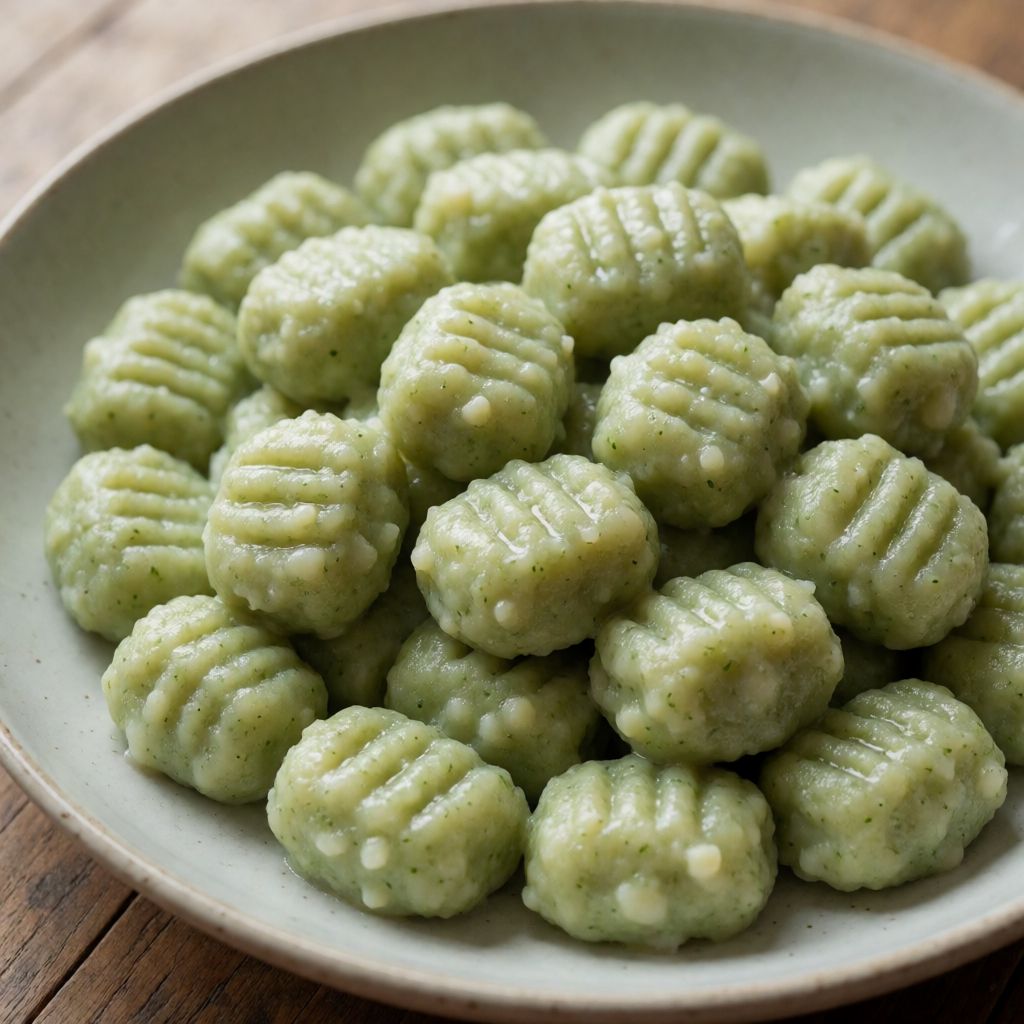
 AI photo
Nettle Gnocchi
Soft potato gnocchi flavoured with fresh nettle leaves.
Labels are worked out automatically from the ingredients and can be wrong. Check the packaging if it matters to you.
Ingredients
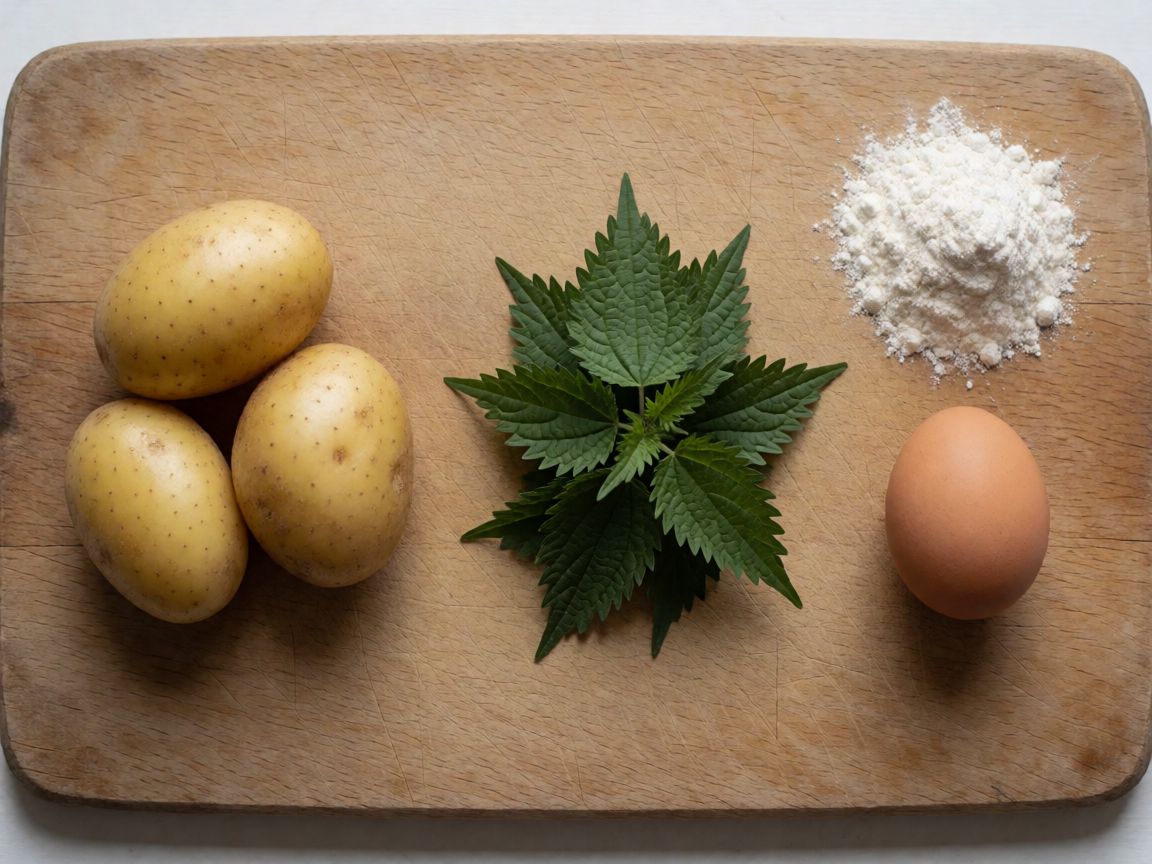
- 500 g Potato
- 150 g Nettle leaves leaves
- 150 g Plain flour
- 1 pcs Egg
- Salt to taste





Steps
Boil the potatoes until tender.
Rinse the nettle leaves, blanch them in salted boiling water, then finely chop with a knife.
In a mixer bowl, combine the boiled potatoes, nettles, egg, flour and four pinches of salt, and mix until you have a smooth, firm dough.
On a flour-dusted surface, shape the dough into small-diameter ropes and cut them into pieces.
Bring water to the boil, season with salt, and cook the gnocchi for a few minutes until they float to the surface.
Nettle gnocchi are potato dumplings turned green by boiled nettle, held together by egg and a little flour, and set loose in boiling water to prove themselves. There's no sauce step standing between you and the mistake — if the dough is wrong, you find out in the pot, when the pieces either hold their shape or scatter into green rags. So the whole dish turns on one thing: how much water is sitting in your mashed potato before the egg and flour ever go in.
Some say gnocchi need a fixed boiling time — three minutes, five minutes, written down like a law. No, because the dumpling tells you itself: it sinks while raw and dense, and floats once the starch inside has gelatinised and turned to little pockets of steam, lightening it below the weight of water. That float is your lower bound. Give it a few seconds more on the surface before you fish it out, because floating only proves the outside has cooked through, not the centre.
The nettle is the other half of the story, and here's the myth worth breaking: that nettles sting you forever, so you need gloves even in the bowl. No — the sting comes from tiny glass-like hairs that snap and inject formic acid when you brush them raw. Boiling water destroys that mechanism outright, same as it softens any leaf. Blanch them properly and the sting is gone before you even reach for the knife; what blanching also does, usefully, is fix the bright green and take the raw, slightly bitter edge off before you chop.
Start with the potato, because it decides more than people give it credit for. You want a floury, high-starch kind — Maris Piper or King Edward do the job in most British kitchens — not a waxy salad potato like Charlotte, which holds onto water instead of binding into dough. Boil it in its skin if you can; the skin is a barrier that keeps the flesh from drinking up boiling water the way peeled chunks do. Drain it properly, and mash it while it's still hot, through a ricer or a fine sieve rather than hammering it with a fork — hard mashing ruptures the cell walls and releases raw starch into a gluey paste, which is the real cause of gnocchi that go leaden rather than soft. Gentle handling here is what saves you flour later.
The nettle should be young — the top few leaves of a spring shoot, picked before the plant toughens and turns bitter. Pick it with gloves if raw nettle worries you, but once it's blanched the danger is already gone, so don't baby it after that. If nettles aren't to hand, the role here — green colour, mild leafy flavour, a vegetable presence without its own strong taste — can be filled by young spinach or wild garlic leaves, blanched the same way. This dish has a quiet history behind it too: nettle was free food, gathered along hedgerows and ditches by people who needed to stretch a potato dish without spending money on it. There's no magic in that, just thrift.
The egg is a binder, not a richness. One egg to 500 g of potato is the right ratio — add more and the dough turns wetter, which forces you to add more flour to compensate, and more flour means more gluten developing as you knead, which is exactly what turns a cloud into a chewy dumpling. Flour itself doesn't need to be anything special; plain flour works because you're not after stretch or structure, only enough protein to hold the shape together once it hits boiling water. Any flour that can bind egg and potato into a cohesive, non-sticky dough will do the same job — 00 flour, or a gluten-free blend if that's your kitchen.
Salt should go in more than once — into the nettle's blanching water, into the dough itself, and into the pot the gnocchi finally cook in — because potato on its own is bland straight through, and seasoning it only at the end leaves the inside tasting of nothing.
Patience belongs on the list of ingredients here as much as flour does. Let the mashed potato cool a little before the egg goes in, so it doesn't start to set the egg on contact. Roll the ropes to an even thickness and cut them to a consistent size — uneven pieces mean some float done while others are still raw in the middle, and you won't notice until you bite one. In an ordinary flat, with a wide pan standing in for a kazan, you're not fighting the kitchen here — you're just working in batches, because gnocchi crowded in too little water cool the pot down and stick to each other instead of cooking clean.