
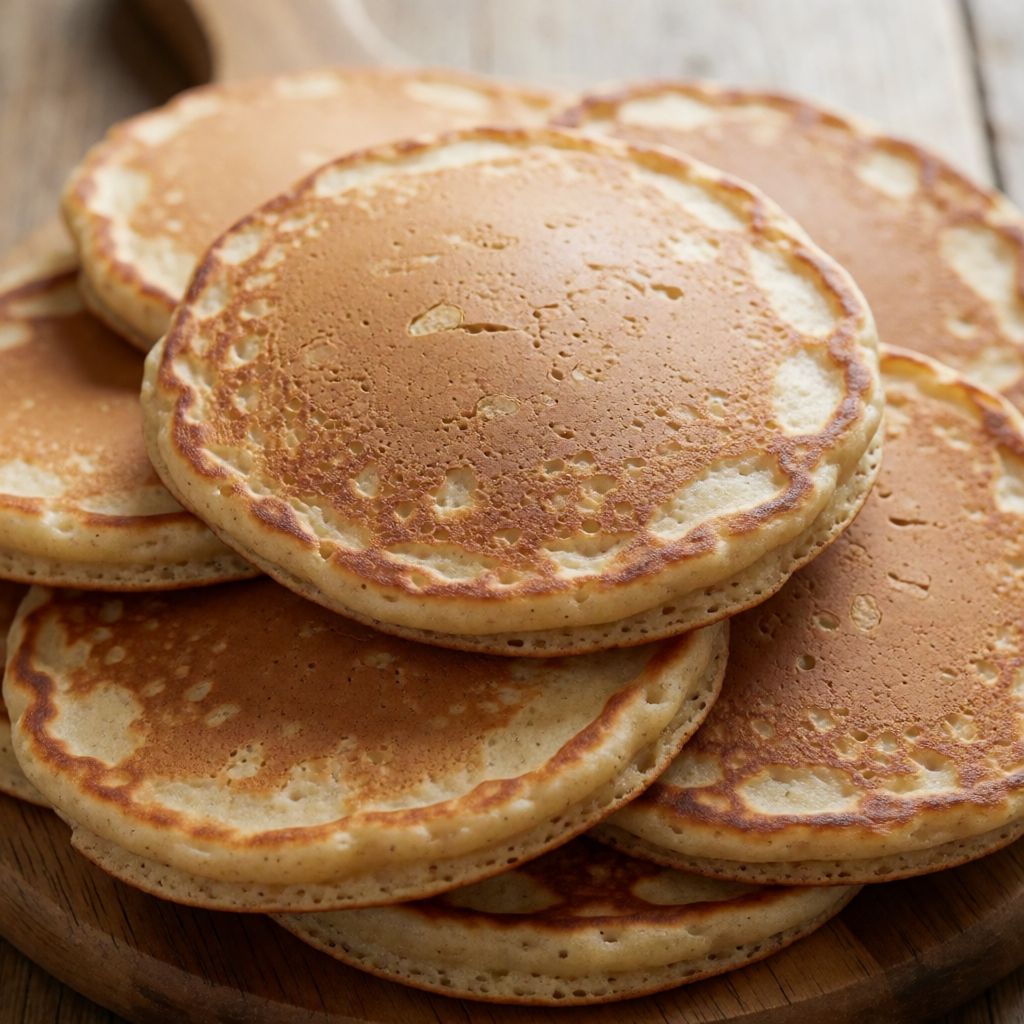
 AI photo
Oat Pancakes
Fluffy, simple pancakes made with wholemeal flour, quick to mix and fry for a weekend breakfast.
Labels are worked out automatically from the ingredients and can be wrong. Check the packaging if it matters to you.
Ingredients
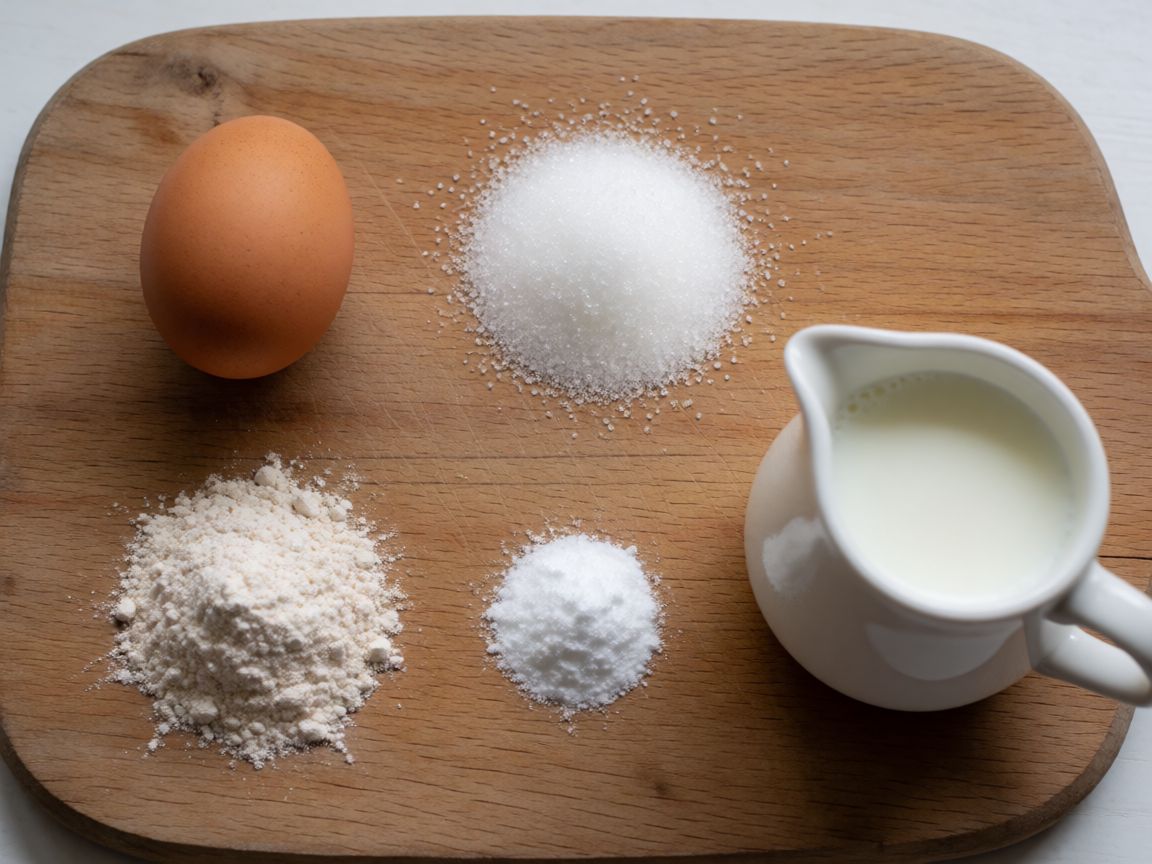
- 1 pcs Egg
- 30 g Caster sugar
- 125 g Wholemeal flour or gluten-free oats, blitzed to a flour
- 8 g Baking powder
- 125 ml Milk
- 1 tbsp Vegetable oil for frying





Steps
In a bowl, whisk the egg with the sugar until smooth.
Gradually add the wholemeal flour and baking powder, stirring constantly so no lumps form.
Slowly pour in the milk until the batter reaches a pourable, slightly runny consistency.
Grease a small non-stick frying pan with vegetable oil and ladle in a portion of batter, shaping it into a circle.
Fry for 2-3 minutes, until bubbles appear on the surface.
3 minFlip the pancake and fry the other side for another 2-3 minutes.
3 minRepeat until the batter is used up.
Serve the pancakes with maple syrup or your favourite topping.
This is not a crêpe and it is not a full stack of American flapjacks either — it is the small, thick teatime pancake, the kind that used to go by the name drop scone or Scotch pancake before every café decided 'pancake' meant something flat and lacy. The clue is in the leavening: no yeast, no waiting for the dough to think about rising. You whisk, you mix, you fry, within the hour. The lift comes from baking powder meeting liquid, a chemical reaction, not a biological one — which is why this batter has no patience for standing around once it's made.
What decides whether it works is not the egg count or the sugar — those are fixed and forgiving. It's the texture of the batter right before it hits the pan. 'Pourable, slightly runny' is the whole recipe hiding in plain sight. Wholemeal flour, because of the bran in it, drinks milk unevenly — one bag absorbs more than another depending on how finely it was milled. So treat the 125 ml of milk as a target you walk toward, not a number you hit blindly. Some say you must measure liquid to the millilitre for a batter to behave — no, because flour isn't a fixed sponge, it's an agricultural product with a mood.
Start with the egg and sugar. Whisking them together until smooth isn't decoration — it dissolves the sugar so it doesn't sit as grit later, and it beats a little air into the egg, which gives the baking powder some scaffolding to lift against. The egg's proteins are what actually hold the pancake's shape once heat hits it; baking powder makes the gas, egg traps it. Without that whisking step the pancake can still rise, but it rises patchily, in blisters rather than evenly.
Flour goes in gradually for a reason that has nothing to do with aesthetics: dump it all at once into a wet mixture and the outside of each clump seizes into a paste before the inside gets wet, and you're left stirring lumps forever. Stir it in steadily and you also avoid overworking the gluten in wholemeal flour — beat it hard and long and you build a tougher, chewier structure than a teatime pancake wants. If you're using ground gluten-free oats instead, there's no gluten at all to overwork, which is both a relief and a problem: the baking powder is now doing the entire lifting job alone, with no elastic net to hold the bubbles steady, so the texture will be a touch denser and more crumbly. That's not a failure, that's oats being oats.
Baking powder is double-acting — it reacts once the moment it meets liquid, and again later with heat. Some say you should let pancake batter rest for a better rise. No — not here, because resting just gives that first reaction time to fizzle out and escape into the air above your bowl, gas you paid for and never used. Mix it, then get it into the pan reasonably soon. This is a batter, not a dough with ambitions of its own.
Milk's job, besides hydrating the flour, is to carry sugars and proteins that brown and give the surface a bit of colour and a faint dairy sweetness. If you've no milk, any liquid with some fat and protein in it will do roughly the job — oat milk, soya milk, even diluted yoghurt — but thinner plant milks mean you may need less than 125 ml to reach that same pourable consistency, so add it slowly and watch the batter, not the measuring jug.
Oil in the pan isn't there to fry in the deep-fat sense — a thin film is enough. Its job is to carry heat evenly across the surface so the sugar in the batter caramelises consistently instead of catching in one hot spot and staying pale everywhere else, which is the usual cause of a pancake that's burnt at the centre and sickly white at the rim. Any oil with no smell of its own works — sunflower, rapeseed, a flavourless vegetable oil — because a strong-tasting oil, olive included, will fight the maple syrup you're about to pour over the top.
And that's really what this dish is for in a British kitchen: a short, quick-leavened pancake sitting next to the long, slow economics of a Sunday roast. One needs chemistry and five minutes, the other needs an oven and most of the afternoon. Baking powder exists precisely for mornings when nobody has the patience for yeast — patience being the one ingredient you can't buy in a tin, but can, at least here, skip.