
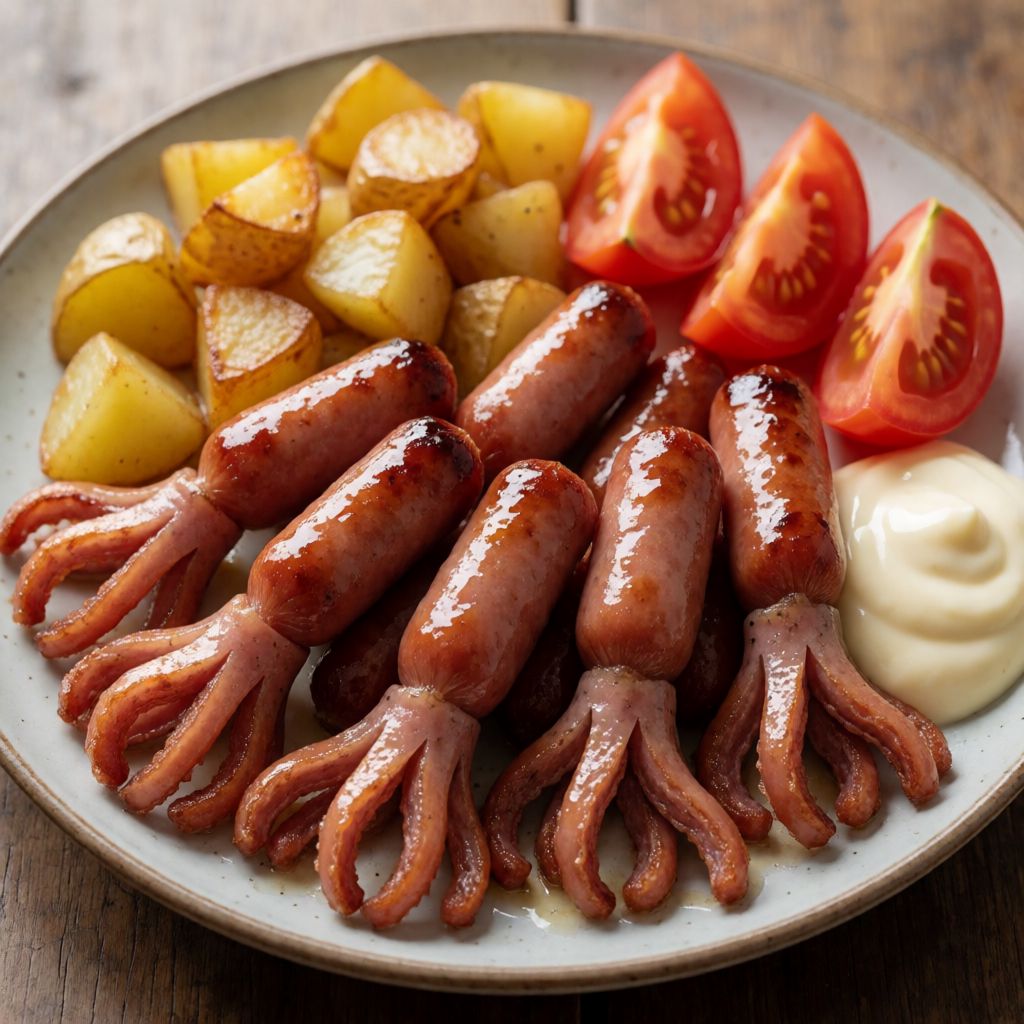
 AI photo
Sausage Octopuses
Cute sausage octopuses served on fried potatoes with cherry tomatoes, finished with mayonnaise and ketchup faces.
Labels are worked out automatically from the ingredients and can be wrong. Check the packaging if it matters to you.
Ingredients
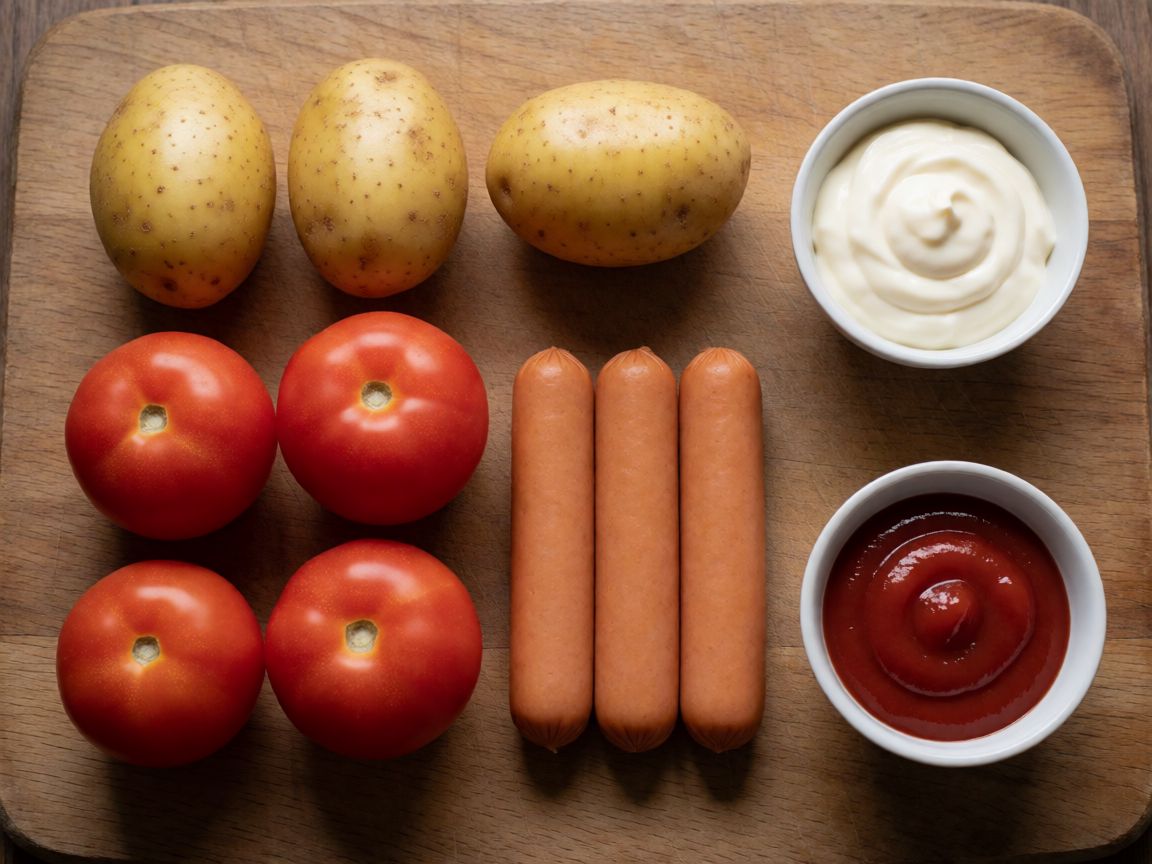
- 3 pcs Potatoes
- 4 pcs Cherry tomatoes
- 3 pcs Frankfurter sausages
- Olive oil
- 1 pinch Salt
- Mayonnaise to taste
- Ketchup to taste



Steps
Cut the potatoes into rounds. Heat the olive oil in a frying pan and fry the potatoes with the salt.
5 minAt one end of each sausage, score a cross so it opens into a little head; at the other end, slice into 8 thin strips to make the tentacles.
3 minFry the sausages in the oil until cooked through, 70°C in the centre.
5 minCut the cherry tomatoes and add them to the pan with the potatoes.
2 minArrange the potatoes and tomatoes on a plate and place the sausage octopuses on top.
Using a piping bag, draw eyes and hair with mayonnaise, and pupils and a smile with ketchup.
This is not really a recipe for octopuses — it's a recipe for making a sausage curl convincingly enough that a six-year-old believes it. Everything else on the plate, the potatoes, the tomatoes, is scaffolding to hold the joke up. What decides whether it works is one thing: how evenly you cut the tentacle end. Eight strips, roughly the same width, cut from the same starting point — fry those, and the heat does the trick for you. The outside of each thin strip loses moisture and tightens faster than the strip can stay straight, so it curls outward on its own. Cut the strips unevenly, and some curl into tight little hooks while others barely bend — the octopus comes out looking seasick rather than friendly.
The head end is simpler: one cross cut, deep enough that frying opens it into four stubby points. That's the whole anatomy. No knife skill beyond a steady hand and a sharp small blade, because a dull one drags the casing instead of slicing it and you get frayed edges that won't curl cleanly at all.
Potatoes: pick a waxy variety, the kind that holds its shape when it bends rather than collapsing into mush — a floury potato bred for mashing will fall apart at the edges in the pan and give you crumbs instead of rounds. Cut rounds of even thickness for the same reason you cut the sausage legs evenly: contact with the hot pan has to be the same all over, or half the slices burn while the other half are still raw in the middle. There's no weight given because potatoes vary wildly in size — three similarly-sized ones beats three potatoes weighed to add up to the same total, since you're frying by eye for colour, not by scale.
Cherry tomatoes bring acidity and a bit of brightness against all that fried starch and meat — any small, firm tomato works, halved instead of whole if that's what you've got. Don't reach for a big tomato cut into chunks; the skin-to-flesh ratio is different and they weep juice into the pan, which cools the oil and stops anything else frying properly.
Frankfurters specifically because they're smooth-textured and uniform in diameter — that uniformity is what lets eight tentacles curl at roughly the same rate. A coarser sausage, a chipolata or anything with visible flecks of fat and herb, won't behave: the texture is uneven, so the cut strips tear instead of curling cleanly. If frankfurters aren't to hand, any smooth, fully pre-cooked sausage of similar width will do the job — the test is whether you can slice it thin without it crumbling.
Olive oil here isn't doing anything olive oil is famous for — there's no dressing, no raw finish. Use any oil with no smell of its own strong enough to fight the sausage and potato: a light, filtered oil rather than a peppery extra virgin, which will taste bitter once it's been through the pan and tends to smoke sooner than a neutral oil. Sunflower or a plain vegetable oil does the same job for less money, and that's really the whole case for it.
Mayonnaise and ketchup are for the face, not the flavour — squeezed from a piping bag for control, though a small sandwich bag with one corner snipped off does exactly the same thing if you don't own one. Don't thin either of them down thinking it'll pipe more smoothly; thinned mayonnaise just runs off the curved sausage skin before it sets into a dot.
Salt goes on the potatoes while they fry, not after, because it needs the moisture coming off the hot potato to dissolve into — sprinkled on afterwards it just sits on top as grit. And give yourself the full time the cutting asks for before you even think about the pan. Eight even strips per sausage, times three sausages, is fiddly work, and rushing it is exactly how you end up with lopsided legs no amount of mayonnaise eyes can rescue.