
 AI photo
Orecchiette with Sausage Sauce
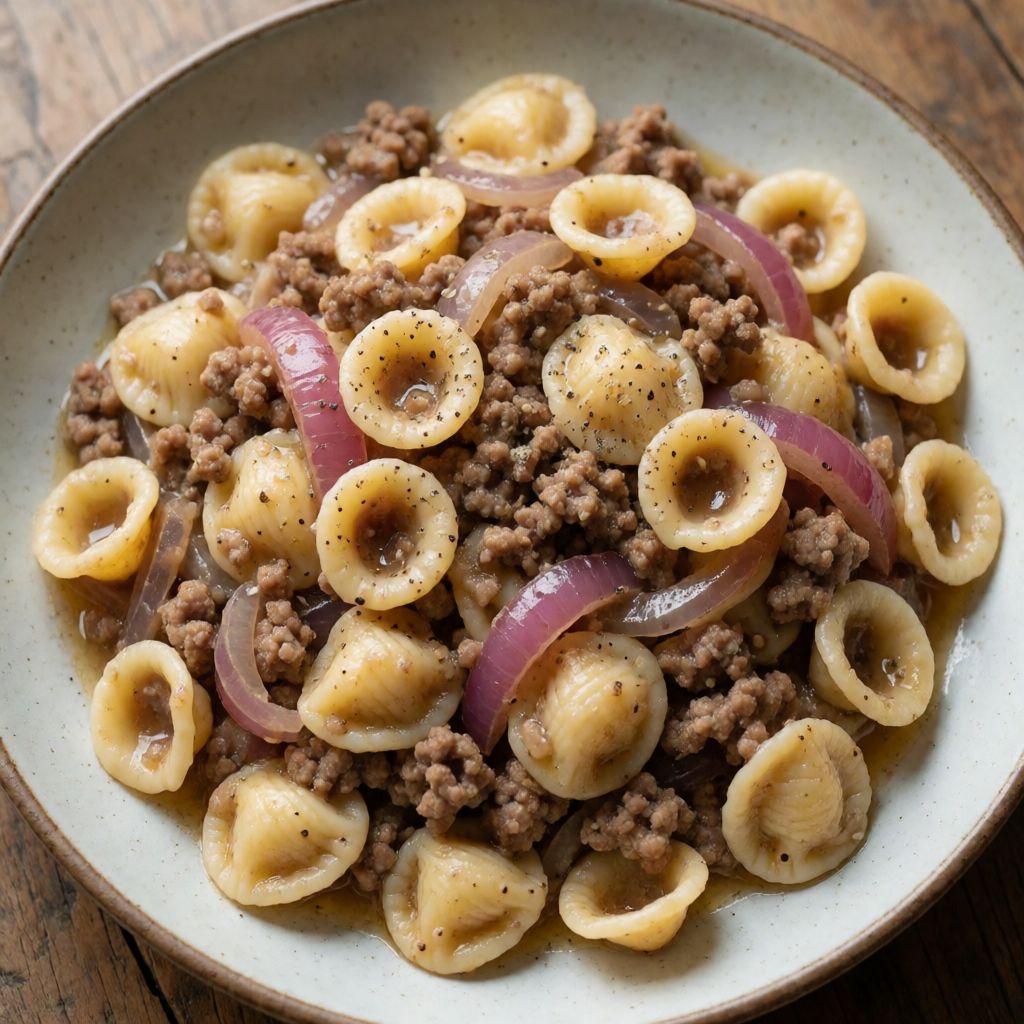
A simple pasta of orecchiette tossed with a rich sausage and tomato sauce, finished with red wine and fresh parsley.
Ingredients
- 400 g Orecchiette
- 1/2 pcs Red onion
- 2 tbsp Olive oil
- Salt to taste
- Black pepper to taste
- 150 g Italian pork sausage
- 200 g Tomato
- Parsley to taste
- 240 ml Red wine









Steps
Finely chop the onion and fry it in a large pan with 2 tbsp olive oil.
Add the coarsely chopped sausage, skin removed, and fry together with the onion.
Pour in the red wine, let it evaporate and simmer gently for 5–8 minutes. Done when it reaches 70°C inside.
8 minMeanwhile, cook the orecchiette in boiling salted water.
Add the halved cherry tomatoes to the sauce and cook for a further 5–8 minutes.
7 minAdjust the salt, grind over black pepper and sprinkle with parsley.
Drain the pasta and toss it together with the sauce in the pan.
If needed, add a little pasta water to loosen the sauce.
Sprinkle with grated cheese, if you like, and serve.
Orecchiette means "little ears" — the shape exists because flat orecchiette would just slide off the sauce, and this is a sauce that wants to be scooped, not clung to. The sausage breaks into rough nuggets, the wine reduces into something sticky and dark, and the little cupped shapes catch it all in a way that spaghetti simply can't. This is Puglian cooking, which is to say: cheap meat, whatever vegetable is on hand, and a shape of pasta invented by people who were not wasting a single drop of sauce on the plate.
What decides whether it works is the sausage, not the pasta. Most "Italian pork sausage" sold loose in a UK butcher's or wrapped in casing is really just seasoned pork mince with fennel or chilli somewhere in it — pull the casing off and you have exactly what the recipe wants: meat that breaks into coarse, uneven lumps in the pan, not a smooth paste. If it fries into a flat patty instead of crumbling, your heat was too gentle and the fat never rendered properly; push it harder, breaking it with the spoon as it goes, until it looks like gravel, not a burger.
The onion goes in first and alone, in oil, because it needs time to go soft and sweet before the sausage arrives and starts throwing off fat that would otherwise shallow-fry it instead of letting it cook through gently. Red onion rather than white or brown is a preference for sweetness and colour, not a rule — any onion works, the dish won't collapse if you use what's in the vegetable rack, you'll just lose a little of that rosy tint in the finished sauce.
Olive oil here is doing a quiet job: carrying the heat evenly and not fighting the other flavours. "Any oil with no smell of its own" is the real criterion — a flavourless vegetable or sunflower oil would do the same work, you'd simply lose the faint peppery note extra virgin olive oil adds at the edges. Don't reach for something strongly flavoured like sesame or coconut oil; it would sit on top of the tomato and wine instead of disappearing into them.
Tomatoes are listed by weight but cherry tomatoes, halved, are what the method wants — small enough to soften through in the time it takes the sauce to thicken, their skins splitting rather than needing to be peeled and crushed the way a big beefsteak tomato would. If all you have are larger tomatoes, roughly chop them smaller and give them longer in the pan, watching for the point where the flesh collapses and the juice runs — that's the same cue, just arrived at differently. Out of season, a tin of good plum tomatoes crushed by hand does the job too; it's not a lesser version, it's simply a different route to the same soft, jammy result, and worth remembering since British supermarket tomatoes in winter are often watery and underripe anyway.
Parsley at the end is for freshness against all that rendered fat and reduced wine — it wakes the dish back up after fifteen minutes of slow, dark cooking. Flat-leaf is traditional for its flavour, curly parsley will do if that's what's in the fridge; it's decoration with a point, not garnish for its own sake.
Salting the pasta water properly matters more than people think, because pasta only ever seasons itself once, at the boil — you can't season it afterwards the way you can a sauce. And keep a cup of that water back before you drain; it's starchy and salty, and a splash of it loosens a sauce that's gone too thick or too dry when the pasta meets it in the pan, binding sauce to pasta instead of leaving them as two separate things on the plate. Cheese at the end is your choice entirely — a hard, salty, aged one like Pecorino suits the fennel-and-meat character of the sausage better than something mild, but nobody's checking.