
 AI photo
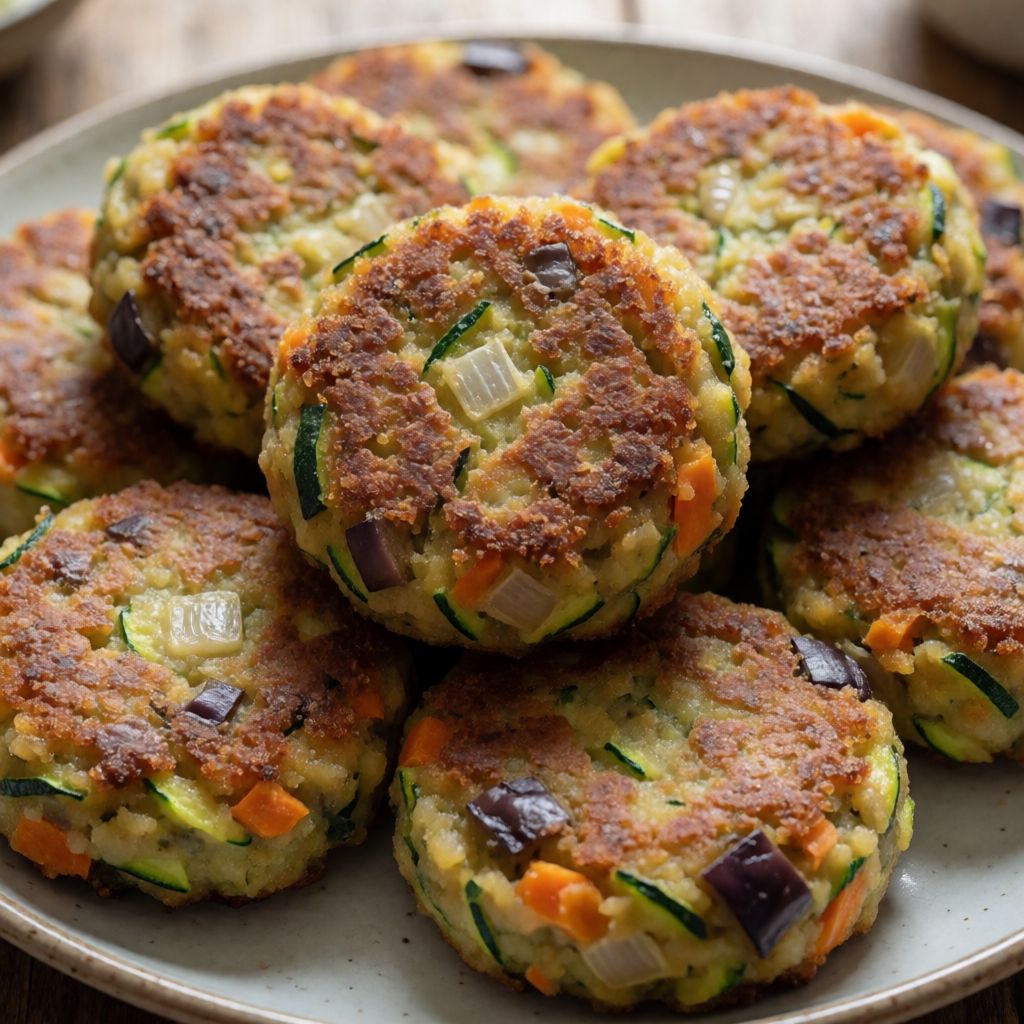
Vegetable Patties
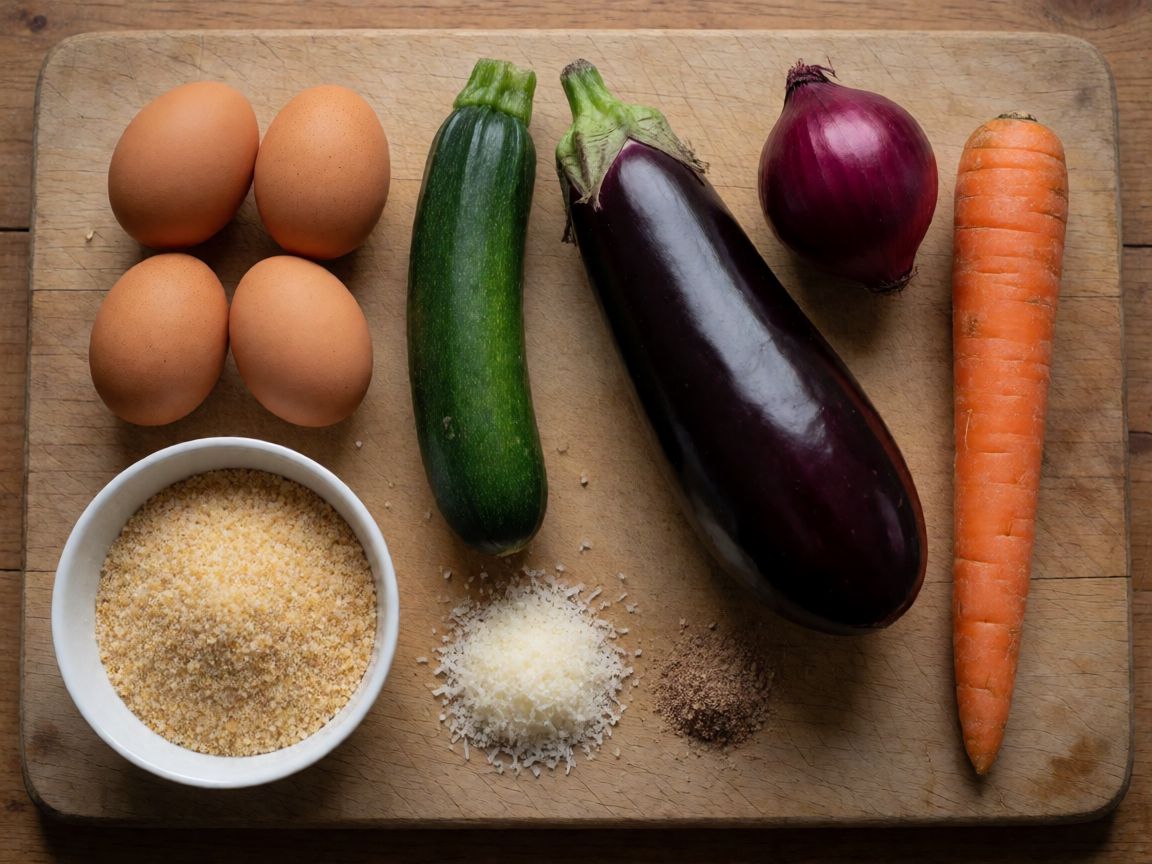
Simple vegetable patties made with courgette, aubergine, carrot and red onion, bound with egg and breadcrumbs.
Labels are worked out automatically from the ingredients and can be wrong. Check the packaging if it matters to you.
Ingredients







Steps
Wash all the vegetables and cut them into cubes.
Finely chop the onion and carrot and fry in a little oil.
Add the aubergine and courgette and cook.
10 minIn a bowl, beat the eggs with salt, Parmesan, breadcrumbs, nutmeg and parsley.
Add the cooked vegetables to the egg and breadcrumb mixture and mix well.
Shape into patties and coat them in breadcrumbs.
Heat a generous amount of oil in a frying pan and fry the patties until golden brown.
Transfer the patties to a paper towel to remove excess oil.
Serve hot!
These are not fritters and not a soufflé — they're a way of making watery vegetables behave like meat. Courgette and aubergine are mostly water held in a loose sponge of flesh. Fry them too long on their own and you just get wet mush in oil. The trick here is that the egg and breadcrumb mixture is built to absorb that water and set around it, so what goes into the pan second time is a patty that holds its shape instead of a pancake that falls apart at the edges.
What decides whether this works is the order: vegetables are cooked down first, then bound, then fried again. Each stage has a job. The first fry drives off water and turns raw vegetable into something soft and sweet — carrot should go from stiff to bendable, onion from sharp white to a mellow translucence, not brown, because brown there means bitter later. The second fry is only about the crust: get colour and crunch on the outside before the inside has time to weep its moisture back out through the breadcrumb coat.
Some say you can skip pre-cooking the vegetables and just mix everything raw with egg and crumbs. No — raw aubergine and courgette release their water slowly, during frying, which steams the patty from inside and breaks the crust you're trying to build. Cook the water out first, and you control it. That's the whole mechanism: cook once to lose water, bind once to hold shape, fry once to gain a shell.
The vegetables themselves are chosen for texture, not flavour alone. Aubergine brings a soft, almost meaty bite once cooked — its flesh collapses into something with body, which is exactly what gives the patty substance rather than just crumb. Courgette is there for moisture and mildness; it has almost no character of its own, so it takes on whatever you season it with, which is why nutmeg and Parmesan matter more than they'd seem to on paper. If you're short of either, any soft summer squash or even grated cooked pumpkin behaves the same way — the test is whether it goes tender and loses its rawness, not which vegetable it technically is.
Carrot and red onion are the base, finely chopped and fried first because they take longer to soften than courgette and aubergine, and because onion specifically needs time at gentle heat to turn sweet rather than sharp. Red onion is milder raw than white or brown, so it won't dominate the mix — but if you only have a regular onion, cook it a touch longer and taste before you add it, since that's the only way to know it's lost its bite.
The eggs and breadcrumbs are the actual engineering of the dish, not padding. Egg sets with heat and glues the vegetable pieces to each other; breadcrumbs soak up whatever liquid remains and give the mixture enough body to be shaped by hand without sliding apart. Three hundred grams sounds like a lot against four vegetables, but remember breadcrumbs are doing double duty — binding the inside, then coating the outside for the second fry. If your mixture still feels wet when you try to shape it, that's not a step to skip past; add more crumb rather than fight it, because a loose patty breaks the moment it hits hot oil.
Parmesan and nutmeg are seasoning but also camouflage — vegetable patties on their own can taste a bit flat and green, and a hard cheese plus a pinch of warm spice gives them a savoury backbone that breadcrumbs and egg can't provide by themselves. Any firm, dry, salty hard cheese stands in for Parmesan — a strong mature cheddar works, since what you need is saltiness and a bit of grain, not a specific Italian name on the label. Nutmeg can be swapped for a light pinch of allspice or white pepper if you don't keep it in — the point is a background warmth, not a flavour you should taste directly.
For frying, use oil that doesn't argue with the vegetables — a plain, flavourless oil for the pan, not olive oil pushed to a high heat where it starts to smoke and turn bitter. Save good olive oil for finishing or for the gentle first cook, where its flavour actually survives; for the hot second fry, a neutral oil like sunflower or rapeseed holds up better and costs less, which is worth knowing since you're using "a generous amount." The paper towel afterwards isn't fussiness — it's the only thing standing between a crisp crust and a patty that goes soggy from sitting in its own oil residue, which is a real risk once it's piled on a plate rather than fried to order one at a time.