
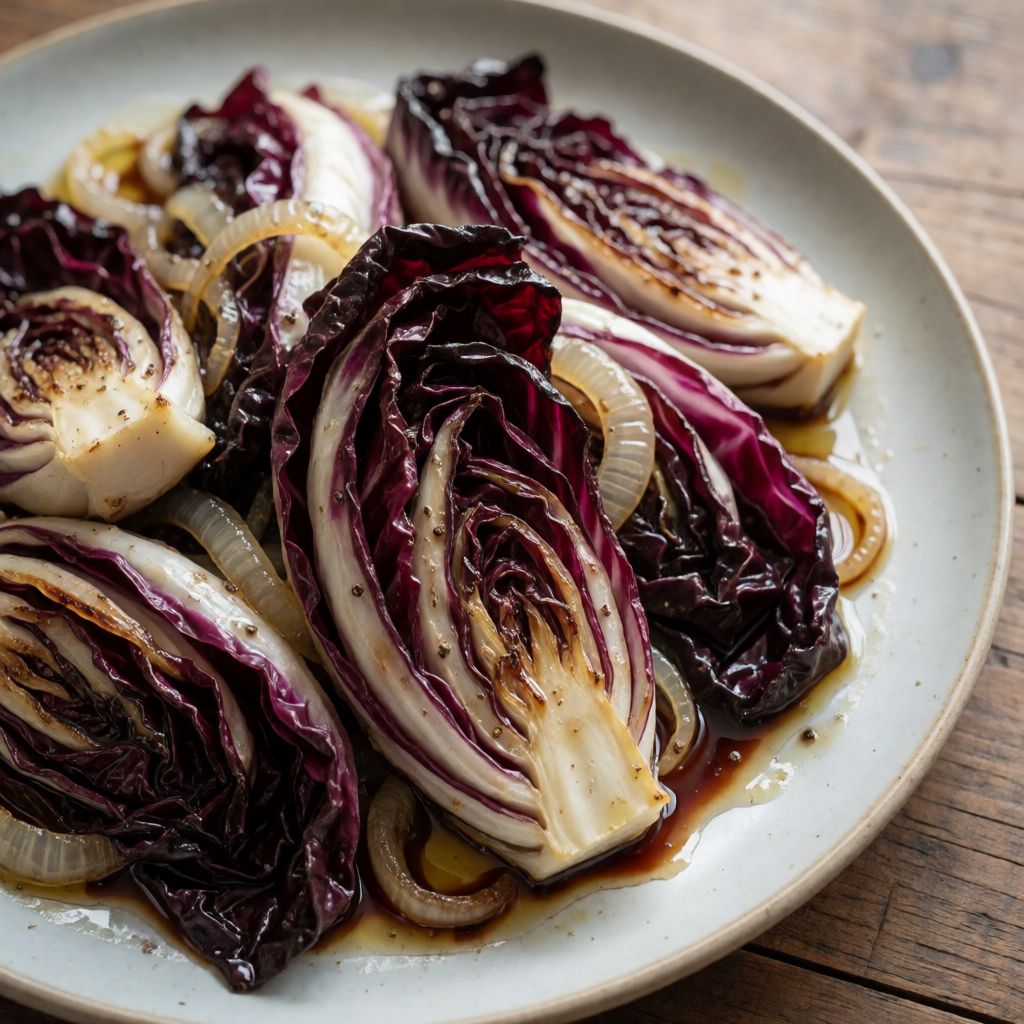
 AI photo
Pan-Fried Radicchio
A simple pan-fried radicchio with onion, finished with balsamic vinegar.
Labels are worked out automatically from the ingredients and can be wrong. Check the packaging if it matters to you.
Ingredients
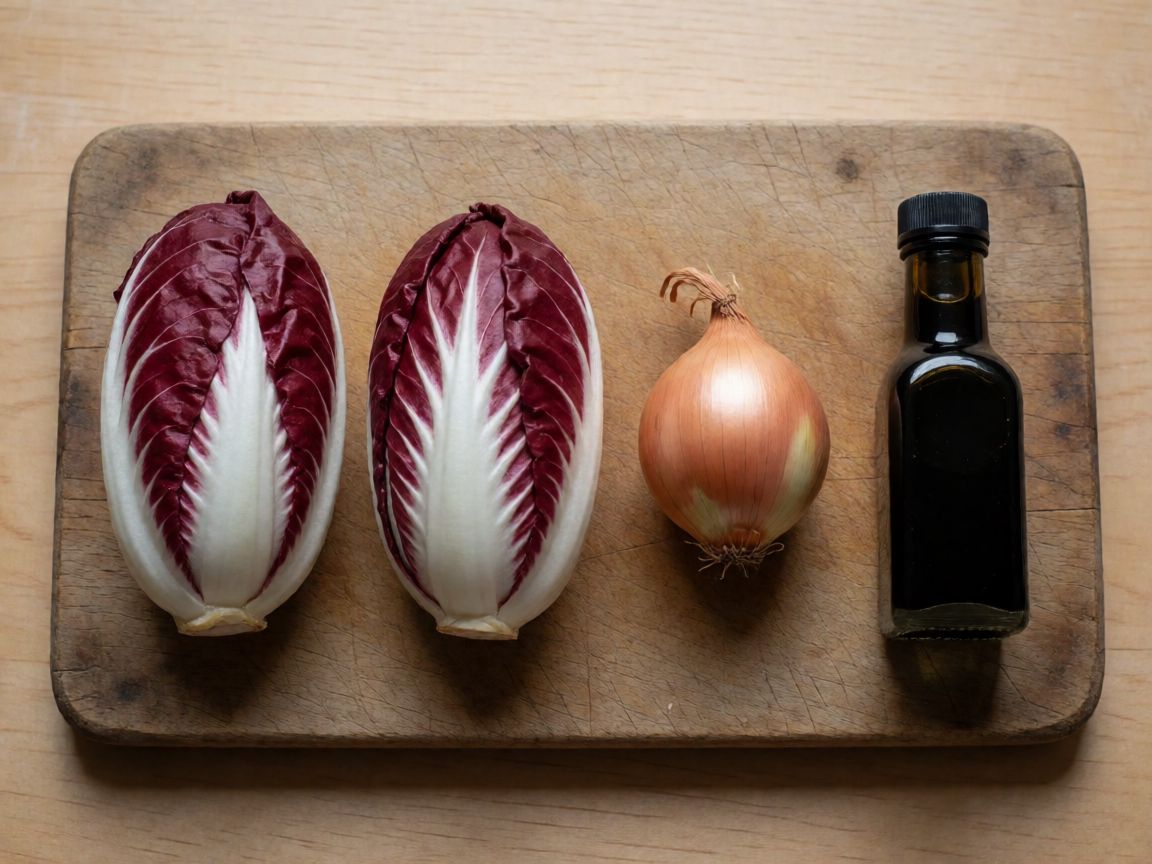
- 2 pcs Radicchio
- 1 pcs Onion
- Salt to taste
- Olive Oil to taste
- Balsamic Vinegar to taste
- Black Pepper to taste





Steps
Separate the radicchio into leaves, rinse each leaf under running water, let it drain, then slice into thin strips.
Peel and chop the onion, place it in a pan with the olive oil and sauté over a low heat.
10 minAdd a spoonful or two of hot water if needed.
Add the radicchio and cook for a further 10 minutes.
10 minSeason to taste with balsamic vinegar, add salt and black pepper, and serve.
This is not a salad gone wrong — it's chicory, built to be cooked, and the whole dish turns on whether you let the heat do its proper work on two things: the onion going soft without catching, and the radicchio wilting without collapsing into mush.
Some say radicchio belongs raw, in a bowl, nowhere near a pan. No — because raw it's all crunch and a bitterness that bites your tongue, meant to sit against something fatty that it can cut through in a salad. Cooked, it's a different vegetable. Heat breaks down the cell walls that are holding that sharpness in one place, and the sugars underneath finally get a say. You're not hiding the bitterness here, you're letting it finish a sentence it started raw.
The low heat under the onion isn't caution for its own sake — rush it and the outside catches before the inside has softened, and scorched onion turns bitter in the wrong way: a burnt, acrid bitterness that fights the radicchio's clean one instead of sitting next to it. You're after onion that's slumped and gone translucent, maybe a pale gold at most, not brown and not crisp. And use the widest pan in the cupboard, not a saucepan with high sides — radicchio needs to let its water off as steam, not sit trapped under it, or you end up with stewed leaves instead of wilted ones.
Radicchio — buy it by look, not by the label on the shelf. Want a head tight and heavy for its size, leaves close together, white ribs with no browning at the base. One that's splayed open and gone limp at the tips has been sitting around too long; it'll still cook but you lose the crunch before the heat even reaches it. Two heads sounds like a lot sliced into a bowl — once it hits the pan it collapses to a third of that, the same trick spinach pulls, so don't panic at the volume at the start and don't be tempted to use less.
Onion — any onion with enough sugar in it to turn sweet under slow heat will do; a standard yellow or white onion is the honest choice. Red onion works too, it'll just bleed its colour into the pan. Cut it the way you'd cut onions for the roast itself — finer if your hob runs hot and even its lowest setting feels too keen.
Olive oil here is just a carrier of heat, not a flavour, so save the good peppery extra virgin for the table and use something plainer in the pan. Any oil with no strong smell of its own will carry the heat fine — a mild rapeseed or sunflower oil does the same job if that's what's open in the cupboard. Drizzle the good oil over at the end if you want its flavour back.
Balsamic vinegar goes in at the end, off the heat or close to it, and that's not fussiness — add it early and the acid cooks off along with the smell, leaving only sweetness behind with none of the lift it's meant to give. Cheap balsamic, the thin, very dark kind with caramel added, sweetens but doesn't cut; proper aged balsamic is thicker and carries real acid under the sweetness. Use less of the proper one and more of the cheap one, and taste as you pour — this isn't a measured ingredient, it's a correction.
The spoonful or two of hot water mentioned for the pan isn't stock or wine standing in for flavour — it's there only if the onion starts drying out and catching before it's gone soft, just enough moisture to stop the pan floor turning into a scorch point. Keep a mug of hot water by the stove for this if your electric hob runs hotter on low than you'd like, which is common enough.
And patience is the real ingredient on this list, more than anything measured in grams. Ten minutes for the onion isn't a number to watch the clock against — it's roughly how long a proper low heat takes to turn it from raw-sharp to soft and sweet, and if yours needs twelve, give it twelve. The radicchio afterwards moves faster, being mostly water with none of a root vegetable's stubbornness — watch the leaves, not the clock: stiff and glossy giving way to soft and matte is the sign you're close.