
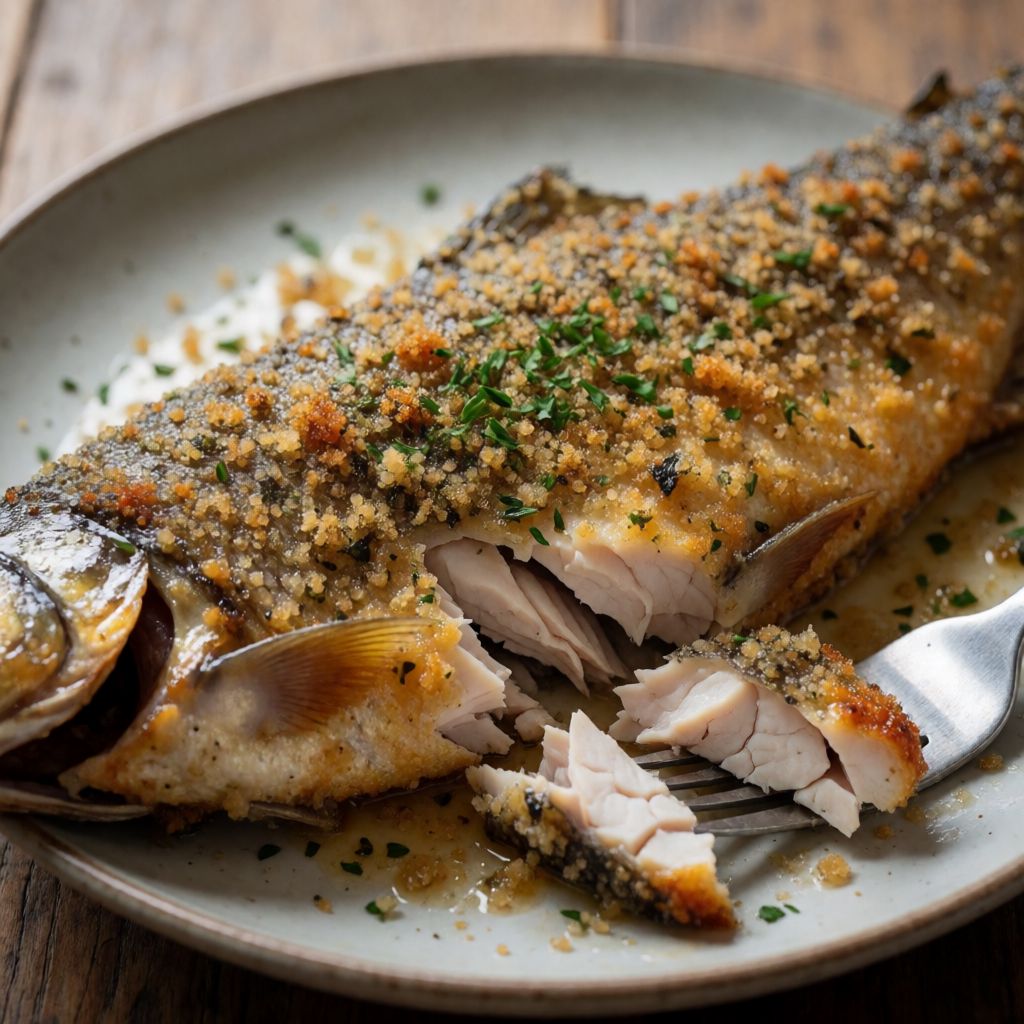
 AI photo
Pan-Fried Trout
Whole trout stuffed with a herby breadcrumb and anchovy filling, pan-fried until crisp.
Labels are worked out automatically from the ingredients and can be wrong. Check the packaging if it matters to you.
Ingredients
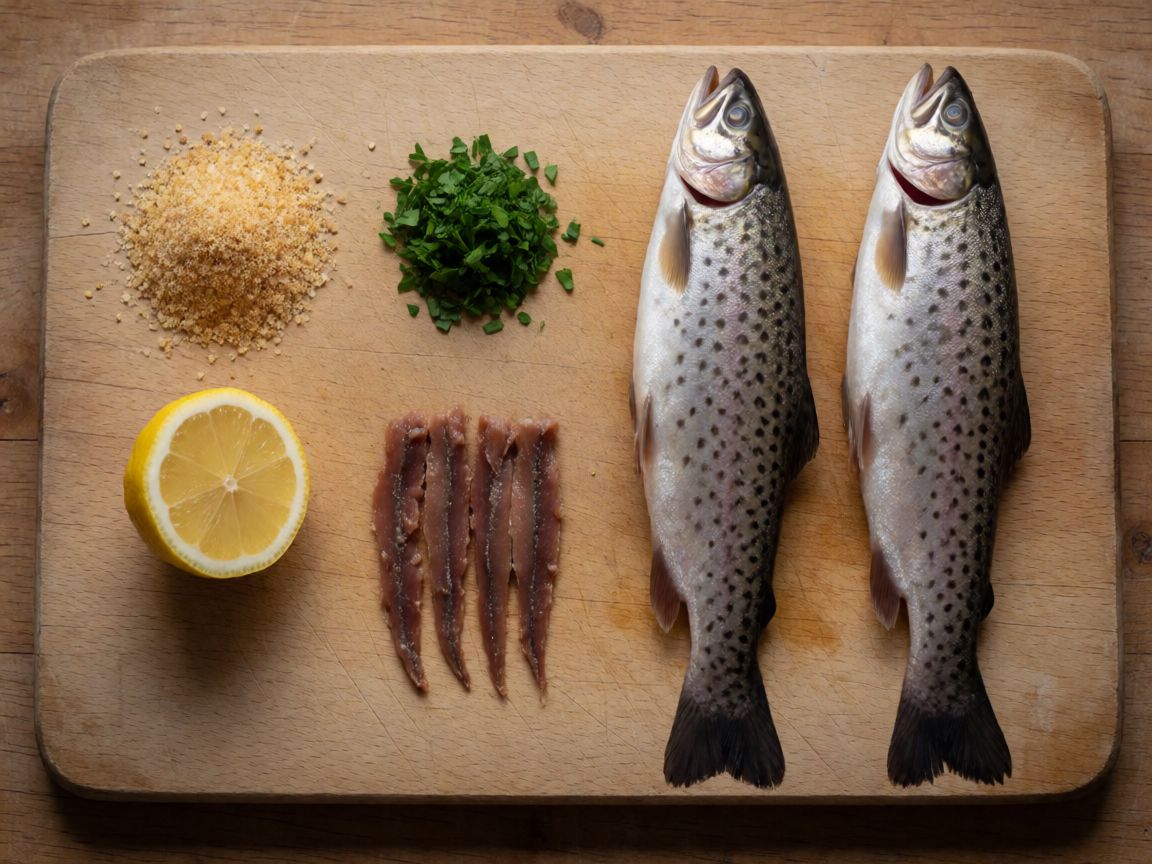
- 2 pcs Trout 250 g each
- Breadcrumbs to taste
- Parsley to taste, chopped
- 0.5 pcs Lemon Juice juice of half a lemon
- 4 pcs Anchovies chopped
- Salt to taste
- Black Pepper to taste
- Olive Oil a small amount






Steps
Gut the trout with a sharp knife, rinse under cold water to remove any traces of blood, and pat dry with kitchen paper.
In a bowl, mix the breadcrumbs, chopped parsley, oil, lemon juice, salt and black pepper into a thick paste.
Stuff the trout with the mixture, gently pushing the filling inside the fish.
Heat a frying pan with oil, add the chopped anchovies, then place the stuffed trout on top.
Fry the fish for about 20 minutes over high heat, turning as needed, until cooked through (63°C in the thickest part).
20 minServe the trout immediately while hot.
This is a whole trout, gutted through the belly and packed with a breadcrumb-herb paste, fried in oil that already has anchovies dissolving into it. One fish per person — you don't split a trout the way you'd carve a Sunday roast and pass plates round; two fish, two plates, done.
What decides whether it works isn't the clock, it's the skin. Leave it whole and it does two jobs at once: it holds the stuffing inside the cavity, and it keeps the raw heat of the pan off the flesh, so the inside cooks gently by steam and radiant heat rather than scorching on contact with metal. Tear the skin turning the fish, and the paste leaks into the oil, burns, and turns bitter — that bitterness isn't a seasoning mistake, it's a mechanical one.
Some say a fine fish like trout is better skinned before frying, cleaner to eat, no skin to pick round. No — skinless trout in a hot pan dries and toughens on the surface long before the centre reaches anything near done, because there's nothing left between the flesh and the heat. The skin isn't decoration here, it's insulation.
The real test of your heat isn't the dial, it's the anchovies. Drop them in and they should sizzle at once and start melting into lace within seconds, turning from silver-pink to dark brown. If they go black and stick before the fish even goes in, the pan is too hot and the fish skin will scorch before the inside catches up. If they just sit there soft and whole, it's too cool, and you'll steam the fish instead of frying it — a damp result, not a cooked one.
Buy trout whole, gutted through the belly — that's the standard cut, and it leaves you a cavity that works like a small oven for the stuffing. At 250g each, two of them side by side want a genuinely wide pan, 28cm or so; a domestic hob doesn't give you a kazan's open space, and if the fish crowd each other, they steam from the moisture trapped between them rather than fry, and the skin never crisps. Give them room, or cook one at a time.
The breadcrumbs aren't filler, they're a sponge: they soak up the oil, lemon juice and juices released by the fish itself, instead of those juices just pooling and burning in the hot pan. Any dry bread, crumbed, does this job — this dish, like most stuffed-fish recipes from fishing coasts, started as a way to use bread that had gone stale rather than throw it out. Fresh breadcrumbs from a packet work fine too, they just need slightly less liquid to bind.
Parsley is there for freshness against the oil and the salt of the anchovy — any soft, mild herb does the same work; dill if that's what's in the fridge, basil if you want a different direction entirely. Lemon juice does two things: it brightens the stuffing, and the acid firms the breadcrumb paste a little on contact so it holds together when you push it into the cavity rather than falling apart.
Anchovies are the real engine of this dish, not a garnish. Melted into hot oil they stop tasting "fishy" and start tasting of salt and depth — that's the chemistry of anchovy, it dissolves rather than flavours as a solid piece. They season the fish from the outside while the stuffing seasons it from the inside, so you get two different routes of flavour meeting in the middle. If you've no anchovies, the criterion is: something small, salted and intensely umami — a dash of fish sauce or Worcestershire sauce in the oil will do the same job, just less texturally interesting.
The olive oil matters more than usual here — this is one of the few times you don't want oil with no character of its own, because its flavour is meant to sit alongside the anchovy, not disappear. If you substitute, pick something else with its own presence, not a neutral oil that vanishes.
Salt carefully — anchovies already bring plenty, so taste the stuffing before you add more, not after it's inside the fish where you can't fix it. For doneness, 63°C in the thickest part is the real number, but you can read the same thing without a thermometer: the flesh goes from translucent pearl to solid white, and it pulls cleanly off the backbone instead of clinging. Twenty minutes is the floor, not the target — don't rush the turning, a fish that's allowed to set its skin before you flip it is a fish that stays whole on the plate.