
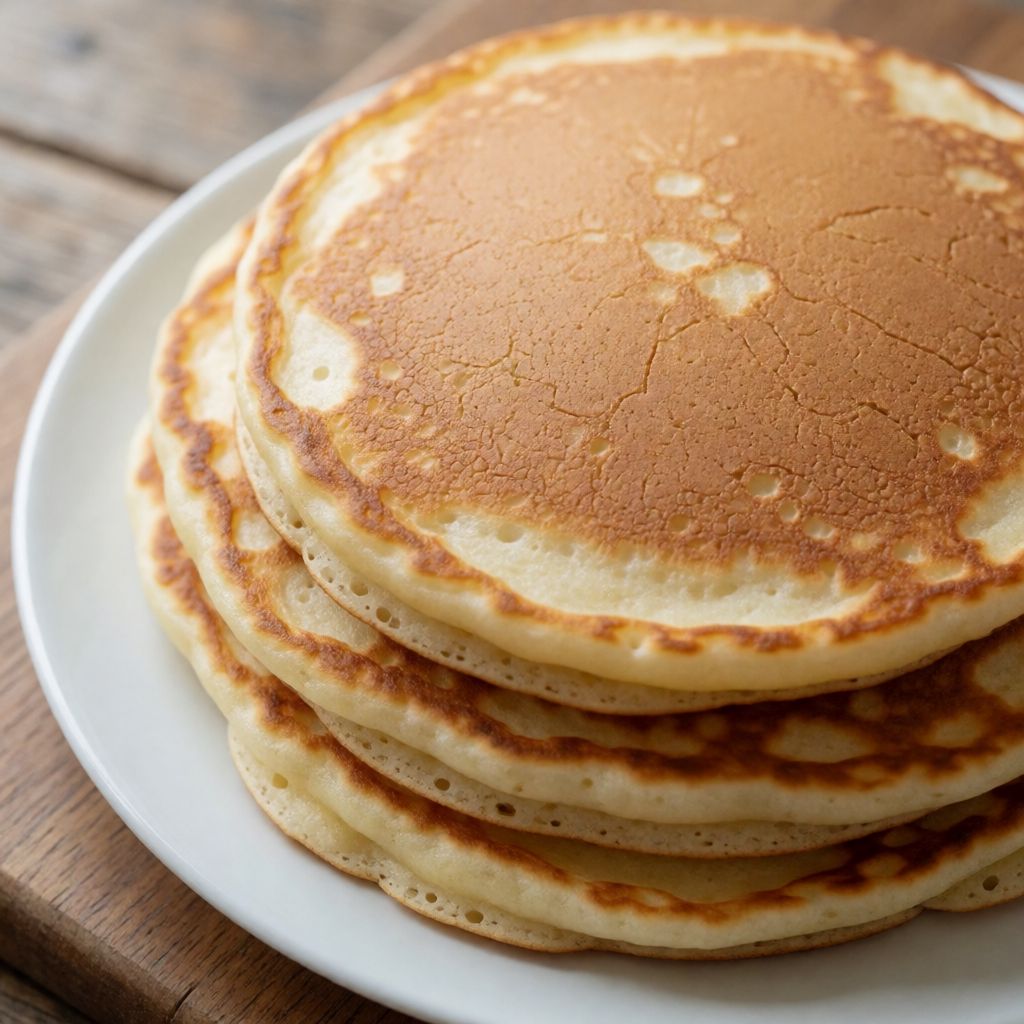
 AI photo
Egg-Free Pancakes
Fluffy pancakes made without eggs, whisked from flour, milk and sugar and fried in a pan until golden.
Labels are worked out automatically from the ingredients and can be wrong. Check the packaging if it matters to you.
Ingredients
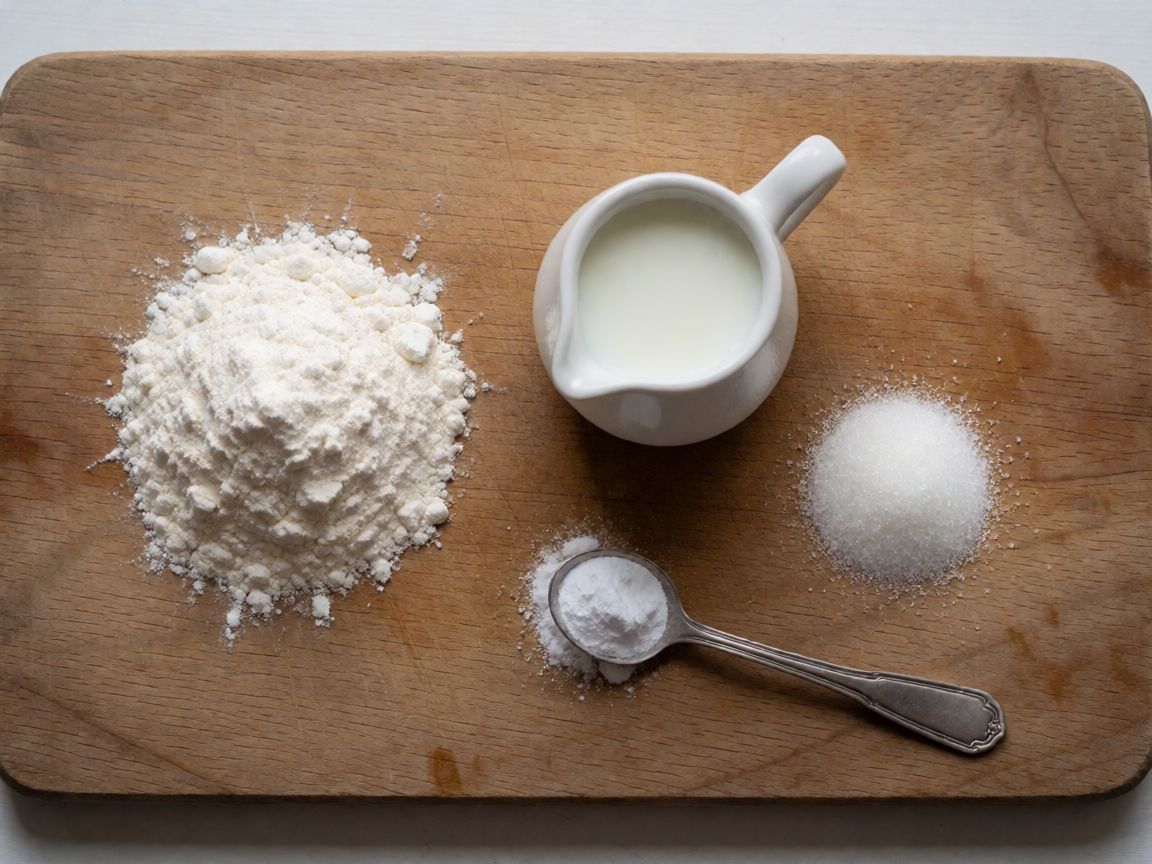
- 150 g Plain flour
- 200 ml Milk at room temperature
- 50 g Caster sugar
- 1 tsp Baking powder
- 2 tbsp Vegetable oil or to taste, for frying




Steps
Sift the flour into a bowl, add the sugar and baking powder, and whisk together.
Gradually pour in the room-temperature milk in a thin stream.
Whisk until the batter is smooth and even.
Cover the bowl with cling film and let the batter rest.
30 minLightly grease a non-stick frying pan with oil, spreading it with a paper towel.
Place the pan on the stove and heat over medium heat.
Ladle the batter into the pan, cooking 2–4 pancakes at a time.
As soon as small bubbles appear on the surface, flip the pancakes with a spatula.
Cook for a few more minutes on the other side, then transfer to a plate.
Repeat until all the batter is used.
Serve the pancakes hot.
This is a dropped batter — close kin to what British kitchens call a Scotch pancake — thick enough to hold a ladleful of itself, thin enough to need no egg to keep that shape. Egg's usual job in a pancake batter is binding and a bit of lift; here that job is handed over entirely to baking powder and to the flour's own starch. Worth knowing before you heat anything: egg isn't glue, it's one way among several of trapping air and setting structure, and a teaspoon of baking powder reacting with the moisture around it does the same work by a different chemistry.
What decides whether these come out light rather than flat and slightly rubbery is the rest. Thirty minutes isn't tidiness, it's time — time for the flour to actually drink in the milk (starch swelling, gluten strands easing off after a hard whisking), and time for the baking powder to begin its slow fizz before it ever meets heat. Skip the rest and you get batter still gritty in patches, bubbling unevenly in the pan — one spot rising, the next staying flat and tearing when you flip.
The second decision point is heat, and "medium" only means something if you know what it's for here: giving the raising agent time to finish before the surface scorches. Forget the clock and watch the batter instead — small bubbles rising and sitting on the surface, not popping straight back down, is your flip signal. Flip too early, before that skin sets, and the pancake folds on itself; flip too late and the underside is leather while the top is still raw.
Flour, plain, sifted. Sifting here isn't ceremony — it's aeration, and more to the point, it stops the baking powder you add at the same stage from clumping. A pocket of undissolved baking powder means one bite fizzes hard and another sits dense; sifting spreads the raising agent through the flour so the whole pancake lifts at roughly the same rate.
Milk, at room temperature, which matters more than it sounds. Cold milk meeting baking powder slows the reaction right down and can make the batter seize slightly on contact with a hot pan — patchy bubbling, patchy rise. Room-temperature milk also hydrates the flour properly during the rest, so you end up with a smooth batter from patience rather than from beating it harder. Any milk with enough fat and protein to carry flavour and help the surface brown will do — whole milk is the obvious choice; a plant milk works, but expect a slightly less tender crumb, since you lose the tenderising effect of milk fat.
Sugar, caster — fine crystals that dissolve into the batter rather than sit as grit. This isn't about sweetness alone; undissolved sugar leaves sandy specks that scorch black in the pan while the rest of the pancake is still pale.
Baking powder is the real worker in a batter with no egg. It's a dry acid paired with a base, inert until wet — which is exactly why the rest before frying matters: you want the reaction already under way, gentle and steady, not detonating all at once the moment the batter hits heat, which gives you a surface that puffs violently and then sinks once it sets.
Oil: vegetable, wiped into the pan with a paper towel rather than poured and left standing. A pool of oil doesn't make a crisper pancake, it fries the edges while the middle steams, and you get uneven colour and a greasy rim instead of an even one. The real criterion for the oil is no smell of its own — sunflower, groundnut, a flavourless rapeseed all qualify; olive oil doesn't, because its taste argues with the batter instead of staying out of the way.
The pan wants to be non-stick, simply because this batter carries less natural fat and protein than an egg batter to lubricate its own release — a well-seasoned cast-iron pan would do the job too, but non-stick is what's usually on a UK hob, and there's no reason to fight your own kitchen. Make these on a Sunday morning before the roast goes in, and serve them hot with the first cup of tea — they don't keep their textures sitting around, and that's not a flaw, that's just what a pancake is.