
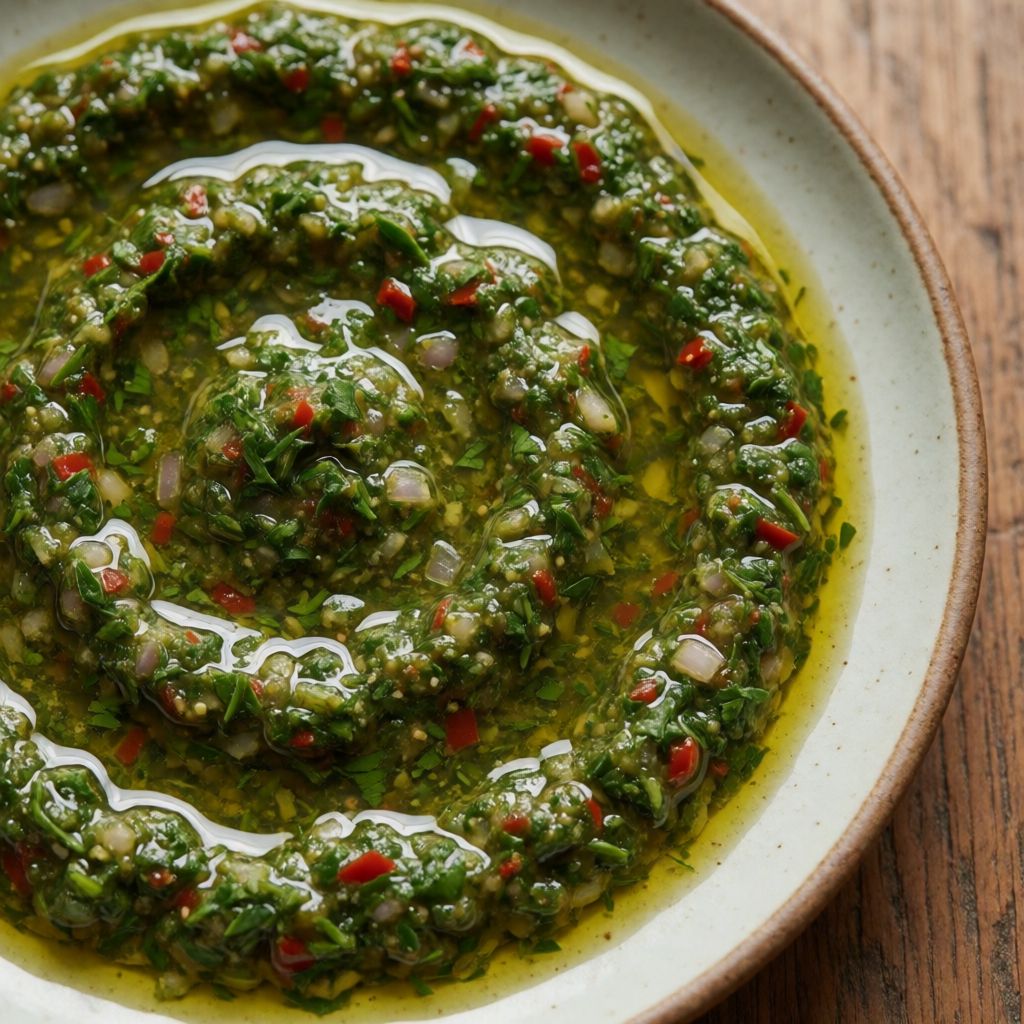
 AI photo
Parsley Sauce
A bright, fresh herb sauce made from blended parsley, shallot, chilli and lemon, finished with olive oil.
Labels are worked out automatically from the ingredients and can be wrong. Check the packaging if it matters to you.
Ingredients
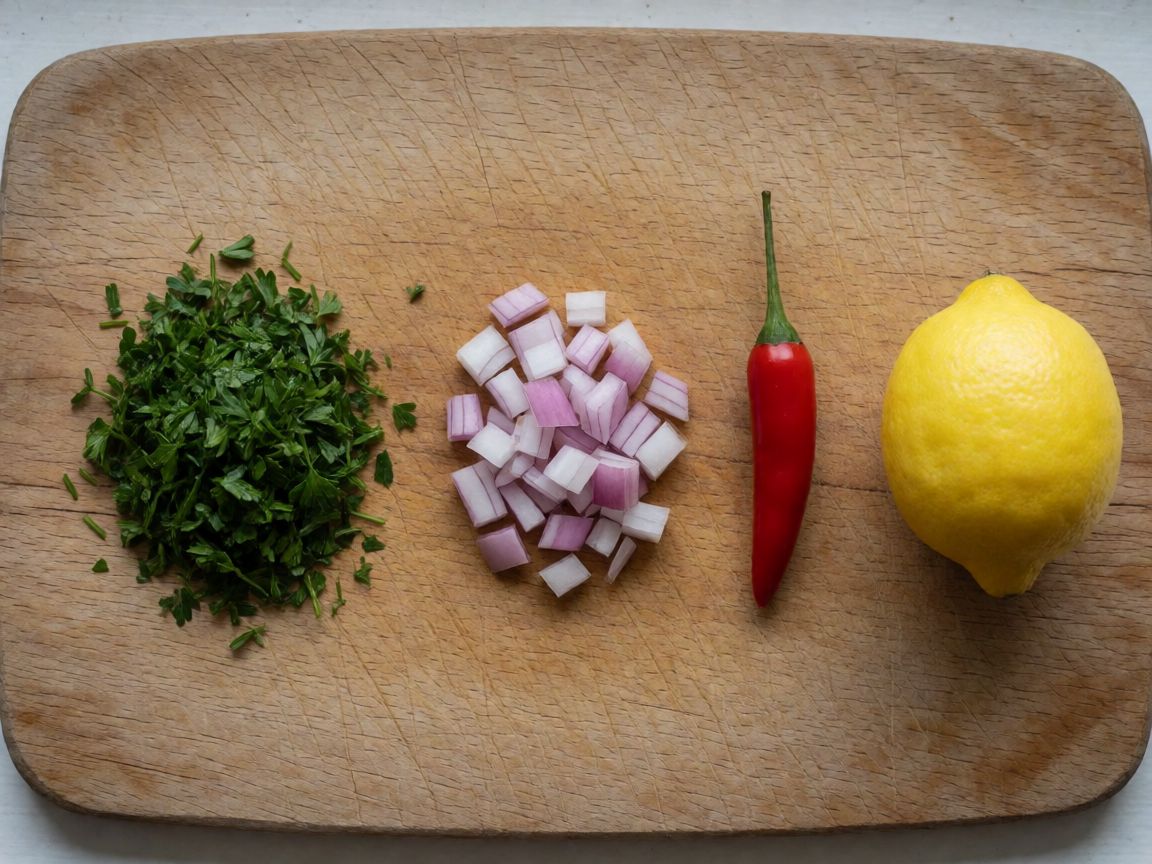






Steps
Put the washed and dried parsley, the chilli pepper and the peeled, chopped shallot into a blender.
Blend until smooth, then transfer the sauce to a bowl, drizzling in the olive oil in a thin stream while adding a pinch of salt and the lemon juice.
Emulsify and chill in the fridge until ready to serve.
This is not a cooked sauce — it's a raw emulsion. You're suspending oil in a liquid built from crushed herb and lemon juice, held together by the little starch and protein that leaks out of the chopped shallot. Nothing here meets heat, and that's the whole point: parsley keeps its colour and its smell only as long as it stays cold and gets handled quickly.
What decides whether it works is how the oil goes in. Pour it in a thin stream while the blade keeps moving and it wraps itself around every blended fleck of leaf — you get a sauce, not oil floating on green water. Tip it all in at once and the bowl looks the same for five minutes, then splits: oil pooling on top, lemon and water sinking underneath. That split is the one failure this recipe is built to avoid, and the thin stream is the whole defence against it.
Some say a sauce like this needs a few minutes on the stove to "marry the flavours" — no, because heat is exactly what would wreck it. Chlorophyll goes dull and olive-khaki past a certain warmth, and the sharp bite of raw shallot and chilli is the flavour here, not a rough edge to be cooked smooth. The only heat this sauce meets is friction from the blender blade spinning too long, which is why you stop the moment you can't spot a whole parsley leaf by eye — not a beat later.
Parsley: flat-leaf if you can get it — it carries more of its own aromatic oil in the leaf, where curly parsley carries more bitterness in the stem and looks prettier than it tastes. Wash it, but dry it properly, because wet leaf dilutes the sauce and stops the oil clinging to it the way you need it to for the emulsion to hold.
Shallot instead of onion because it's milder and sweeter raw — onion eaten uncooked lingers with a sulphur bite that will sit on the sauce (and your breath) for hours. If all you have is onion, take a small piece, chop it fine, and soak it in cold water for a few minutes first — it pulls out some of that sharpness. Spring onion white works too.
Lemon does two jobs at once: it cuts the fat so the sauce doesn't sit heavy on the tongue, and its acid slows the leaf from browning once it's bruised by the blade. The substitution criterion is "a sharp acid without a strong smell of its own" — a light vinegar will do it, lime will do it, but each nudges the flavour sideways, so taste before you commit the whole quantity.
The cherry chilli is there for warmth, not fire — it's a mild-to-medium pepper, used whole with seeds if you want more heat, deseeded if you don't. Any fresh chilli substitutes, the amount is yours to set by your own tolerance; dried flakes will do in a pinch, but they bring dust-dry heat instead of the fresh, slightly vegetal kind, which changes the sauce more than people expect.
For the oil, the criterion is a mild olive oil, not your good bottle — the fruity top notes of a fine extra virgin get lost and sometimes turn bitter once blended hard against acid and chilli. Don't swap in sunflower or another neutral oil here, though: olive's own faint grassy note actually supports the parsley rather than fighting it, which is the one place where "any oil with no smell of its own" doesn't apply.
A jug blender or stick blender does the job — no mortar needed, and nobody in a British kitchen should feel short-changed for lacking one. The salt isn't just seasoning; a pinch early on draws juice out of the parsley and sharpens the shallot's bite before the oil goes in, so taste and adjust rather than trusting the single pinch written down. Parsley earned its place in a British pantry for the dullest of reasons — it's the herb that survives a British garden and a British winter better than basil or coriander ever will, which is exactly why a green sauce built on it, rather than on something more exotic, sits so naturally next to a Sunday roast or a piece of plain fish. Keep it covered in the fridge and eat it within a day or two — after that the green turns tired even chilled, and tired green tastes exactly as dull as it looks.