
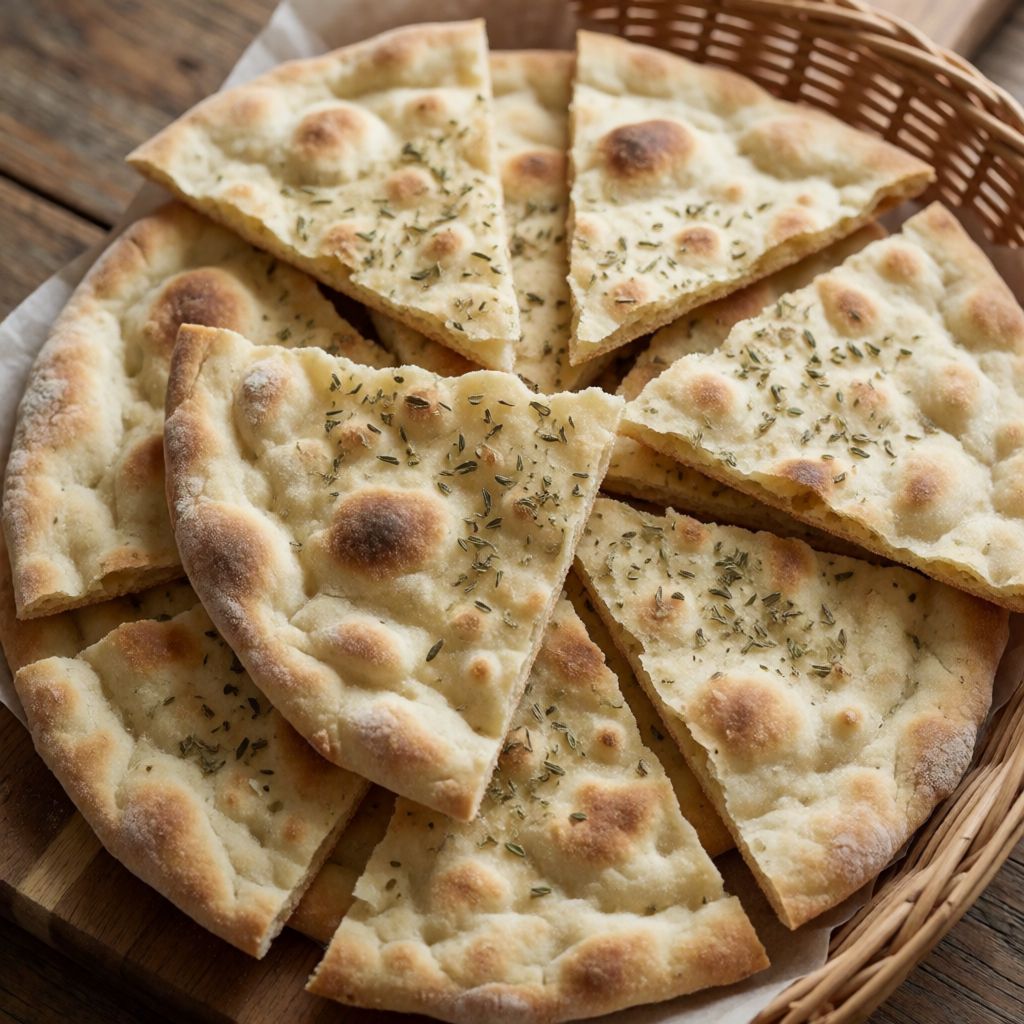
 AI photo
Pasta Matta
Pasta matta is a simple savoury dough used to make strudels, rolls, tartlets and other savoury bakes.
Labels are worked out automatically from the ingredients and can be wrong. Check the packaging if it matters to you.
Ingredients
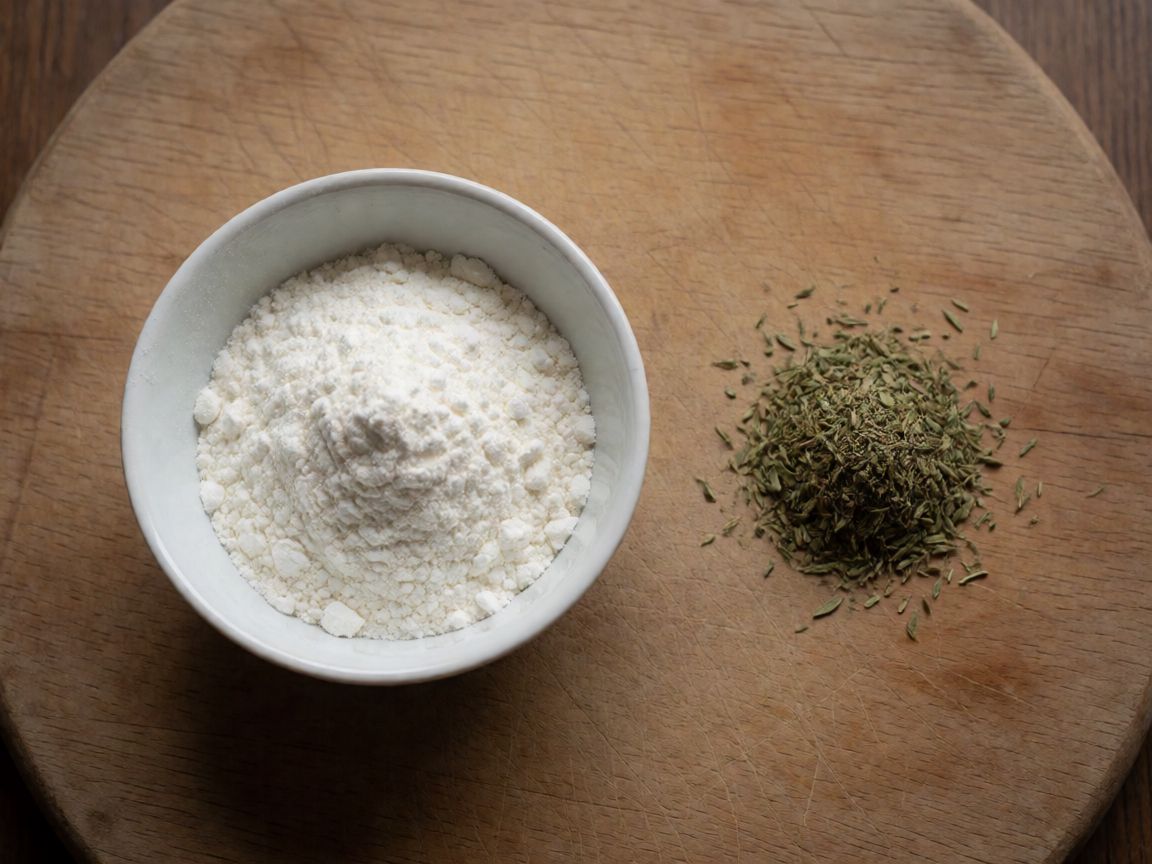
- 500 g Plain Flour
- 180 g Water
- 8 tbsp Olive Oil
- 2 pinch Salt
- tsp Dried Herbs oregano, parsley, rosemary, thyme





Steps
Tip the flour into a bowl, then add the salt, olive oil and dried herbs.
Gradually pour in the water, kneading until all the ingredients come together into a smooth dough.
Shape the dough into a ball, wrap it in cling film and leave to rest at room temperature.
30 minOn a lightly floured surface, roll out the dough and use it for strudels, rolls, tartlets or other savoury bakes.
Bake according to the chosen preparation.
Pasta matta isn't a pasta at all — it's a dough that pretends to be puff pastry while skipping the one thing that makes puff pastry puff: cold butter, folded over and over into hundreds of paper-thin layers. Here you fold nothing. Olive oil goes straight into the flour, the dough gets kneaded smooth the way you'd knead pasta for noodles, and that's where the name comes from — pasta matta, "crazy dough," because it gets you a crisp, rollable sheet without any lamination at all.
What decides whether it works isn't the baking, it's the resting. You knead until smooth, then leave the dough alone at room temperature for half an hour. That rest has one job: let the gluten you just built by kneading relax, so when you roll it out thin it stretches instead of springing back or tearing. Skip the rest and you'll fight the dough the whole time, and it'll shrink on you like a stubborn net curtain.
Some say an oil dough can never be rolled thin, that it's only good for rustic, thick shapes. No — because this isn't shortcrust, where you deliberately avoid building gluten so the fat stays in separate flakes. Here you knead properly, like for pasta, which is exactly what gives you the elasticity to roll it down to strudel thinness without it falling apart in your hands.
Flour is plain flour, not bread flour and not cake flour, and that's not arbitrary. Bread flour has too much protein — the dough would fight you when rolling thin, springing back like old elastic. Cake flour has too little — it would tear before it was thin enough to wrap anything. Plain flour sits in the middle: enough gluten to stretch, not so much it resists you.
The water isn't really measured for your flour, it's measured for an average one. Flours drink differently depending on the wheat and the damp in your kitchen that week, so treat the 180g as a starting point. The dough is right when it's smooth and holds together without sticking to your fingers — if it's crumbly, it needs a splash more water worked in properly, and its full 30 minutes to settle.
Oil, salt and herbs go into the flour before a drop of water touches the bowl, and the order matters. Dried herbs release their aroma into fat, not water — the compounds that smell like oregano or thyme are oil-soluble. Tip them straight into water and most of that aroma stays locked up and does nothing. Mixed into oil-coated flour first, the oil carries the flavour right through the dough.
As for the oil itself, the only real requirement is that it's liquid at room temperature and has no smell you'd rather not taste later — unlike butter, it never gets a chilling stage where it firms back up, so whatever character it has stays in the finished dough. Olive oil is traditional because it's what was on the hillside where this dough comes from; a mild, neutral oil gives the same texture with a plainer, quieter flavour.
The recipe doesn't give you a baking temperature, and that's honest rather than lazy — it depends entirely on what you shape the dough into. A strudel wants enough heat to brown and crisp the outside before the filling turns to mush inside it; a tartlet base needs the heat to get all the way through the bottom. In a domestic oven, without the all-sides heat of a wood-fired oven, judge it the way you'd judge a loaf of bread: the surface should take the colour of a well-roasted potato skin, and feel dry and firm when you tap it, not soft.
This is a dough worth keeping in mind after a Sunday roast, when you've got leftover vegetables and a bit of meat with nowhere sensible to go — wrap them in a sheet of this instead of starting another butter pastry you haven't got the patience to keep cold. The patience here goes somewhere else entirely: into the half hour you let the dough sit and do nothing, which is the one ingredient here you can't buy more of at the shop.