
 AI photo
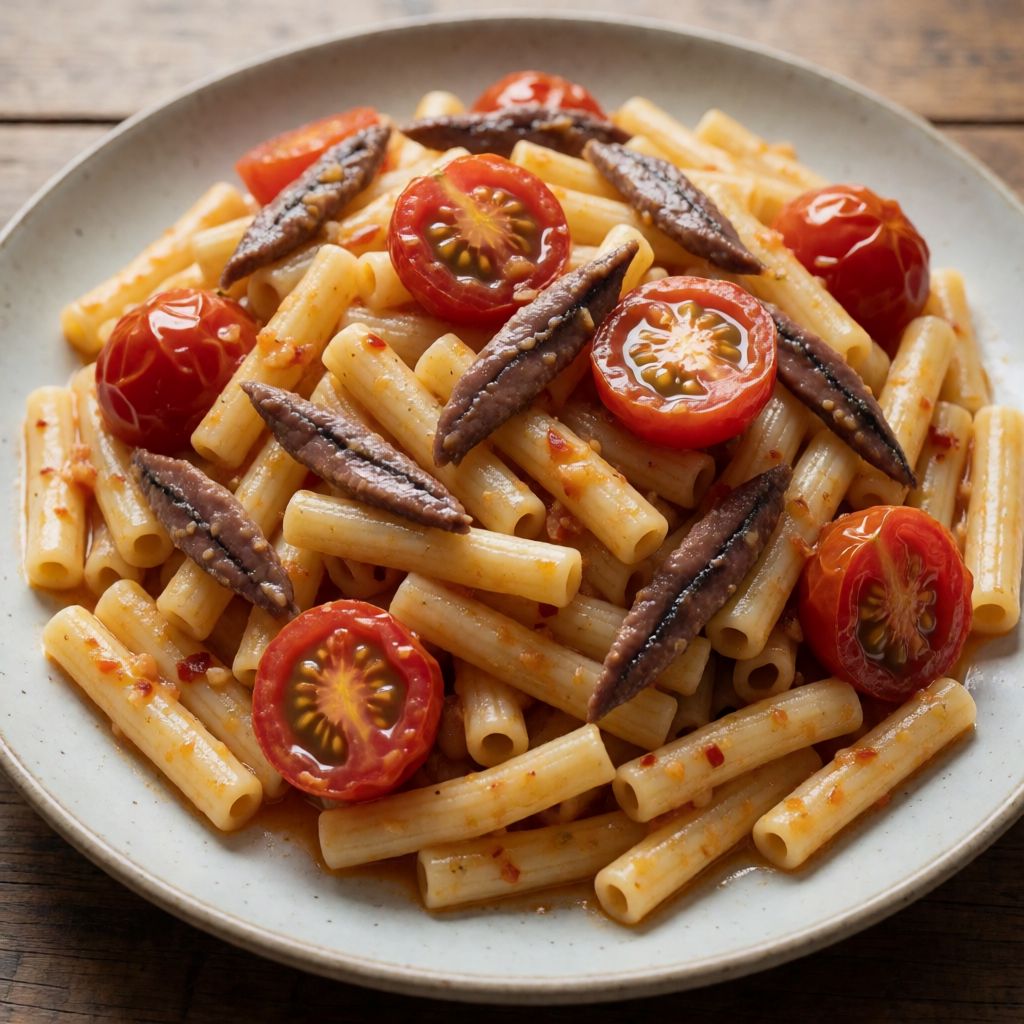
Pasta with Anchovies and Cherry Tomatoes
A quick pasta dish with anchovies, garlic and cherry tomatoes, ready in about 35 minutes.
Labels are worked out automatically from the ingredients and can be wrong. Check the packaging if it matters to you.
Ingredients
- 400 g Short pasta
- 1 clove Garlic
- 2 tbsp Olive oil
- 7 pcs Anchovies
- 200 g Cherry tomatoes
- 1 pinch Chilli powder to taste
- 1 pinch Salt to taste
- 1 bunch Fresh parsley, chopped to taste






Steps
Heat the olive oil in a frying pan and sauté the crushed garlic clove, removing it once golden.
Add the anchovies, breaking them into small pieces, along with the cherry tomatoes.
Cook over low heat for 10 minutes, then season with the salt, a pinch of chilli powder and the parsley.
10 minCook the short pasta in salted boiling water until al dente.
Tip the pasta into the pan, toss together and simmer for a few minutes before serving.
What was changed
We used Cherry tomatoes because this exact ingredient isn't available in the catalog.
This is a thrifty little sauce built on disappearance. The anchovy isn't meant to turn up on your fork announcing itself — it's meant to melt into the oil and vanish, leaving behind salt and the sea's deep savour, nothing more. That melting is the whole mechanism of the dish, and it only happens at a heat gentle enough not to fry the fish, only to coax it apart.
What decides whether this works: the garlic goes gold and comes out before it goes brown — brown garlic is bitter, and bitterness here has nowhere to hide. The anchovies go in and break down into the oil rather than crisp up in it — crisped anchovy is tough and fishy in the bad way, the way people who say "I don't like anchovies" actually mean. And the cherry tomatoes burst on their own time, skins splitting and juice running out to meet the oil, which is how you get sauce instead of a pan of oil with some hot tomatoes sitting in it.
Some say anchovies make a dish taste "too fishy". No — because what you're tasting when that happens is anchovy that was cooked too hard, too fast, and seized up instead of dissolving. Give it low heat and time and it reads as depth, not fish. That's the trick fishing villages worked out generations ago, long before anyone wrote a recipe for it: salt-cured fish stirred into hot oil stops being "fish" and starts being seasoning.
On your hob, "low heat" needs translating, because electric rings in particular hold their heat and keep cooking long after you've turned the dial down — gas is more honest, it drops the moment you ask it to. What you want is oil that barely moves, a quiet shimmer, the anchovy dissolving with small slow bubbles rather than a hiss. If the pan is too hot you'll know within a minute: the tomatoes blister and char on the underside before they've had time to burst properly, and the anchovy fibres go leathery instead of melting. Pull the pan half off the heat if you need to buy yourself patience — you're not browning anything here, you're coaxing.
Anchovies: tinned or jarred in oil, salt-cured. Seven for four people sounds like a lot until you remember they're disappearing, not sitting whole on the plate. If you've only got anchovy paste, use it — a heaped teaspoon or so, added the same way, early, into the warm oil, never thrown in cold or at the end where it won't have time to break down. No anchovies at all and you want something in that direction: a few drops of fish sauce plus extra salt gets you the savour without the dissolving texture, or a small handful of chopped black olives gives you a different but honest brininess. It won't be the same dish, but it won't be a sad one either.
Garlic: one clove, crushed rather than minced, because a crushed clove releases its oil slowly and evenly and you can fish it out whole once it's done its work. Minced garlic burns in patches before you notice, and burnt garlic is bitter in a way nothing else in this pan can cover up. If you don't like finding bits of garlic at all, crushing-and-removing is exactly the method that solves that for you — it's not a shortcut, it's the point.
Olive oil: here you actually want one with flavour of its own, not a neutral oil, because the oil is doing real work carrying the anchovy and garlic — a decent, everyday olive oil, not your best bottle saved for drizzling, and not an aggressively grassy extra virgin that'll fight the anchovy for attention.
Cherry tomatoes: chosen for their skin-to-flesh ratio. Small fruit, taut skin, quick to split under gentle heat and sweet once they do — that splitting is your doneness cue, watch for it rather than counting minutes. Any ripe tomato cut small will stand in, but a tomato that's firm and underripe will sit there stubbornly instead of bursting, and you'll end up cooking it longer just to force a result it was never going to give you willingly.
Pasta shape: short and preferably with some grip — penne, fusilli, something with ridges or a hollow — because this sauce is chunky rather than smooth, and a slick shape like spaghetti lets the tomato and anchovy fall straight off instead of catching.
Parsley and chilli are both there for contrast, not weight: parsley's freshness cuts the richness of the oil, chilli gives a small current of heat under the salt. Both go in at the end, off the heat or nearly off it, because their job is brightness, and brightness cooked too long just turns into more sauce. This isn't a dish that rewards rushing — the tomatoes bursting, the anchovy melting, that's patience doing the actual cooking, and there's no shortcut that gets you the same result faster.