
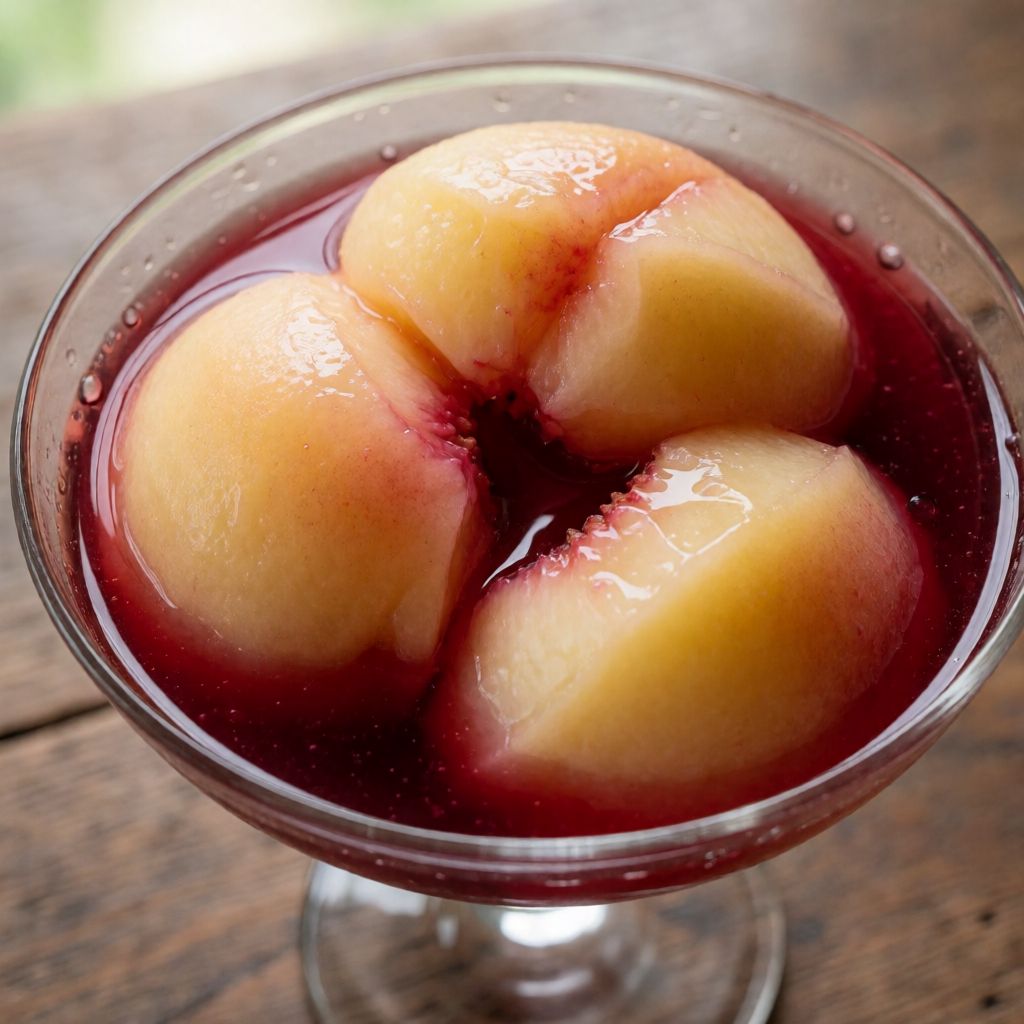
 AI photo
Peaches in Wine
A simple chilled dessert of sweet peaches steeped in red wine, perfect for warm evenings.
Labels are worked out automatically from the ingredients and can be wrong. Check the packaging if it matters to you.
Ingredients



Steps
Wash and peel the peaches, remove the stones and cut into cubes.
Put the peaches into a large bowl or jug, then add the sugar and red wine.
Stir well.
Chill in the fridge to cool.
60 min
This isn't cooking, it's an exchange. You never touch heat here — the "cook: 0 min" is not a typo, it's the whole point. Peach, sugar and wine sit together in the cold and trade places: sugar pulls juice out of the fruit, wine moves in to fill the gap. That two-way traffic, sugar out, wine in, is what turns cubed fruit and a glass of red into a dessert. Nothing is added by flame, only by time and a concentration gradient doing its slow, patient work.
What decides whether it works is the peach you start with, not the wine. You want a peach that's ripe enough to taste of something but still firm enough to hold a cube shape — press it, it should give a little and spring back, not cave in. A fully soft, bruise-ready peach has cell walls already breaking down on their own; sugar and wine will finish the job in the fridge and you'll end up with wine-coloured mush instead of wine-soaked cubes. Some say the riper the fruit the better the result — no, because ripeness here is about structure holding up to osmosis, not about maximum sweetness.
The peeling matters for the same reason, and it's not fussiness. Skin is where a peach keeps its bitterest compounds, right under the fuzz. Leave it on and you get two tannic things fighting — skin bitterness and wine tannin — instead of one clean flavour. Peel it, and the wine has direct access to flesh, no barrier, no bitterness stacking up.
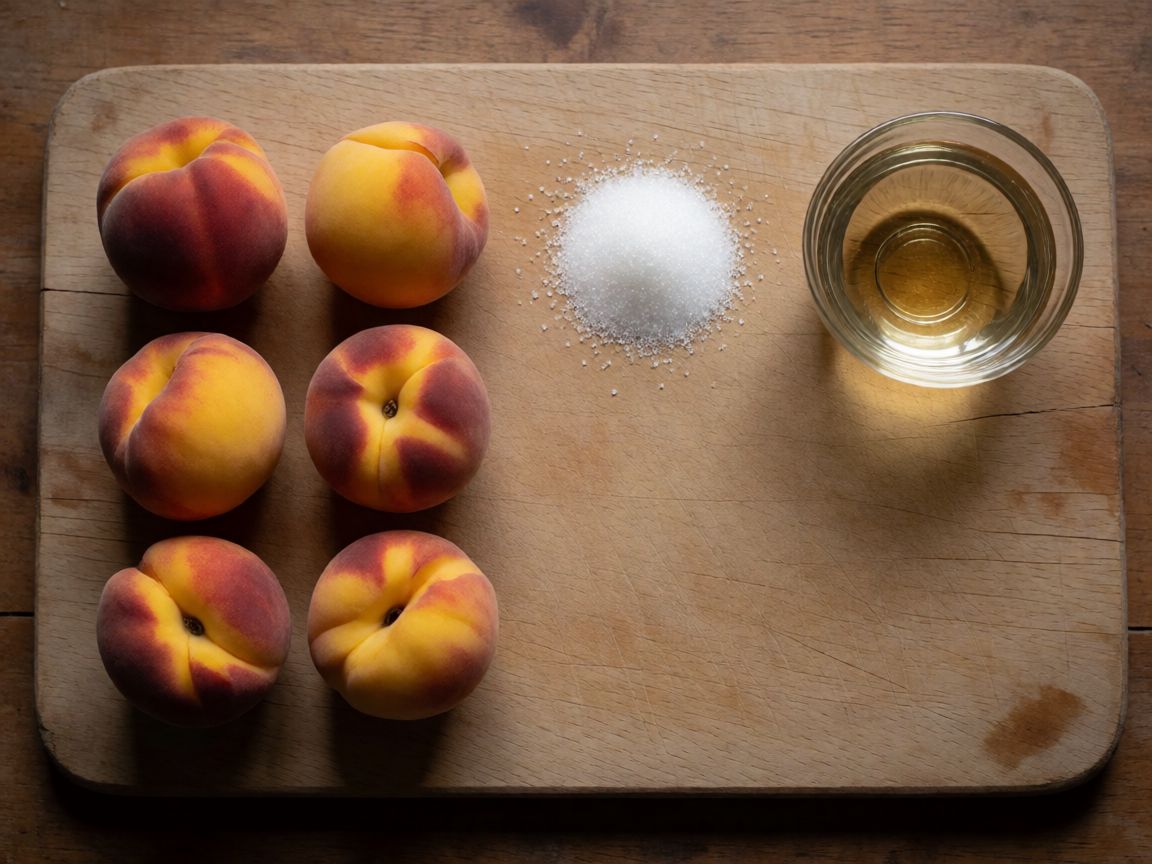
Peaches: six is roughly a kilo and a half, enough to fill four small glasses or bowls after the juice comes out and the volume settles — people always forget that macerated fruit shrinks a little, juice has to come from somewhere. If peaches aren't in season or look sad in the shop, nectarines do the same job and you can skip peeling them, their skin is thin enough to let wine through without a fight. Apricots work too, cut smaller, because they're more delicate and will give up their structure faster.
Sugar's job is entirely mechanical here: it's the thing that creates the pull. Dissolved sugar makes the liquid outside the peach cells more concentrated than the liquid inside, so water and flavour move out of the fruit to even things up, while wine moves in the opposite direction. Thirty to forty grams for six peaches is a light hand — this isn't meant to taste like jam, it's meant to taste like peach and wine, sugar is just the mechanism that makes the exchange happen, not a flavour on its own. White sugar dissolves clean and fast, which is what you want; honey would work by the same logic but brings its own taste along, so only use it if you're happy for the dessert to taste a bit of honey too.
The wine is doing more work than people give it credit for. Alcohol carries aroma and colour into the fruit faster than water alone would, which is why this takes an hour, not a day. Pick something medium-bodied and not too tannic — a young, straightforward red, the kind you wouldn't feel bad about using for cooking. A heavily oaked or very tannic wine will fight the fruit instead of flavouring it, leaving a dry, gripping edge on the peach rather than a soft one. This is, historically, a frugal dish: end-of-bottle wine, end-of-summer fruit, nothing wasted, nothing bought specially — it earns its place in a kitchen the same way bread pudding does, by using what's already there.
There's no equipment problem with this one, which is rare and worth saying plainly: a bowl, a jug, a fridge, that's the whole kit. No kazan, no wide pan, no need to improvise a lid out of a plate — for once the ordinary flat kitchen is perfectly equipped, better even, since all it asks of you is cold storage and patience.
After a Sunday roast, this is the kind of dessert that asks nothing of you at the stove when the oven's already been working all afternoon — made ahead, sitting cold, ready while you're still clearing plates. Patience is the one ingredient the recipe doesn't list but absolutely requires: rush the hour and you get sweetened wine with raw fruit chunks sitting in it, not peaches in wine.