
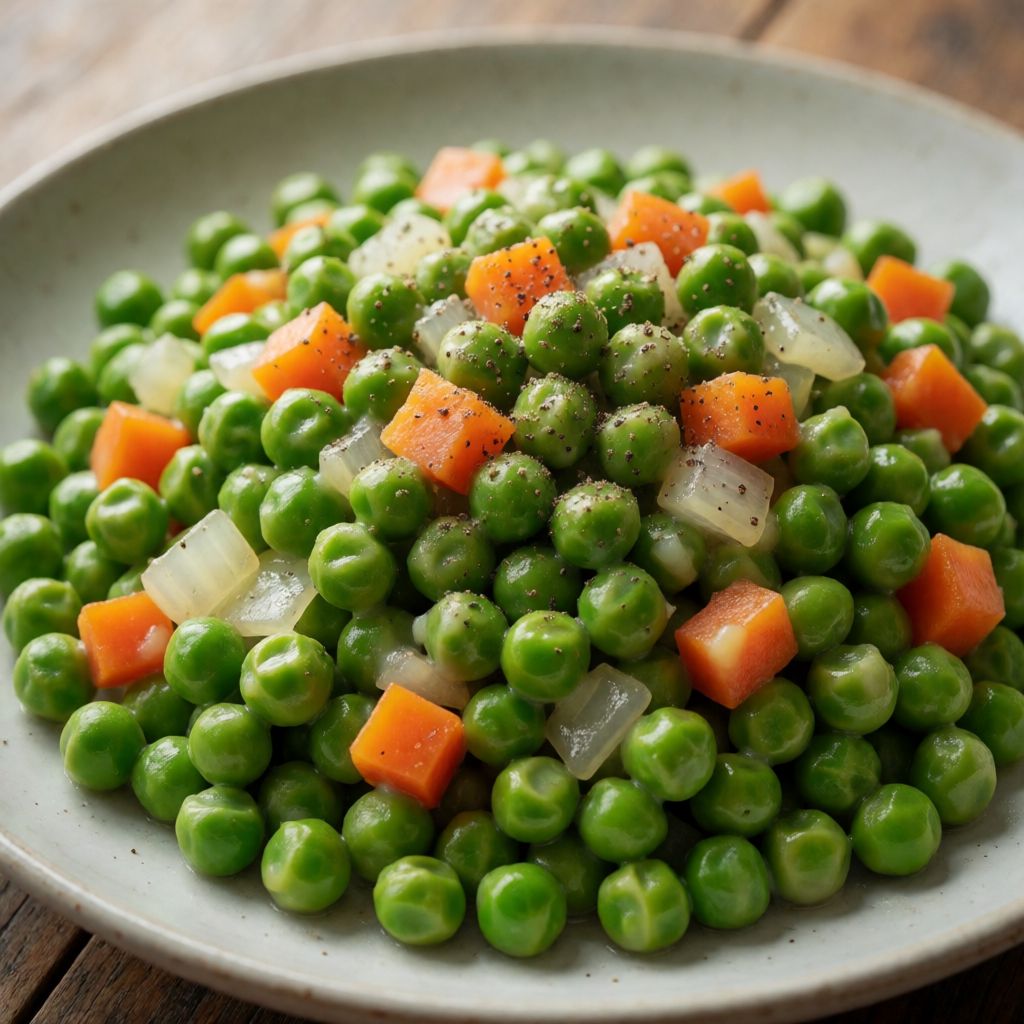
 AI photo
Peas in Butter
A simple side dish of peas cooked with carrot and onion, finished with butter.
Labels are worked out automatically from the ingredients and can be wrong. Check the packaging if it matters to you.
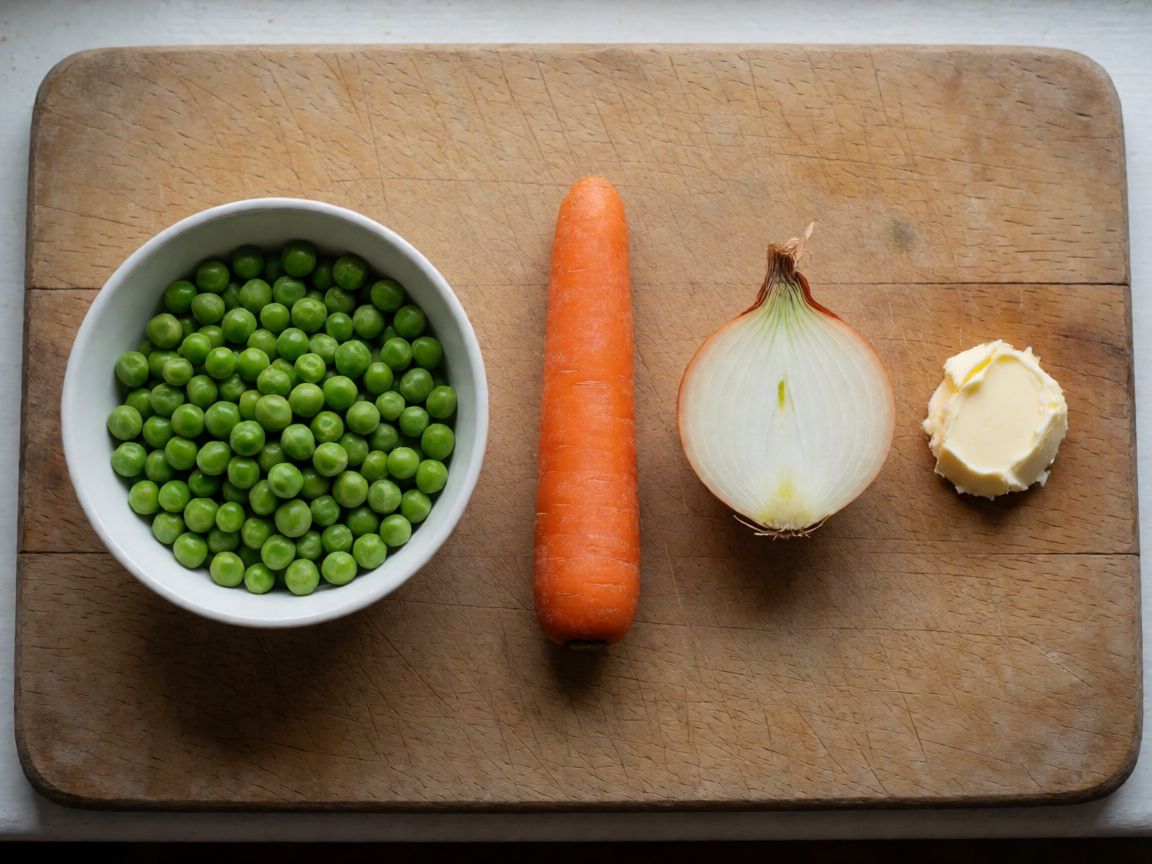
Ingredients





Steps
Finely chop the onion and grate or dice the carrot.
Put the peas together with the carrot and onion into a saucepan, and cover with salted water.
Cover with a lid and simmer gently.
20 minAdd the butter and let it melt, stirring with a wooden spoon.
Add a little ground black pepper to taste.
Serve hot.
The name undersells the mechanism. This isn't peas cooked "in" butter from start to finish — it's peas and their two quiet companions, poached in a shallow bath of salted water, and only at the very end given a knob of butter to melt through them. Butter here does no cooking at all. Its job is to coat, to glaze, to round off the rough edges that salt and raw vegetable leave behind. That's why it goes in last, off the heat of real boiling, just melting — if you put it in at the start, it would brown, spit, and burn long before the peas were done, and you'd have wasted the one ingredient that's supposed to be the finishing touch, not the fuel.
What decides whether this works is restraint at the simmer. "Cover and simmer gently" is doing real work in that sentence — you want small bubbles breaking the surface, not a boil. A hard boil knocks the skins off peas, clouds the water with starch, and by the time it's done you've got grey mush floating in grey water instead of bright green peas sitting in almost no liquid. The 20 minutes on the card is a guess for an average carrot cut an average size — the carrot is your real clock. Fish a piece out: it should bend without resistance, not snap. When it bends, the peas are long since ready; carrot is always the slow one here, so you're really cooking for it.
Peas: frozen is the sensible default in a British kitchen, and nothing here asks you to apologise for that. If you use fresh peas in their short summer window, remember they're already sweeter and rawer than the frozen kind and will take a little longer to come right, since none of their sugar has been locked in by blanching yet — taste as you go rather than trusting any clock. Dried peas are a different dish entirely: they need soaking and a much longer simmer, and would turn this from a quick side into an afternoon project. Don't substitute them in without planning for that.
Carrot: its only job is to add sweetness and a bit of colour and bite. Grate it and it half-dissolves into the liquid, almost sauce-like; dice it and it keeps its own shape and a soft resistance against the pea. Neither is wrong — it's a texture choice, not a technical one. Choose a carrot that's firm end to end; one that's gone woody or rubbery in the core will never get to the "bends, doesn't snap" stage no matter how long you give it, it'll just go soft on the outside while staying stiff in the middle.
Onion: half an onion, finely chopped, is there to round out sweetness, not to announce itself. This is not a dish built on fried, caramelised onion — it goes in raw, straight into the water with everything else, and softens as it poaches. Add more and it starts to dominate the peas instead of supporting them; leave it out entirely and the dish turns a bit flat, missing its backbone. A shallot works if you want something gentler and sweeter in its place.
Butter: fifty grams against five hundred grams of peas is a generous but not excessive ratio — enough to glaze every pea, not enough to turn this into a sauce. Unsalted is worth seeking out if you can, because then the salt level is entirely in your hands, set by the cooking water rather than fought over twice. If you have no butter, any fat with no smell of its own will carry the glaze — a light oil will do the mechanical job — but you'll lose the reason the dish is named what it is, which is the faint dairy sweetness only butter brings.
Salt goes into the water at the start, not sprinkled on at the end, so the peas and carrot take it up as they cook rather than wearing it only on the surface. Go easy if your peas came from the freezer — many are blanched in lightly salted water before freezing, so they arrive already partway seasoned, and a heavy hand here just makes the dish taste of salt rather than of itself.
Black pepper, ground fresh if you can manage it, goes in only at the end, off the heat. Pepper's aroma is carried by oils that start fading the moment it's ground, whether from a mill or a packet — adding it early just means boiling that smell away before it ever reaches the plate. And patience is worth naming as its own ingredient here: rush the simmer and you get hard carrot in grey water; give it the time its texture asks for, and the dish needs nothing else from you.