
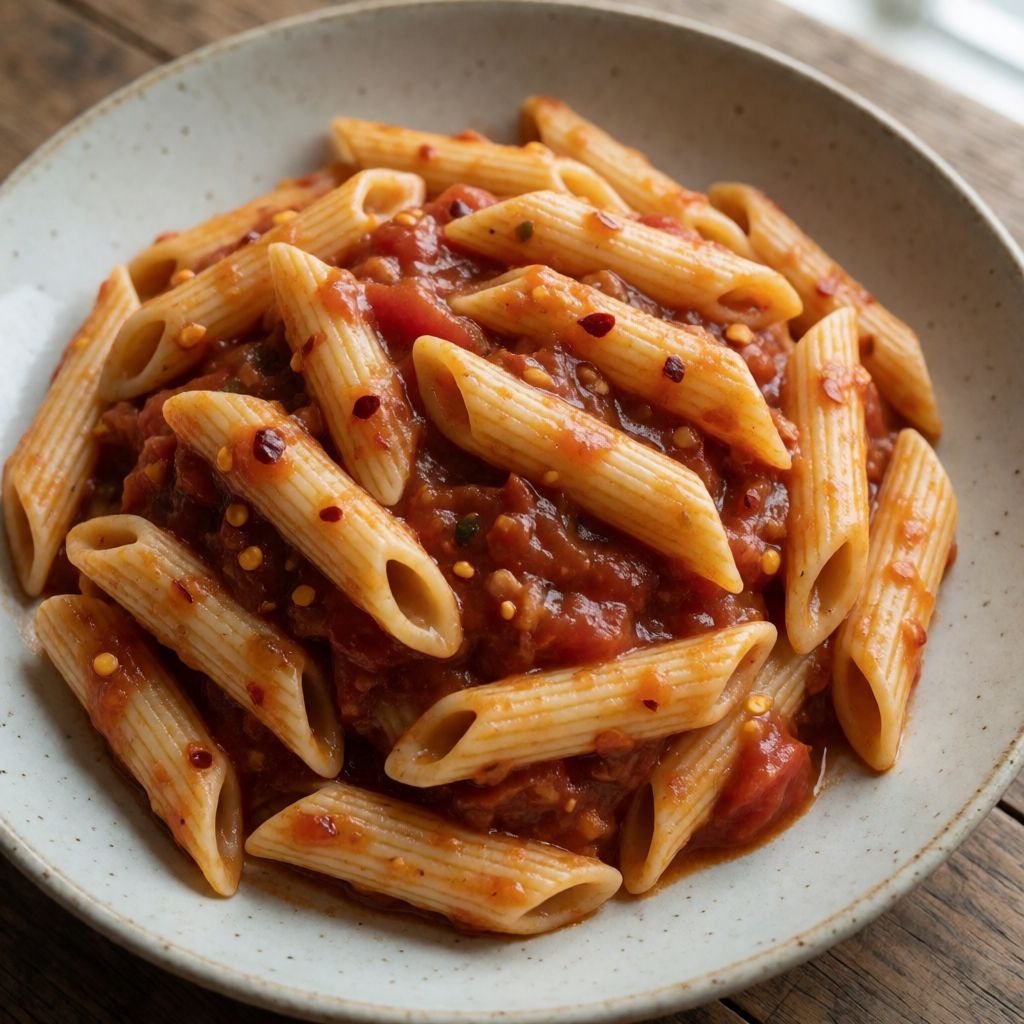
 AI photo
Penne Arrabbiata
A fiery, simple Italian pasta dish with tomatoes, chilli and garlic.
Labels are worked out automatically from the ingredients and can be wrong. Check the packaging if it matters to you.
Ingredients
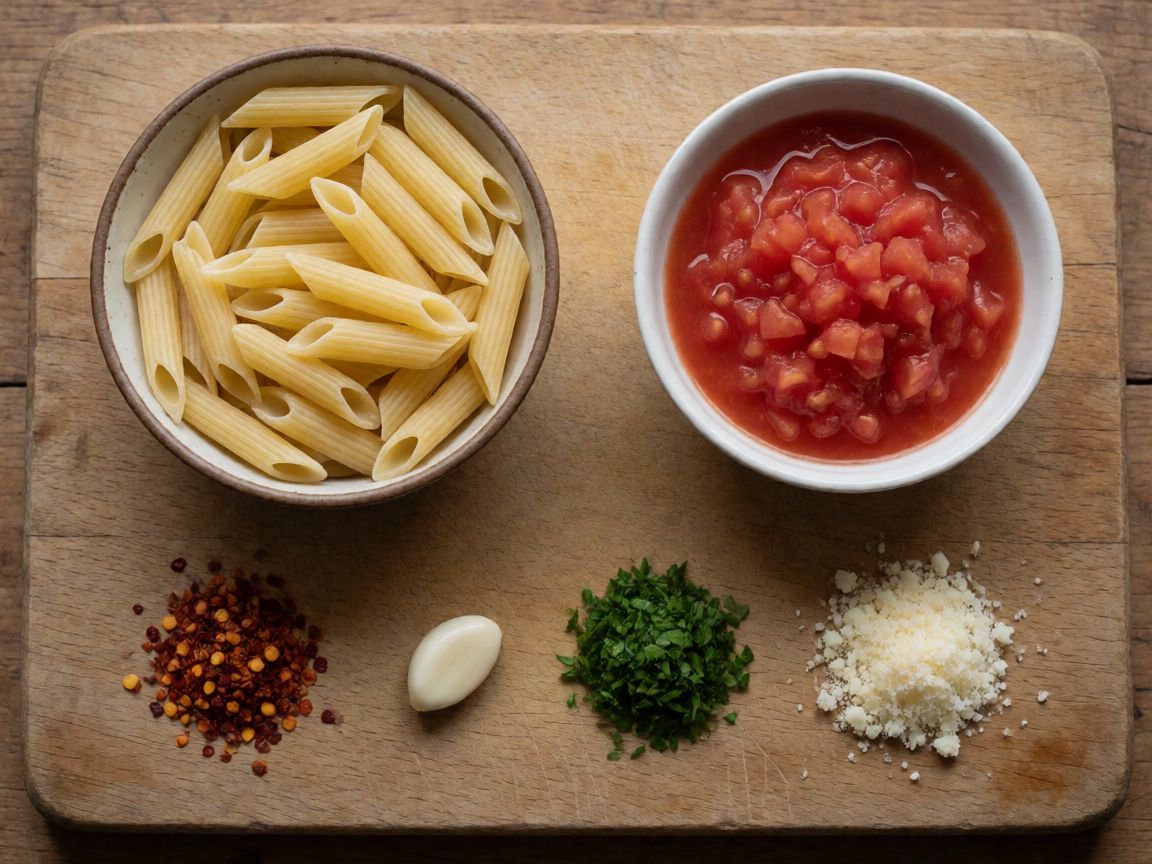
- 320 g Penne
- 400 g Tinned peeled plum tomatoes
- 2 pcs Dried whole chillies
- 1 clove Garlic
- 2 tbsp Parsley
- Olive oil to taste
- Pecorino Romano to taste, optional
- Salt to taste





Steps
Cut the peeled tomatoes into small cubes or mash with a fork. Finely chop the parsley.
Crumble the dried whole chillies and put them in a large frying pan with the crushed garlic clove and a little olive oil.
Fry gently over a low heat, making sure the garlic does not burn or turn too dark.
Add the tomatoes, stir and season with salt. Simmer, stirring occasionally, until the sauce thickens.
11 minMeanwhile, put a pot of water on to boil for the pasta.
Cook the penne until al dente, following the timing on the packet.
Remove the garlic from the sauce and tip the cooked penne straight into the frying pan with the sauce.
Toss quickly over a high heat for a few seconds, adding a little pasta water if needed, then turn off the heat.
Add the chopped parsley and toss once more.
Serve the penne in deep bowls, finishing with grated Pecorino Romano if you like.
Arrabbiata means "angry" — and the anger is the chilli, not the tomato. This is a Roman trattoria dish built for speed: five ingredients, one pan, the kind of thing a cook makes at midnight when the kitchen's about to close. What decides whether it works is not the tomato brand or the chilli count — it's whether the garlic stays blond and the sauce stays loose enough to coat, not sit on, the pasta.
Some say arrabbiata needs a long-simmered sauce, like a Sunday ragù left ticking under the roast. No — because the whole point of this dish is that it's fast. Eleven minutes reduces tinned tomato to something that clings to penne instead of pooling at the bottom of the bowl; longer than that and you're making a different sauce, denser, sweeter, losing the raw bite of chilli against acid that's the actual character of the dish.
The garlic is the fragile part. Low heat, gentle oil, and you pull the clove out once it's done its work — this isn't garlic as a flavour you chew, it's garlic as a flavour you walk past. Let it catch any colour past pale gold and it turns bitter, and bitter garlic is not a seasoning you can cook around; it sits on top of the dish and nobody enjoys it. This is also why the clove goes in whole and crushed, not minced — a whole clove you can fish out and discard; minced garlic you're stuck with, burnt bits and all.
Penne is the shape for a reason beyond habit: its ridges and angled ends catch small cubes of tomato and trap a bit of sauce inside the tube. A smooth tube like macaroni would just let the sauce slide off. If you've only got rigatoni or fusilli, fine — anything with grip or hollow space does the same job; what you want to avoid is a long thin strand like spaghetti, which wants an oil-based sauce clinging by surface tension, not a chunky one needing something to hold onto.
Tinned plum tomatoes exist because fresh tomatoes, outside a few weeks of late Italian summer, are watery and pale-tasting — tinning captures them picked ripe and cooked down slightly, which is more reliable than most things sold as "fresh" in a UK supermarket in February. Buy whole peeled tins over ready-chopped if you can; chopped tins are often cut from lower-grade fruit and padded with extra liquid. Mash them with a fork rather than blending — you want ragged pieces, not a purée, because texture is half of what makes this sauce taste like something instead of ketchup.
The chilli is dried and whole, crumbled by hand, not chilli flakes from a jar. Dried whole chillies still have their seeds and veins where most of the heat actually lives, and crumbling them yourself lets you control the burn and release a toastier flavour than pre-made flakes, which lose aroma sitting on a shelf. No dried chilli in the cupboard? A fresh red chilli, deseeded by half, fried the same gentle way, gets you close — the defining heat here is built slowly in fat, not dumped in raw at the end.
Olive oil is the only fat, and it's doing a specific job: carrying the chilli's capsaicin and the garlic's aromatics into the tomato without adding a competing taste of its own. This is not the place for a heavily flavoured extra virgin saved for drizzling — you want something clean enough that chilli and garlic are what you taste. Any neutral-ish oil with a decent heat tolerance will substitute, but you lose a little of the roundness olive oil brings.
Pecorino Romano is optional, and that's not an afterthought — it's a nod to the dish's roots. Many Roman tomato-and-chilli dishes skip cheese on purpose, because the sauce is meant to be sharp and a bit aggressive, and a salty hard cheese can mute that edge as easily as it can round it off. If you want cheese, Pecorino's saltiness and tang fit better than Parmesan's milder nuttiness, but don't feel you're missing a step if you leave it off.
Parsley goes in at the very end, off the heat, because its whole value is a flat, grassy freshness — cooked for even a minute it turns dull and loses that. It's not decoration; it's the one note in the dish that isn't tomato, garlic or heat, and it's there to cut through, not to blend in.