
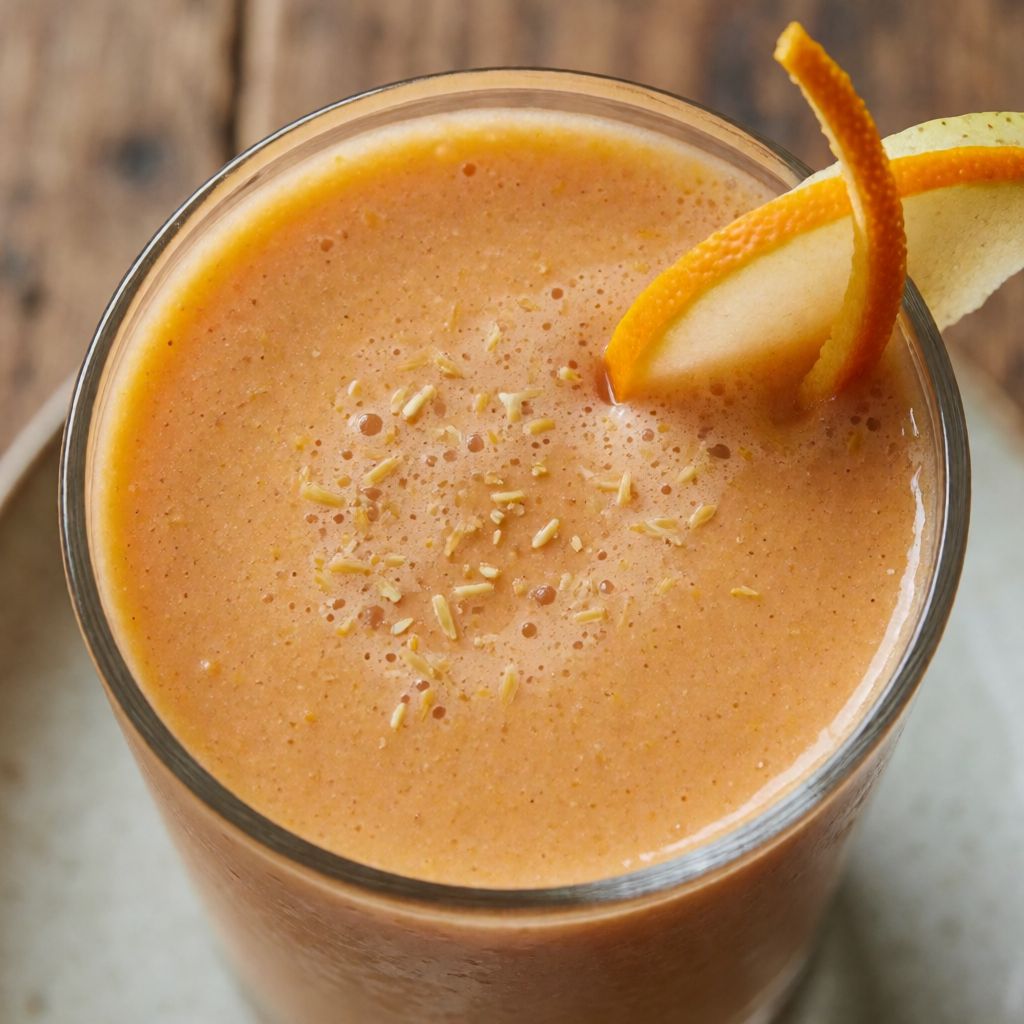
 AI photo
Persimmon and Pear Smoothie
A fresh, fruity smoothie made with persimmon, pear, ginger and orange.
Labels are worked out automatically from the ingredients and can be wrong. Check the packaging if it matters to you.
Ingredients
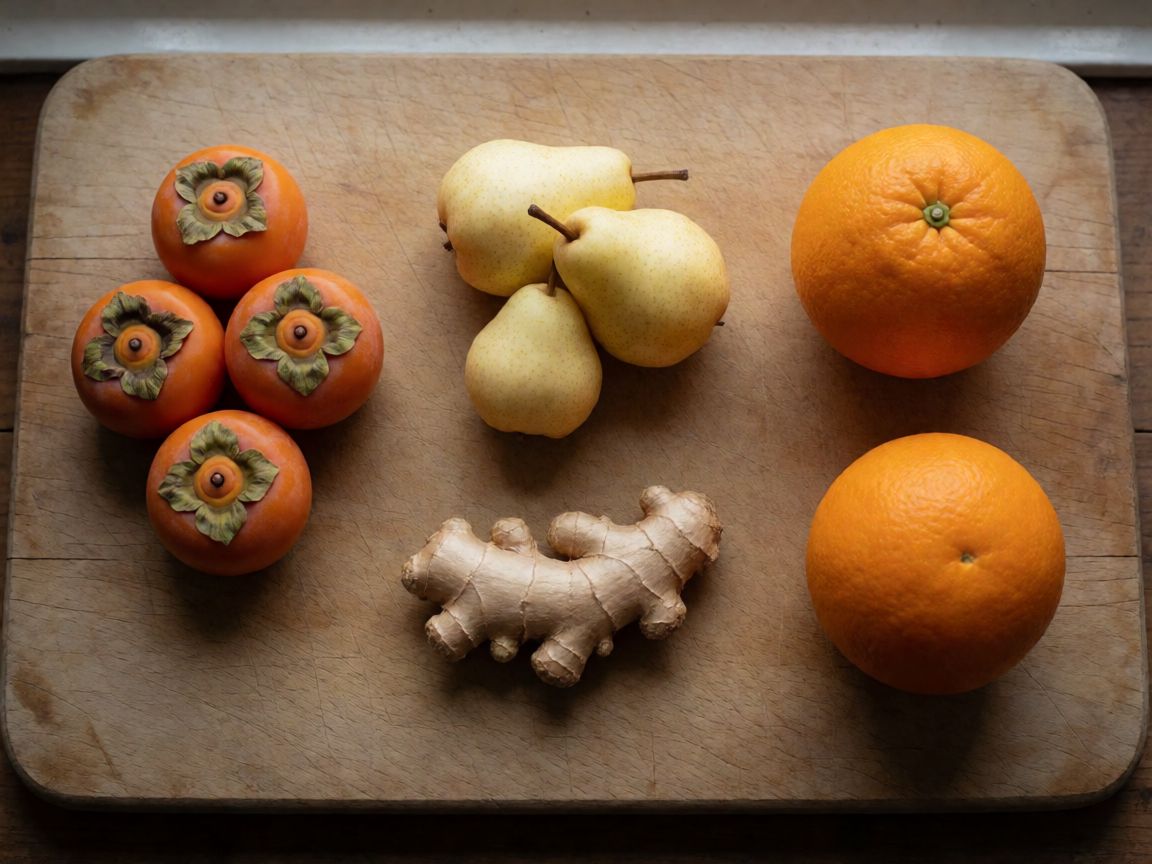



Steps
Wash the fruit thoroughly under running water to remove any dirt.
Cut off the top of the persimmon and scoop out the flesh with a teaspoon, transferring it to the blender jug.
Add the ripe pears, cut into cubes; you can leave the skin on for extra fibre.
Peel the ginger, grate it and add to the fruit (about a teaspoon).
Wash the oranges thoroughly, zest them, cut in half and squeeze out the juice, then add to the blender.
Blend all the ingredients for a few minutes until the smoothie is smooth and even.
This is not a recipe, it's an assembly — nothing gets cooked, so there's no technique to rescue you if the fruit is wrong. The whole dish stands or falls on ripeness, and ripeness here means something specific, not just "soft to the touch."
Start with the persimmon. Some say any persimmon will do once it's orange — no, because the flat, squat kind (Fuyu) can be eaten crisp like an apple, but the pointy, acorn-shaped kind (Hachiya) is full of tannins until it goes almost liquid inside, jelly through a spoon. Blend that one too early and you get a mouth that feels like it's been lined with chalk — that's the tannin, not a fault in the blender. If your persimmon still has any firmness in the middle, leave it on the windowsill. A few days, not a few minutes. That's the patience this dish asks for, and it's the only patience it asks for.
Pear works the same logic in miniature: ripe means it gives slightly at the stem end and smells of itself. Underripe pear brings grit to the blend — tiny stone-cells that no blade erases, only ripening does.
Once the fruit is right, the rest is arithmetic: ginger for a controlled sting so the drink doesn't collapse into pure sugar, orange for acid to hold the sweetness up, zest for scent that juice alone doesn't carry. Two hundred grams of persimmon flesh and two hundred of pear, from one thumb-sized knob of ginger, zest and juice of two oranges — that's two glasses, breakfast-sized, not a jug for the whole table.
Persimmon is the ingredient with a reputation problem, and it's deserved only against unripe fruit. Buy them a week before you need them if you're not sure, and judge by give, not colour — colour turns before the inside catches up. If persimmon is out of season or not sold near you, very ripe mango does a similar job: dense sweetness, soft enough to spoon. It won't taste the same, but it won't fight your blender either.
Pear brings body more than flavour — it's the fruit equivalent of a base note, there to thicken without shouting. Any variety common in a UK greengrocer's — Conference, Comice, Williams — works once it's ripe; the recipe leaves the skin on deliberately, for the fibre and because peeling a pear for a smoothie is work with no payoff, the blender doesn't care about skin.
Ginger root, not the ground spice from the jar. Ground ginger is ginger with its top notes gone — what's left is a flat heat with none of the citrus-sharp smell fresh root has when you grate it. A teaspoon grated is enough to wake the drink up without turning it into a throat-clearer; more than that and it stops being fruit with ginger in it and becomes ginger with fruit as an excuse.
Oranges do two separate jobs, and the recipe is right to treat zest and juice as different ingredients, not one. The juice brings acid, which is what stops a fruit smoothie tasting like dessert — without it, persimmon and pear together are just sugar on sugar. The zest brings oil-soluble aroma that juice doesn't carry at all; this is why you zest before you juice, and why the orange gets scrubbed first — wax and handling residue sit on the skin, and grating straight into the blender puts all of that in your glass too. If you only have juice cartons in the fridge and no whole orange, skip the zest rather than fake it; there's no substitute for citrus oil that doesn't taste like a substitute.
Blending itself has no mechanism worth explaining — there's no heat, no reaction, nothing to undercook. The only real test is the one your eye already knows: does it pour, or does it clump. If it clumps, the fruit went in underripe, and no extra minute in the blender fixes what a few more days on the counter would have.
This drinks best cold and soon — it's raw fruit with nothing to protect it, so it separates and browns within the hour, same oxidation that darkens a cut apple. Make it for the two people who are about to drink it, not for the fridge.