
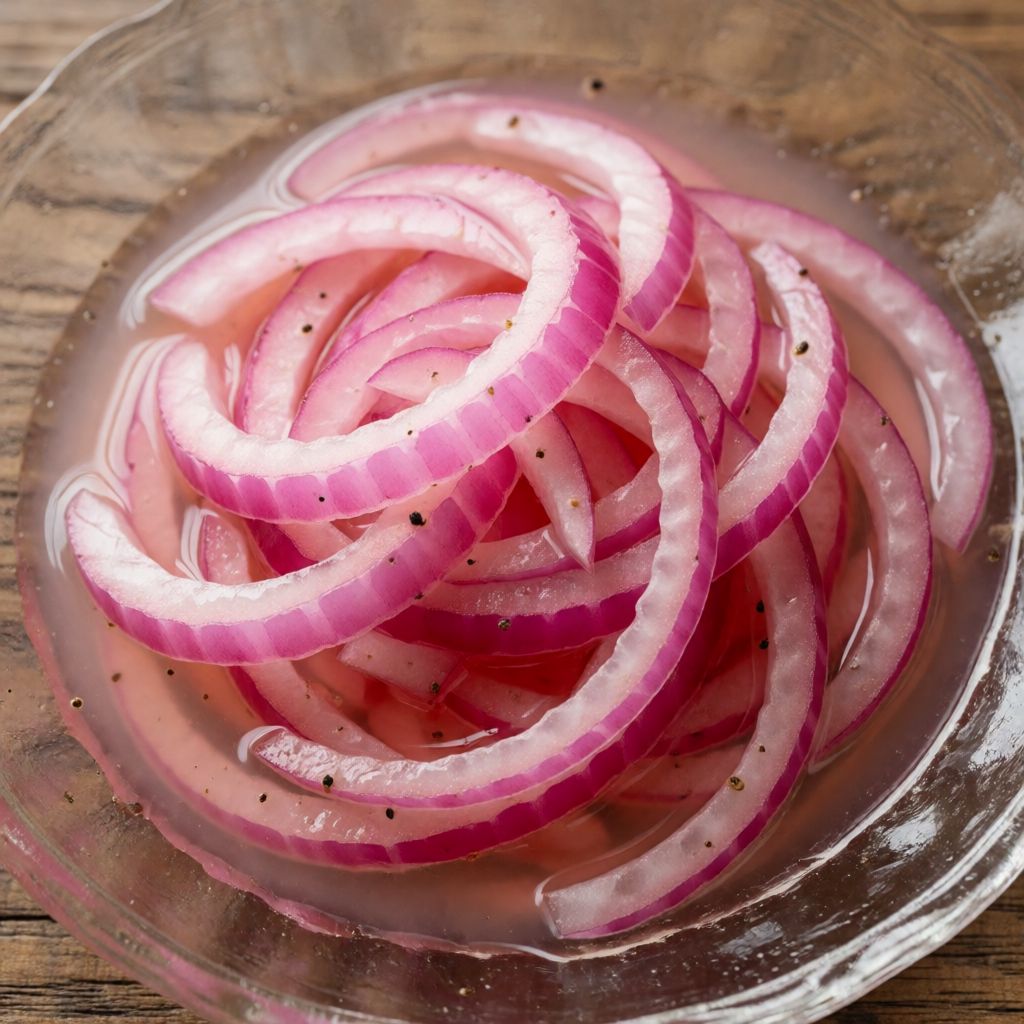
 AI photo
Pickled Red Onion
A quick pickle of red onion rings steeped in a sweet apple cider vinegar brine.
Labels are worked out automatically from the ingredients and can be wrong. Check the packaging if it matters to you.
Ingredients
- 4 pcs Red Onion
- 400 ml Apple Cider Vinegar
- 100 ml Water
- 100 ml Sugar
- 1 tsp Black Pepper peppercorns




Steps
Slice the onion into thin rings and place it in a clean, sterilised jar with a lid.
10 minIn a saucepan, bring the vinegar, water and sugar to the boil together with the peppercorns and, if you like, other spices, until the sugar has dissolved.
3 minPour the boiling hot vinegar mixture over the onion, seal the jar and store in a cool place.
This is a ten-minute pickle, not the dark, vinegar-soaked onion that sits for months in a British chip-shop jar. You slice, you pour hot brine, you wait an hour or a day, and you have something sharp, sweet, and the colour of a sunset — good next to a Sunday roast, a slab of cheese, cold meat, anything that needs a bit of acid cutting through the fat.
What decides whether it works is not time, it's thickness and heat, working together. Slice the onion thin and even, because the vinegar has to get from the outside of the ring to the middle before the dish is any good — a thick slice gives you a pickled edge wrapped around a raw, biting centre, and that's the real reason some home pickles taste half-finished. The brine goes on boiling hot for the same reason: heat opens the onion's cell walls just enough to let the acid in fast, without turning the onion to mush. Pour cold vinegar over raw onion and you'll be waiting days, not hours, for the same result.
Watch the colour, not the clock. Red onion turns fuchsia-pink in acid almost on contact — that's not decoration, it's a visible signal that the pickling is actually happening, the anthocyanin pigment in the skin reacting to the vinegar's pH. When the rings have gone from dull purple-red to that bright pink-magenta, right through, you know the acid has done its work. Some say you must use red onion purely for looks — no, because it's also milder and sweeter raw than white or yellow onion, so it survives a quick pickle without turning fierce.
Onion: buy ones that are firm and tight-skinned, no soft spots, because a soft onion has already started breaking down and will go slimy in brine instead of staying crisp. Slice across the rings, thin and even — a mandoline helps if your knife skills wobble, but a steady hand and patience do the same job. No red onion in the house? A white or banana shallot will pickle fine; you lose the pink shock but keep the sweetness and the bite.
Vinegar: the only requirement is enough acidity to actually preserve and season — around 5%, which is what shop-bought vinegar normally is. Cider vinegar brings its own apple sweetness, which is why it's chosen here over something sharper. White wine vinegar works as a cleaner, more neutral stand-in; rice vinegar gives a softer, rounder pickle; malt vinegar, the traditional British choice for jarred onions, gives you something darker and more aggressive — closer to pub food than to a plate of cold cuts.
Water: this is the dilution that stops the pickle from being a punch in the face. Straight vinegar on onion is a cure, not a condiment. Cut it with water and you get sourness you can actually taste other things around, which matters if this is going next to roast beef and not standing alone.
Sugar: caster or granulated both dissolve at the same point — boiling — so don't fuss over which. Its job is to balance the vinegar, not to make the onion a sweet. If you want a sharper, more savoury pickle, pull the sugar back by a third; it won't break the method, only shift the balance.
Black peppercorns: kept whole, not crushed, because whole peppercorns give off their oil slowly into the boiling brine and leave it clean — crushed, they turn the jar gritty and bitter. Bay leaf, mustard seed, a dried chilli, a shard of cinnamon — all fair additions if you want to go further, added at the same boiling stage so they have the heat to release anything.
Jar: sterilise it properly, not as ritual but because this is a short-cure pickle stored cool rather than a long-fermented one — there's no long acid build-up to outcompete mould the way a jar of onions cured for months would have. In a UK flat with no larder, that cool place is your fridge; expect this to keep well for a couple of weeks there, not for the months a proper jarred British pickled onion manages, because that's a different process built on salt-curing and a much longer sit in vinegar. This one is built for speed, not storage — patience here is measured in one afternoon, maybe overnight, not in a cupboard over winter.