
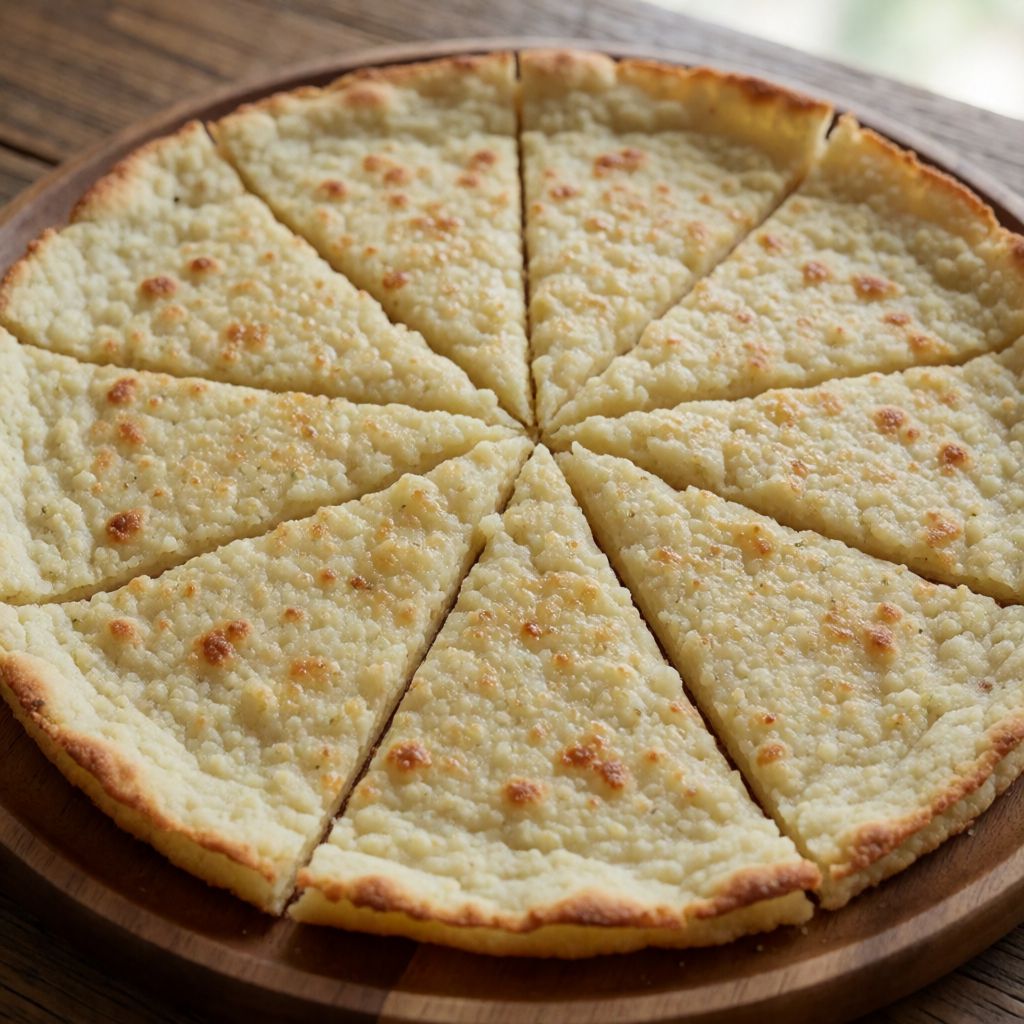
 AI photo
Cauliflower Pizza
A lighter take on pizza, with a cauliflower base instead of a classic dough crust.
Labels are worked out automatically from the ingredients and can be wrong. Check the packaging if it matters to you.
Ingredients
- 1 kg Cauliflower
- 30 g Rice flour
- 50 g Parmesan
- 2 pcs Egg whites
- Nutmeg to taste
- Salt to taste
- Black pepper to taste
- 150 g Fior di latte
- 150 g Tomato passata
- 20 g Olive oil
- 1 tsp Oregano
- Basil to taste











Steps
Wash the cauliflower, cut off the stalk and outer leaves. Separate the florets with a knife, rinse under water and pat dry with a towel.
Transfer the florets to a blender and blitz into fine crumbs.
Add the Parmesan, egg whites, nutmeg, salt and black pepper, and mix well.
Transfer the mixture to a bowl, add the rice flour and mix thoroughly.
Line a 32 cm tin with baking paper and spread the prepared mixture into it.
Heat the oven to 200°C and bake the pizza base.
30 minDrain the fior di latte in a sieve to remove excess water, then slice or cube it.
Transfer the tomato passata to a bowl, add a pinch of salt, the oregano and the basil leaves.
Take the base out of the oven, spread the tomato sauce over it with a spoon, then add the fior di latte.
Finish baking the pizza in the oven at 200°C.
12 min
What was changed
Plain flour was swapped for Rice flour to keep the base firm.
This isn't pizza pretending cauliflower is dough — it's a vegetable held together by starch and protein until it behaves like a base. That's the whole trick. Cauliflower itself has no gluten, no elasticity, nothing to bind it. So you borrow structure from elsewhere: egg white coagulates with heat and clamps the crumbs together, rice flour soaks up the water the vegetable keeps weeping, and Parmesan adds salt, fat and a crust that holds its shape when you lift a slice. Take any of those three away and you get cauliflower mash with toppings, not a base.
What decides whether it works is moisture, not flavour. A kilo of raw cauliflower is mostly water sitting inside cell walls. Blitz it fine, mix it with egg and cheese, and that water is still there, waiting to turn your base soggy the moment the tomato sauce lands on it. The first bake at 200°C does the real work: it isn't "cooking" the base so much as driving that water out as steam while the egg white sets. You want the surface to look matte and slightly pulled-together, not shiny and wet, before sauce goes anywhere near it. Some say cauliflower bases are naturally soft and a bit damp in the middle — no, that's a base that didn't bake long enough the first time, not a feature of the vegetable.
Cauliflower: buy it heavy for its size, with the florets tight and white, not yellowing or loose — a cauliflower that's starting to open its florets is starting to lose moisture control, and you need that moisture to leave on your terms, in the oven, not beforehand. Pat the florets properly dry after rinsing; every bit of surface water you don't towel off is water your rice flour has to work overtime to absorb later.
Rice flour here isn't a flavour choice, it's an absorber — it has almost no gluten and soaks liquid without turning gluey, which is exactly what you want in a mix that already has no structural dough to fall back on. If you haven't got rice flour, use any starchy flour with a bland taste and real thirst for water — cornflour works, so does fine semolina in a pinch, though semolina will give a slightly grittier bite. Don't reach for plain wheat flour out of habit; it'll do the job but adds a doughy taste you didn't ask for in a dish that's meant to taste like cauliflower and cheese.
Egg whites are the glue, not the yolk's job here — whites set firm and clear when they cook, yolks would add fat and softness you don't need when firmness is the entire point. Two whites from a kilo of cauliflower is a deliberately light hand; add more and the base turns rubbery, more omelette than crust.
Parmesan does three things at once: salt, savoury depth, and a bit of fat that helps the base crisp rather than just dry out. Any hard, well-aged grating cheese with a similar bite can stand in — a mature Cheddar, which you'll have in the fridge for the roast anyway, works, though it melts wetter than Parmesan so go a touch lighter on it to keep the base from weeping.
Fior di latte gets drained in a sieve for the same reason the whole base exists: moisture control. Fresh mozzarella carries its own brine and whey, and if you don't let it shed that before it lands on your pizza, you're undoing the thirty minutes you just spent driving water out of the cauliflower. No fior di latte near you — regular mozzarella ball, well drained, is the straightforward swap; pre-shredded bagged mozzarella is drier by design and will behave differently, usually fine, just don't expect the same stretch.
Tomato passata rather than a chunky tin of tomatoes is a texture decision — you want a sauce that spreads thin with a spoon and doesn't sit in wet pools on a base that can't afford more water. If passata isn't in the cupboard, blitz tinned whole tomatoes smooth and, if they're watery, let them sit in a sieve for ten minutes first.
A 32 cm tin and a domestic oven that may run a touch hotter or cooler than its dial admit — that's the honest limit here. Thirty minutes at 200°C is a floor, not a fixed point; what tells you the base is ready is how it looks and feels, not the timer: matte, set at the edges, no longer glossy with moisture in the middle. Patience at that first bake is what the whole dish is built on — rush it and no amount of good mozzarella fixes a wet centre.