
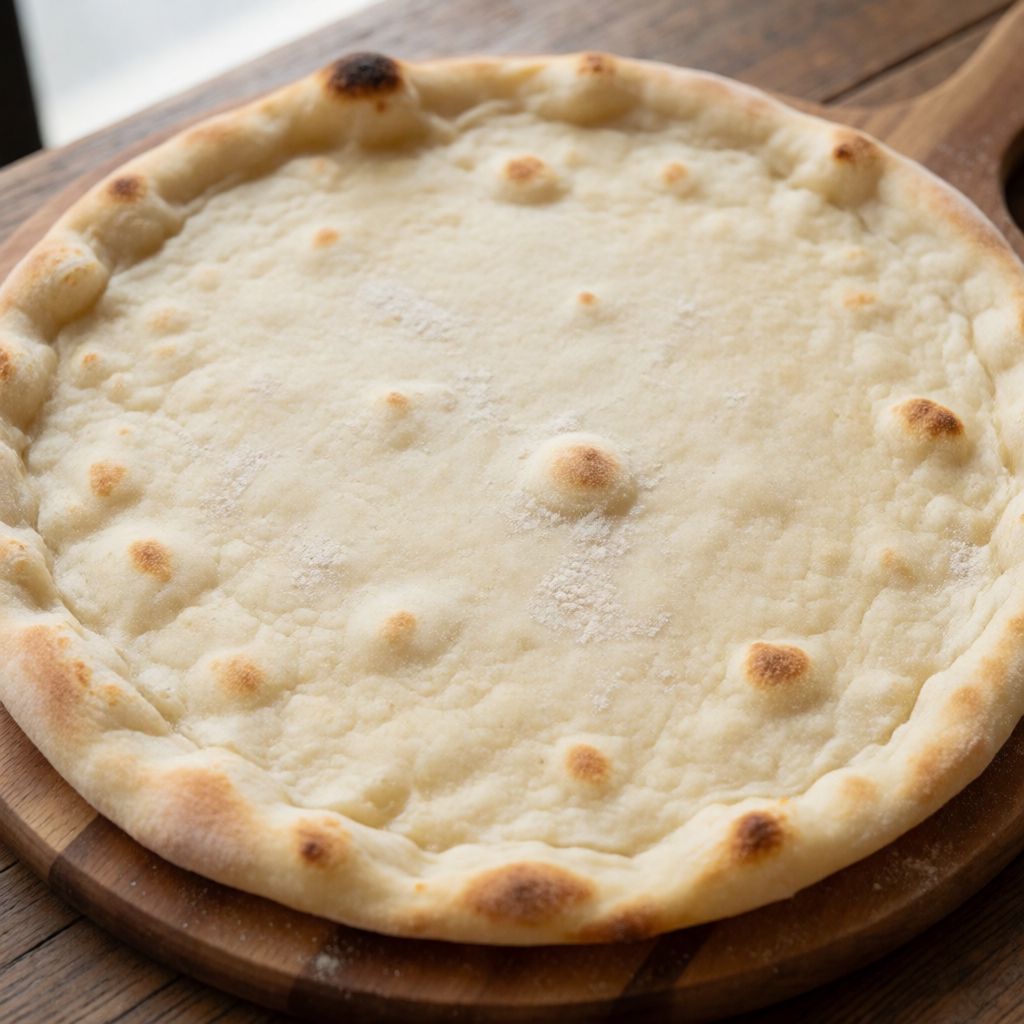
 AI photo
Quick No-Prove Pizza Dough
A quick pizza dough that skips the proving time, ready to roll out and bake straight away.
Labels are worked out automatically from the ingredients and can be wrong. Check the packaging if it matters to you.
Ingredients
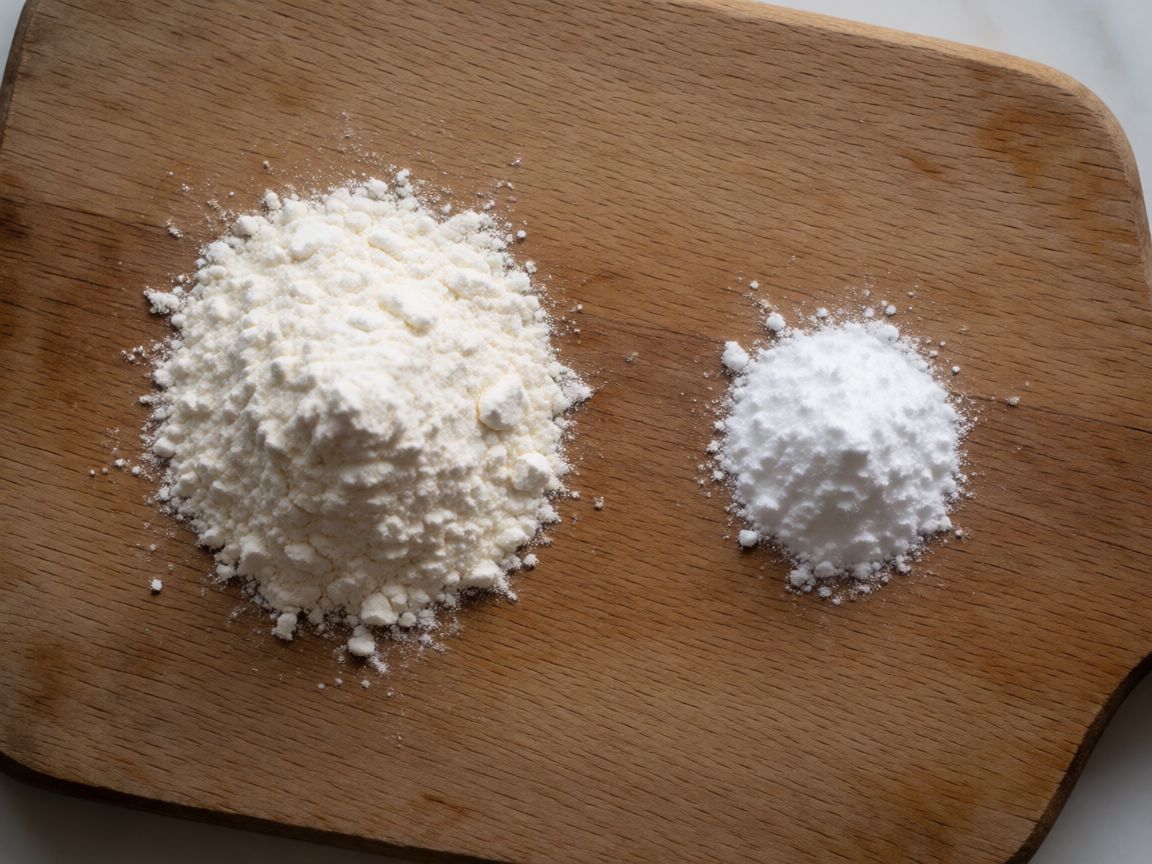
- 500 g Plain Flour
- 300 ml Water
- 15 g Baking Powder for savoury baking
- 10 g Salt
- 10 g Olive Oil





Steps
Tip the flour into a large bowl, add the salt and olive oil, and mix well.
Add a couple of tablespoons of warm water, mix, then stir in the baking powder.
Gradually add the remaining water, kneading as you go, until the ingredients come together into a ball.
Tip the dough onto a lightly floured surface and knead by hand for a few minutes.
Roll out the dough onto an oiled baking tray, add your topping, and bake at your oven's highest setting for 15 minutes.
15 min
This isn't bread dough with the patience removed — it's a different mechanism altogether. Yeast dough rises because a living organism eats sugars and breathes out CO2 slowly, building flavour as it goes, which is why it needs hours. This dough rises because baking powder is a dry acid and a dry alkali sitting next to each other, inert until water and heat arrive, and then they react and throw off gas fast. No fermentation, no waiting population of yeast — just a reaction that happens in minutes.
So the whole dough is built around one job: get that gas trapped while it's still fizzing, and get the oven hot enough that the crust sets around the bubbles before they can escape through the surface. Those are the two things that decide whether this works — how briskly you move once the baking powder goes in, and whether your oven is actually as hot as it claims.
Some say proper pizza dough always needs to rest before baking. No — because that rule belongs to yeast dough, where resting lets gluten relax and flavour develop over time. Here there's no fermentation to wait for. Resting just gives the gas you've already started making a chance to bubble out through the surface before it ever reaches the oven. The clock runs the opposite way to a normal dough: mix, shape, bake, and don't dawdle between any of them.
The flour is plain, not strong or '00', and that's deliberate rather than a shortcut. Bread flour earns its strength through hours of kneading and fermentation, building long gluten chains that trap gas slowly. This dough never gets that time, so a high-protein flour just means more effort kneading by hand for no real gain. Plain flour gives you a softer dough that comes together quickly and still holds the gas it needs to hold for fifteen minutes in a hot oven. If all you've got is strong flour, it'll still work — knead a little less, and expect a slightly chewier base.
Salt and oil go into the dry flour before any water touches it, and that order matters. Salt tightens the gluten network; oil coats the flour's starch and protein like a light seal. Mixed into dry flour, both spread evenly through every gram. Add them after the water and the baking powder are already reacting, and you get patches instead — some bites sharp with salt, others bland, streaks of oiliness rather than an even tenderness. It's the same reason you season meat before it hits the pan, not after.
The couple of tablespoons of warm water added next, before the rest, has a specific job: it starts the chemical reaction gently and evenly while the dough is still loose in the bowl, so the first bubbles form and get caught in the structure early, not unevenly in clumps later. Tip all 300ml of water in cold and at once and the reaction kicks off patchily — you end up with scattered gas pockets rather than a dough that lifts as a whole.
This isn't a foreign trick to a British kitchen, either. Scones, soda bread, a Yorkshire pudding batter — they all lean on the same shortcut: skip the fermentation, lean on chemistry and heat instead. It's the same economics that gets a scone on the table for an unexpected guest in twenty minutes rather than two hours. This dough is that logic applied to pizza.
For the baking powder itself, the criterion is double-acting, labelled for savoury baking: it releases gas once at room temperature when it meets moisture, and again under oven heat, so you get lift both before baking and during it. Don't substitute self-raising flour for the plain-flour-plus-baking-powder combination — self-raising already carries salt and a different raising ratio built in, and you'll end up oversalted and under-risen at the same time, fighting yourself.
The 300ml of water against 500g flour gives a firm, slightly tacky dough — wet enough to give the gas something to push against, firm enough to roll without tearing. Treat that figure as a starting point, not a law: an older, thirstier bag of flour will drink more, a very fresh one less. Judge by feel — it should come together into one ball that clings to itself but not to your hands — not by the millilitre. And when it comes to the oven, 'highest setting' isn't vague instruction, it's the mechanism: with no gluten strength built up over hours, this dough needs the shock of real heat to set the crust before the gas it's making escapes. Fifteen minutes is where you start looking, not where you stop — watch for the base losing its raw pale colour and the edges blistering gold, the topping bubbling and just starting to catch at the high points. That's doneness. The timer is only ever a lower bound.